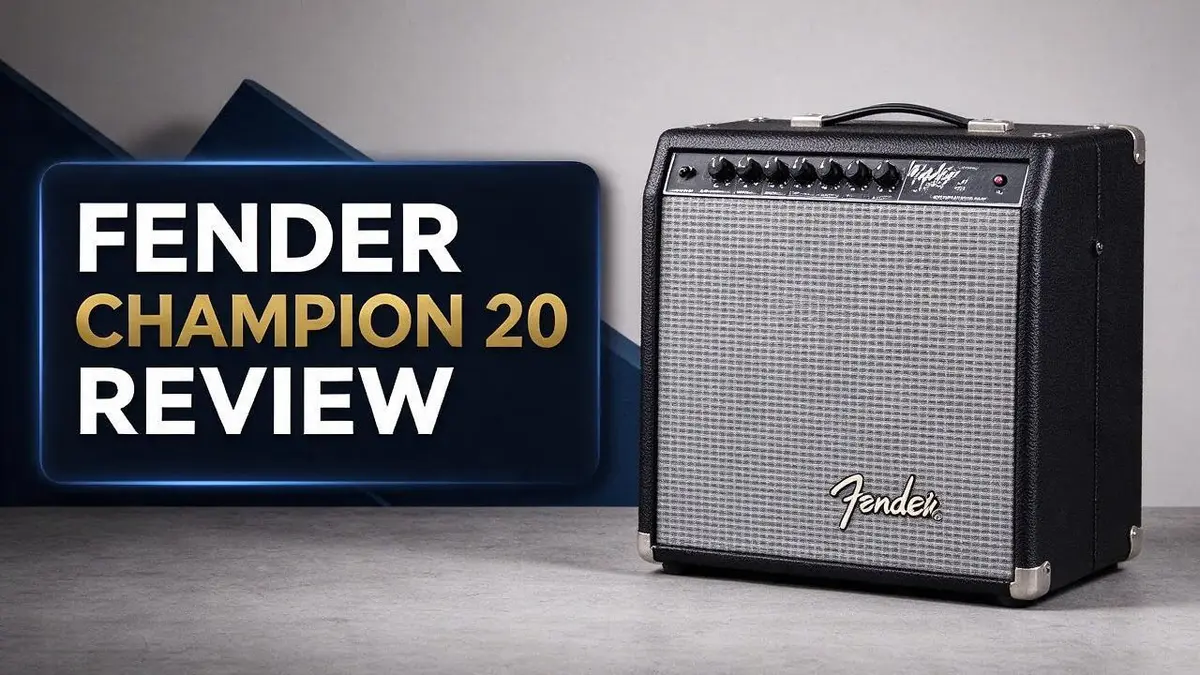
Fender Champion 20 Review: Tone, Effects, Build Quality and Who It’s For
Looking for a small amp that sounds great at home? The Fender Champion 20 could be exactly what you need. It packs plenty of tone into a compact body.
You get 20 watts of power and an 8 inch Fender Special Design speaker. Bass and treble controls let you shape your sound. The single channel keeps things simple.
Want more variety? This little amp includes reverb, delay, chorus, tremolo, and Vibratone effects. You can switch between clean, crunch, and overdrive tones with ease.
New players often ask if a practice amp can grow with them. In this review, we cover what the Champion 20 does well. We also explain where it falls short, so you know what to expect.
Ready to see if it fits your playing style? Keep reading for a full look at sound, build quality, and daily use.
In a Nutshell
-
Simple controls keep things easy. The amp has one channel and a two-band EQ for bass and treble. Beginners can shape their tone without feeling lost.
-
Three main sounds cover most styles. You can choose clean, crunch, or overdrive. Each setting gives a different feel during practice.
-
Small size fits almost any room. The amp feels compact and light. You can move it from a bedroom to a living room with little effort.
-
A strong pick for first-time players. Many players see it as a good starting amp. It offers enough volume for home practice.
-
Build quality shows its limits. The tolex and pressboard feel thin. Heavy daily use may leave you wanting something sturdier.
-
Loud playing exposes weak spots. Sound quality can fade at high volumes. Feedback may also become a problem in some rooms.
Clean, Crunch and Overdrive Tones

- One Fender Champion II 25 guitar amp, 25 watts, 16.4"D x 14.1"W x 10.1"H
- This amp comes with an 8 inch Fender special design guitar speaker for the tried-and-true Fender...

Last update on 2026-11-21 / Affiliate links / Images from Amazon Product Advertising API
Clean tones are a great place to start. Roll the guitar volume back a little and let the amp do the work.
The clean sound stays open and bright. Every chord rings clearly, which helps new players hear their mistakes.
Clean settings also reveal your playing style. Light picking sounds smooth, while heavy strumming shows where you need more control.
Use the treble knob to add sparkle to single notes. Turn the bass up for a warmer feel. Small changes make a big difference here.
Crunch sits in the sweet spot for most players. It adds a gritty edge without hiding the clarity of your notes.
Crunch works well for classic rock riffs and blues bends. Play a simple power chord and the sound feels full and lively.
Crunch also responds to your picking strength. Dig in harder and the sound grows rougher. Ease off and it cleans up again.
Overdrive delivers the most gain and sustain. Notes stretch out, and solos sing with extra bite.
This mode suits punk, hard rock, and heavier styles. It gives riffs a thick, aggressive character.
Keep the volume moderate when using overdrive. Higher gain can cause feedback squeals, especially when the guitar sits close to the speaker.
Place the amp away from walls and experiment with the tone knobs. Lowering the treble can tame harsh highs.
Try mixing your approach during a single song. Start with a clean intro, then move into crunch for the verses. Save overdrive for the chorus or solo.
Overall, these three modes cover a wide range of music. Beginners can learn chords, riffs, and solos without changing amps. The variety keeps practice sessions fresh and motivating.
Onboard Effects: Reverb, Delay, Chorus, Tremolo and Vibratone
Effects add fun to every practice session. The Fender Champion 20 packs five built in effects into a small body. Each one shapes your guitar in a different way.
Reverb adds space to your sound. It makes each note ring like it sits in a large room. Start with a low setting so your riffs stay clear. Too much reverb can blur fast picking.
Delay repeats your notes like an echo. It works well for slow solos and open chords. Set the repeats low at first. Then play along with the echoes to build timing.
Chorus adds a shimmering width to your tone. Clean chords sound fuller and more lush. Funk rhythm parts and soft ballads often use this effect. Try it with a light strum to hear the shine.
Tremolo pulses your volume up and down. This creates a rhythmic wobble that moves with the beat. Surf rock and vintage blues players love this sound. Use simple chords to feel the pulse clearly.
Vibratone creates a slow, swirling motion. It mimics the sound of a rotating speaker, which many organ players know well. The effect adds movement to sustained notes. It suits dreamy or psychedelic parts.
Each effect has a clear purpose. Reverb gives space, delay adds echo, chorus widens tone, tremolo pulses, and Vibratone swirls. Learning them one at a time helps you hear the differences.
Many players keep one effect on for most songs. Others switch between effects during a single practice run. Both approaches work well.
Try one effect per session. Play the same song with each setting. Write down the settings that inspire you. Over time, you will build a personal sound that fits your style.
Keep the volume comfortable when testing effects. Some effects sound best at moderate levels. This habit also protects your ears during long sessions. Small changes can make a big difference.
Power, Speaker and Volume Headroom
The Champion 20 produces 20 watts of power. That output suits bedroom practice and quiet home sessions. It fills a small room without much effort from the amp.
Speaker size shapes how the amp feels under your fingers. The 8 inch Fender Special Design speaker gives a focused, bright voice. Many players notice the speaker shapes the tone more than the wattage does.
A smaller speaker moves less air than a larger cone. Bass notes can sound tight, but they may lack deep weight. Chords still ring out with good clarity.
Volume headroom describes how much clean sound an amp delivers before it breaks up. Think of it as the space between a comfortable level and distortion. Headroom matters most when you play with other people.
The Champion 20 offers limited headroom. Clean sounds stay clear at moderate settings. Once you push the volume higher, the tone turns gritty fast.
Set your sound before you raise the volume. Pick the right mode and adjust the tone knobs first. This approach keeps your playing clean for longer and protects your ears.
Room size changes everything for this amp. In a small bedroom, the sound feels full at low levels. In a larger space, you may need more volume than the amp handles cleanly.
Some listings describe a 25 watt model with USB output. Check the label on your unit before you compare specs. The power rating matters for accurate expectations.
Playing with a drummer is a different story. Acoustic drums can easily overpower this amp. Consider a larger model if you often play with a band.
Bottom line: the 20 watts suit home practice well. Live gigs or loud rehearsals will test its limits. Plan your upgrade path early if those plans are coming up.
Top 3 Alternatives
Looking for a practical alternative to the Fender Champion 20? These three amps are worth a close look. Each one brings something different to the table.
Boss Katana Mini

- Authentic Katana Tone: Highly portable amp delivers authentic Katana tone in a compact design for...
- Superior Sound Quality: Rich, full sound that far exceeds other amps in its class for exceptional...
Last update on 2026-11-21 / Affiliate links / Images from Amazon Product Advertising API
The Boss Katana Mini packs a lot of sound into a tiny box. It runs on batteries, so you can play almost anywhere. It offers several built-in amp tones and effects. Beginners often love its simple layout. Its small size makes it easy to carry to lessons or jam sessions.
Vox Pathfinder 10

- Compact 10-watt combo amp, perfect for home practice and small gigs
- Features a 6.5-inch speaker delivering powerful, dynamic tones
Last update on 2026-11-21 / Affiliate links / Images from Amazon Product Advertising API
The Vox Pathfinder 10 gives you classic British tone in a compact size. It has a clean channel and a bit of grit for rock sounds. Players who want a vintage vibe will enjoy it. The controls stay easy to read, so you can dial in your sound fast. Many guitarists use it for home practice and small gigs.
Marshall MG10

- Marshall Amps Guitar Combo Amplifier (M-MG10G-U)
Last update on 2026-11-21 / Affiliate links / Images from Amazon Product Advertising API
The Marshall MG10 brings the famous Marshall look and attitude to your practice room. It includes built-in effects and a headphone jack for quiet practice. It suits players who want bold, loud tones. Its sturdy build also handles everyday use well. You can take it to a friend’s house without worry.
Check each amp’s features and pick the one that fits your style. Each option can help you grow as a guitarist. Start with the sound you love most, and you will enjoy practicing even more.
Build Quality and Portability
The Champion 20 feels light in your hands. Its compact size makes it easy to move from room to room. That is a big plus for beginners.
The cabinet uses thin tolex and pressboard. These materials help keep the amp light. However, they do not feel as solid as heavier wood builds.
Treat this amp with care. A hard knock can dent the case. Scuffs and small tears in the tolex can appear over time.
A soft cover or gig bag offers simple protection. It guards the corners and front grille during trips. Slide the amp in before you load it into a car.
Portability works well for practice sessions. You can carry it to a friend’s house or a small jam room. Plug it in and play within minutes.
Build quality matters most during daily use. Turn the knobs gently and avoid yanking the cables. Rough handling causes most early wear.
Ventilation also matters. Keep the back panel clear of clutter. Good airflow helps the amp stay cool during long sessions.
Think about where you store it. A stable floor or sturdy stand works best. Avoid placing it near the edge of a table where a pet or child could knock it over.
Temperature changes also affect the case. Avoid leaving the amp in a hot car for long periods. Heat can stress the materials.
Gigging adds more risk. Gig bags often get tossed in vans and crowded stages. Use a sturdy road case if you play live often.
Test the knobs and input jack before you take it home if you buy used. Look for loose knobs or crackling sounds when you turn them. These signs point to wear inside the controls. Plug in and test each knob slowly.
Bottom line: the Champion 20 is light and easy to carry. Its build feels basic, so careful handling keeps it in good shape longer.
Value and Pricing Context
The Fender Champion 20 packs many sounds into one small amp. A beginner can explore clean, crunch, and overdrive tones in one place. That mix of features shapes how useful the amp feels over time.
Start with your playing goals. A player who practices at home will likely enjoy the range of sounds and effects. A player who needs a loud stage amp will probably need more power.
Your playing habits matter too. If you play every day, the built-in effects keep each session fresh. If you play only now and then, a simpler setup may fit your routine better.
The short answer is that this amp suits home practice best. It handles bedroom and small room sessions with ease. It does not suit large venues or loud band rehearsals.
Think about the extras, too. A reliable instrument cable and a sturdy stand help your practice flow. Plan for these items before you sit down to play.
Read the product details carefully. Some listings describe a 25 watt version with USB output, while the standard model offers 20 watts. Confirm the exact model so you know what you receive.
Used units deserve a closer look. Plug in your guitar and turn each knob slowly. Listen for buzzing or crackling at low volume. A short test can reveal problems early.
Bottom line: the Champion 20 fits players who want variety in a compact package. It rewards careful use and home practice. Choose it when your goals match its strengths.
Pros and Cons
Pros
- Packs clean, crunch, and overdrive tones into one amp
- Reverb, delay, chorus, and tremolo add plenty of texture
- Simple controls make it easy for beginners to learn
- A two band EQ makes quick tone shaping possible
- Many players see it as a solid first amp
Cons
- Feedback can creep in at higher volumes
- One input limits how you connect other gear
- Sound can lose clarity when you push it hard
- One reviewer called it the worst amp they ever played through
Who Should Buy It
If you are just starting out, this amp gives you plenty to explore. You can test clean, crunch, and overdrive tones without buying extra gear.
Kids who feel excited about guitar often want quick results. A fun range of effects can keep motivation high during early lessons.
Students and teenagers often practice in shared rooms. This amp works well when you keep the volume low and focus on your playing.
Adults who return to guitar after years away will also fit the profile. The amp makes restarting feel easy. You can warm up without setting up a complex rig.
Parents buying for a young learner should see this as a learning tool. It supports daily practice rather than stage performances.
Hobbyists who play for fun fit well here too. A relaxed evening with favorite songs suits the amp’s compact size and power.
Songwriters who sketch ideas at home can use the built-in effects to find a mood for a new song. You do not need a full setup to try an idea.
Players who want to learn effects will enjoy the options. Trying tremolo or chorus teaches you how each sound shapes a song. Experimenting helps your ear grow over time.
Anyone on a tight schedule will appreciate quick sessions. Plug in, pick a sound, and play. There is no long setup to slow you down.
Think about how often you play. Daily players who practice in short sessions get the most from this amp. Occasional players may want an amp that rewards longer sessions.
Gigging musicians should look elsewhere. Loud venues will push this amp past its comfort zone. Bands that need strong stage projection will want more power.
Match the amp to your goals. If you want a quiet, flexible practice partner, this amp fits well. Serious stage players should keep shopping.
Final Verdict
The Fender Champion 20 earns a solid verdict for the right player. It works best for practice, learning, and casual playing at home.
Think of this amp as a learning companion rather than a stage machine. It lets you explore sounds without a steep setup process. Students can focus on technique first.
The main strength is how much it teaches you about tone. Switching between clean, crunch, and overdrive shows how each setting changes your playing.
The effects also help you hear what good tone sounds like. Trying tremolo or delay on a simple riff can spark new ideas.
The limits are real, though. The thin build and modest volume mean this amp fits quiet rooms best. Gigging players will likely outgrow it quickly.
Keeping the volume moderate protects your tone. This habit helps the amp sound its best for longer.
Think about your next step too. Players who plan to record or add many pedals may feel limited here.
Check any secondhand unit with care. Test every knob, listen for crackling, and look over the speaker cone for damage.
Who should skip it? Gigging musicians, loud rock players, and anyone needing several inputs should look at bigger models. This keeps expectations realistic.
Keep your goals clear as you shop. A clear goal helps you judge if this amp meets your needs or if you need more power.
Your room, volume needs, and long term plans all shape the decision. Honest expectations lead to happier results.
Our final pick: The Champion 20 suits beginners, hobbyists, and songwriters who practice at home. It offers plenty of sounds in a light body.
The Champion 20 earns its place as a friendly starter amp. Its simple layout and light body make daily practice easy.
Pick up the amp, plug in your guitar, and play for ten minutes. You will quickly hear whether its sound fits your style.
Frequently Asked Questions
Can I use this amp for live gigs?
It works better for practice than for performing. The 20 watt output can struggle when the room gets loud. It may suit a very small, quiet venue, but a full band needs more power.
Is this amp a good fit for a small apartment?
Yes, it suits small spaces well. The light, compact build makes it easy to move from room to room. Keep the volume low so your neighbors stay happy and the tone stays clean.
What should I know about the different versions?
Some listings describe a 25 watt model with USB output. That does not match the 20 watt specs. Read the product details closely so you know exactly which model you get.
How long should a beginner practice with this amp?
Short, regular sessions work best. Even 15 to 20 minutes a day helps you learn the clean, crunch, and overdrive sounds. Try one effect per session so you can hear how each one changes your playing.

Dillip is the founder and lead writer at PlayItLoudFinds.com, where he combines his deep passion for music with hands-on experience to deliver honest, in-depth reviews and comparisons of musical instruments, gear, and accessories.