Yamaha TRBX174 Review: Is This 4-String Bass Right for Beginners?
Are you searching for your first electric bass? The Yamaha TRBX174 deserves a close look. Many new players choose it as a dependable way to start.
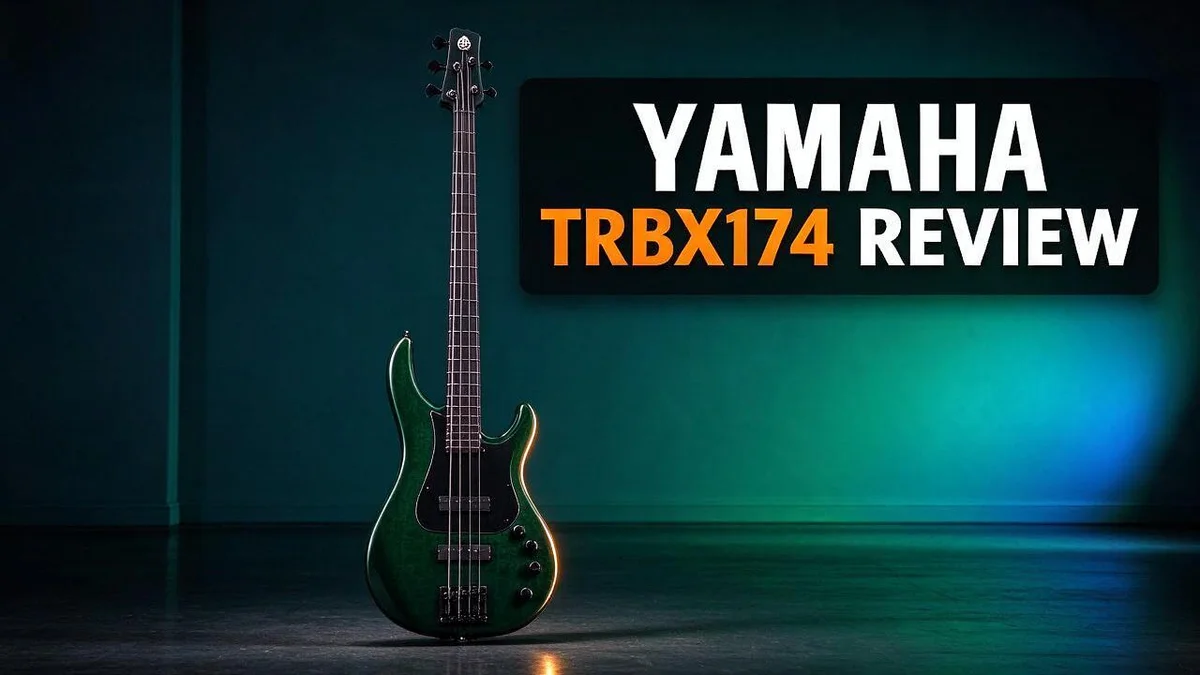
This bass has four strings and a 34 inch scale maple neck. Its PJ pickup setup gives you a wide range of tones. You also get a master volume, a pickup balancer, and a three band EQ. These controls help you shape your sound with ease.
Comfort matters when you practice for hours. Many players say this bass feels comfortable and easy to play. It is a friendly option for learning the fundamentals.
Is it the right fit for you? In this review, you will find the key features, real player feedback, and a few points to keep in mind. Let’s dive in.
In a Nutshell
-
Simple controls: The bass includes a master volume and a pickup balancer. You also get a three band EQ, so you can shape your tone with ease.
-
Flexible tone: The PJ pickup setup blends a jazz style sound with a punchy rock sound. An active or passive switch, listed in the TRBX series specs, helps you match the bass to different amplifiers.
-
Beginner friendly: Many players find it easy to handle. It gives a new bassist the basics needed to learn well.
-
Upgrade path: You can replace the electronics and hardware later. This lets the bass grow with your skills over time.
-
Build checks: Some users question the weight. Quality control also draws concern, so inspect the bass carefully before you commit.
-
Competitor view: One beginner score ranks the TRBX174 at 80, while the Fender Player Plus Jazz Bass scores 70. Ibanez and Cort also appear often in forum suggestions.
Build and Materials

- Incredible Quality and Value
- Mahogany Body

Last update on 2026-11-22 / Affiliate links / Images from Amazon Product Advertising API
Build quality shapes how a bass feels every single day. The Yamaha TRBX174 pairs a maple neck with a 34 inch scale, so the strings sit at a familiar tension for beginners.
Maple is a dense wood that helps the strings sound bright and clear. Many players notice this crisp attack right away when they play a few notes.
Hardware is the next thing to check. Tuners, bridge, and output jack all take daily wear. Give each part a gentle turn or push before you buy.
Quality control deserves extra attention. Some reviewers raise concerns about it, so a full check in person makes sense.
Look at the fret ends first. They should feel smooth, not sharp. Next, check that the tuners hold pitch after a few minutes of playing.
Run your hand along the neck edges too. A clean finish feels pleasant during long practice sessions. Rough spots can cause hand fatigue.
Pickups and controls connect to the body through wiring. Turn each knob slowly to confirm it moves smoothly. A crackle or dead spot often signals a loose connection.
Weight matters for your back and shoulders. Strap the bass on and stand for several minutes. Notice how it balances against your body.
Pay attention to the finish too. Scratches on the body are normal in daily use, but deep gouges can suggest rough handling in the store.
Ask the seller about the return policy. A solid policy gives you time to test the bass at home. This step protects you if a flaw shows up later.
Finally, trust your own hands and ears. The build should feel right for your body and your style. Confident players make smarter choices.
A careful check takes only a few minutes. It can save you from frustration later. Bring a tuner and a small amp if you have one.
Pickups, Controls and Sound
Three knobs shape your tone. The bass, middle, and treble controls work together. Each one lets you cut or boost a part of the sound.
Try the middle knob first. Many players keep the middle control near the center. This setting sounds balanced in most rooms. Small turns can make a big difference in a band mix.
Move your pluck point. Play near the neck pickup for a warm and round tone. Move closer to the bridge for a sharper attack. Your hand position changes the sound as much as the knobs do.
Pick or fingers? Your fingers give a soft and full sound. A pick adds bite and helps notes cut through a loud drummer. Both styles suit this bass well.
Test the controls before you buy. Plug the bass into an amp and turn the volume up slowly. Listen for crackling or hum as you move each knob. A clean response is a good sign.
Compare small and large amps. A small practice amp shows the basic tone. A larger amp reveals more low end and detail. Try both if you can, so you hear the full range.
Keep the settings simple at first. Set the volume and tone near the middle. Then adjust slowly as you learn your style. Your ears will guide you faster than any chart.
Trust your ears in the store. Play a few notes on each string. Check that every note rings clear and even. Uneven notes can point to a problem with the pickups.
Playability and Comfort
Playability decides whether you keep practicing. A bass that feels good in your hands invites you to play for longer sessions. Focus on how the neck and body feel together.
The 34 inch scale length keeps string tension fairly gentle. Your fingers stretch less between frets than they would on a longer scale. This helps new players find notes without much strain.
Start with your fretting hand. Wrap your thumb around the back of the neck. Your thumb should rest near the middle of the neck, not clamp tightly. A relaxed grip makes it easier to press each string cleanly.
Next, reach up to the highest frets. Notice whether your wrist bends sharply or stays fairly straight. A comfortable neck lets your hand move freely. If you feel tension in your forearm, the neck may not suit your hand size.
Pay attention to string height too. Strings that sit high make pressing down tiring. Strings that sit too low can cause buzzing. Ask the seller whether a shop can check the setup before you leave.
Your fingertips need time to toughen. Expect some soreness during the first few weeks. Short daily sessions help your fingers adapt without pain. Stop before the discomfort becomes sharp.
Test the bass while seated, too. Many players practice sitting down. Rest the body against your leg and check the balance. The bass should feel stable on your lap, not pull toward one side.
Look closely at the body edges near your picking arm. A smooth, rounded edge feels kinder during long practice. Sharp edges can press into your forearm after a while.
Finally, play a simple scale across all four strings. Move slowly from the first fret up to the twelfth. Smooth movement tells you the neck suits your hand. Choppy or stiff movement is a sign to keep looking.
Playability and comfort work together. Take your time, and trust how the bass feels in your hands.
Top 3 Alternatives
Ibanez GSR200

- 4-string Electric Bass with Agathis Body
- Active Bass Boost - Black
Last update on 2026-11-22 / Affiliate links / Images from Amazon Product Advertising API
The Ibanez GSR200 is a lively four string bass. It has a slim neck that feels fast under your hand.
Its active electronics deliver a bright and punchy tone. The body is light, so it feels easy to carry. Rock, funk, and pop players often choose this bass for its smooth feel. It suits anyone who wants comfort and clarity right out of the box.
Squier Affinity Precision Bass

- LIGHTWEIGHT BODY: Affinity Precision Bass PJ features a thin and lightweight poplar body with a...
- COMFORTABLE NECK: It also features a Slim, “C”-shaped maple neck that offers a comfortable...
Last update on 2026-11-22 / Affiliate links / Images from Amazon Product Advertising API
The Squier Affinity Precision Bass brings the classic P Bass sound to your room. It has a split coil pickup that produces a warm and thick tone.
You get a familiar layout that many bassists already know. Beginners like its simple setup and steady build. Its sound also cuts through a full band mix without much effort. It works well for rock, blues, and country music. If you want a traditional feel, this bass is a great choice.
Fender Player Jazz Bass

- BODY CONSTRUCTION AND FINISH: The contoured alder body produces well round sound, offering a blend...
- MODERN "C"-SHAPED NECK PROFILE: The Modern "C"-shaped neck profile helps to hold the guitar...
Last update on 2026-11-22 / Affiliate links / Images from Amazon Product Advertising API
The Fender Player Jazz Bass offers a smooth neck and a bright, clear voice. Its two single coil pickups let you shape many different tones.
You can get a deep thump or a crisp slap with ease. The slim neck profile helps your hand move quickly across the fretboard. Players who want more range will enjoy the extra flexibility. This bass feels great during long practice sessions. It is a strong pick if you want one instrument that handles many styles.
Quality Control and Consistency
Quality control deserves a closer look before you buy the Yamaha TRBX174. Some players feel that one bass can differ from another. Consistency matters because a good bass should feel the same every time you play it.
Start by placing two or more basses side by side if the shop allows it. Compare the body shapes and check whether each neck sits straight and centered on the body.
Sight down the neck from the headstock. The neck should look straight with no bow or twist. Small differences can change how the strings feel under your fingers.
Next, check the fret height along the full length of the neck. Press a string at the first fret and again near the last fret. Listen for buzzing or flat notes that appear only in certain spots.
Look at the nut as well. The string slots should look clean and evenly cut. Uneven slots can make open strings sit at odd heights.
Tuning stability is another useful test. Tune the bass to pitch and play it for a few minutes. If the tuning drifts quickly, the tuners or nut may need attention.
Check the gaps where the neck meets the body. They should look even on both sides. Uneven joints can sometimes suggest rushed assembly.
Compare the four strings too. A balanced bass sounds clear and even from the thickest string to the thinnest string.
If you can, try a Fender Player Plus Jazz Bass or an Ibanez or Cort model on the same day. Playing both shows which one feels more even and steady. This comparison makes your decision much easier.
Reviewers mention quality control concerns, but the details vary from one source to another. Taking time to inspect the bass protects you from surprises. A careful check helps you find a bass that plays well from day one.
Upgrade Potential
The Yamaha TRBX174 offers plenty of room to grow. Many players keep the stock parts for a while, then upgrade one piece at a time.
Electronics are the first big step. Replacing the electronics is one of the most common ways to change this bass. A new pickup or preamp can shift the tone in a clear way.
The series specs list an active/passive switch, so check your model first. Confirm the wiring before you buy parts. Some upgrades only work if the bass is wired for them.
Hardware changes the feel. The TRBX174 can also take new hardware. Upgraded tuners, a new bridge, or a different nut can change how the strings sit and how well the bass stays in tune.
Locking tuners help if the tuning drifts during long practice sessions. A replacement bridge can also make intonation easier to set.
Weight deserves attention too. Some players question the weight of this bass. Lighter replacement parts may ease the load on your shoulder and make longer sessions more comfortable.
Strings are the easiest upgrade. Changing strings lets you test different gauges and materials without major work. You can hear the difference right away.
Plan your upgrades in order. Start with strings and setup, then move on to electronics. This order lets you hear each change clearly and avoid mixing up the results.
Keep the original parts. Store the stock pickups, tuners, and bridge in a safe place. This makes it easy to return the bass to its factory state when you sell it or need a repair.
Upgrades work best after you know the bass well. Play it for a few weeks before you start changing parts. That way you learn which pieces really need replacing.
If you want more options, compare the TRBX174 with rivals like the Fender Player Plus Jazz Bass or Ibanez and Cort models. Their upgrade paths may differ, so research those too before you decide.
Pros and Cons
Pros
– – Good sound for practice and early lessons
– – Has what a beginner needs in a starter bass
– – Scored 80 on one beginner friendly test
– – Master volume and 3 band EQ give simple control
– – Easy to start with for new players
Cons
– – Passive pickups limit tone changes without an upgrade
– – Experienced players may outgrow it quickly
– – Players who want a Jazz style feel may prefer a Fender model
– – Source details on build concerns are incomplete
Who Should Buy It
Beginners who want to learn at home will likely enjoy this bass. It gives a simple setup, so new players can focus on rhythm and finger placement instead of complicated controls.
Parents shopping for a young student often look for a bass that does not overwhelm a child. This model keeps the controls simple. A young learner can explore sound without feeling lost.
Pop, rock, and funk students also find plenty to work with. Basic bass lines in these styles sound clear through the middle and lower range. Learning them builds timing and confidence fast.
School and church band players often need an instrument that works right away. This bass lets them plug in, tune up, and join a group without a long setup.
Players learning alone benefit from a dependable instrument too. Without a teacher nearby, a bass that feels comfortable encourages daily practice. Consistent practice builds skill more than long, rare sessions.
Adults returning to music often feel nervous about starting again. A friendly bass makes the first weeks feel less intimidating. Small wins on this instrument can restore confidence and motivation quickly.
Players who plan to build a collection can start here. It works as a first instrument, and later purchases can focus on new sounds and styles. Many players keep it as a backup bass for practice.
Gigging and studio musicians should look elsewhere. Professional work often calls for deeper tonal range and more flexible electronics from day one. Those players may want a higher tier bass instead.
Gift buyers can also feel confident choosing this model. It offers a clear starting point for a friend or family member who has shown interest in bass. Pair it with a simple amp and a short lesson plan for a strong present.
Before you decide, think about your goals. Ask yourself how often you will practice and which music you love most. Your answers will show whether this bass fits your plans.
Final Verdict
Here is the short answer. The Yamaha TRBX174 suits a player who wants a simple, dependable bass to learn on. It is not a perfect instrument, but it gives new players a solid start.
Try before you commit. Playing the bass in person tells you more than any written review. Pick it up, stand with it, and notice how the neck feels in your hand.
Check the build closely too. Look at the frets, the fret ends, and the nut. Make sure the tuners turn smoothly and the strap buttons sit firmly.
Think about your practice space. A passive bass pairs well with a clean amp and a quiet room. Plug it into a few different amps to hear how the tone responds.
Many beginners find that a simple setup keeps them focused on playing rather than tweaking knobs.
Ask yourself where you want to go. If your goal is to play rock, pop, or funk in a band, this bass covers the basics. If you dream of professional studio sessions, you may want to look at higher tiers sooner. Your goals should guide your choice.
Gear choices matter too. A sturdy strap, a clip-on tuner, and a gig bag protect the bass and keep practice smooth. Your teacher can also suggest a setup that fits your style.
Keep a simple practice routine. Play scales, learn songs you enjoy, and record yourself once a week. Listening back shows progress that you might miss day to day. This habit helps you judge whether the bass still fits your growth.
Final thought: the TRBX174 rewards patience. Practice daily, learn the fundamentals, and let your skills grow. The bass will keep pace with you for a long time.
Frequently Asked Questions
Does this bass suit small hands?
Yes, many younger or smaller players find it comfortable. The 34 inch scale length keeps the frets closer together. Your fingers travel less distance when you move up and down the neck. Hold the bass in a store before you decide, if you can.
Which other basses should I compare it with?
Many shoppers also look at Ibanez and Cort models. Both brands offer options in a similar range. Compare the feel, the sound, and the build of each bass. Play them through the same amp so the differences are easy to hear.
What amp works well for practice at home?
A small combo amp works well for quiet practice at home. Look for one with a headphone jack. This lets you play late without bothering the people around you. Start with a clean setting, since passive basses respond well to it. You can add grit later as your skills grow.
Can I record with this bass at home?
Yes, you can record with it using a simple audio interface. Plug a standard cable from the bass into the input. Keep the amp or tone settings clean at first. A clean recording gives you more control when you edit your playing later.

Dillip is the founder and lead writer at PlayItLoudFinds.com, where he combines his deep passion for music with hands-on experience to deliver honest, in-depth reviews and comparisons of musical instruments, gear, and accessories.