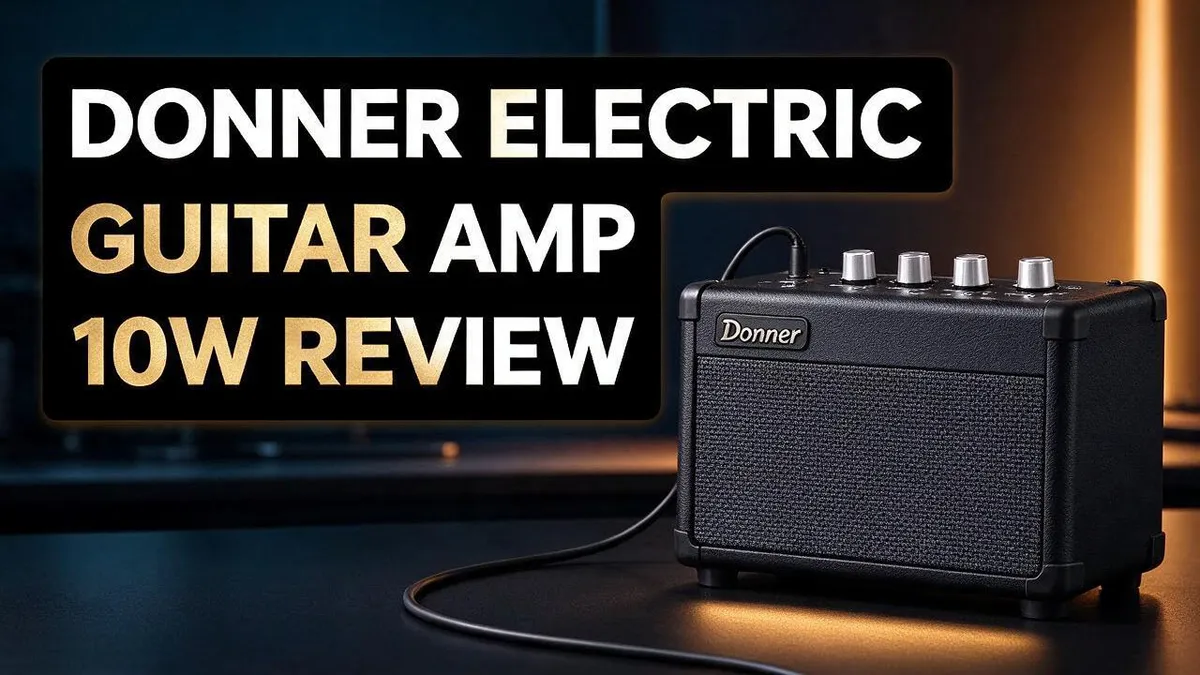
Donner Electric Guitar Amp 10W Review: Tone, Power, Features, and Verdict
Starting out on electric guitar can feel exciting. But finding the right amp takes time. This short guide helps you decide.
Donner has a strong reputation with players. Many people say the brand delivers good results for new guitarists. Users also praise its starter kits.
Some reviewers say the sound can feel thin. Others stress that proper setup matters a lot.
Here is what you will learn. We look at the key features, the strengths, and the weak spots. We also cover who this amp suits best. Then you can decide if it fits your needs.
Ready to find your next sound? Let’s dive in.
In a Nutshell
- Plan a proper setup: Experienced players often say a quick check helps a lot. Look at the action, the intonation, and the tuning stability first.
- Use the headphone output: Some Donner bundles include one. This lets you practice late at night without bothering neighbors.
- Try silent practice: One kit review mentions a silent practice feature. Confirm that it comes with your exact model before you buy.
- Check the specs closely: Our research did not confirm the exact amp specs. Look for wattage details, speaker size, and input options on the listing before you decide.
- Note the rating: One Amazon listing shows 4.3 out of 5 from more than 2,000 ratings. The product match is unclear, so read recent comments too.
- Consider a starter bundle: A creator calls a Donner guitar and mini amp pack a strong starter kit. It may suit someone who wants everything in one box.
Tone and Sound Quality

- Pure Analog Technology for Crystal-Clear Sound: Featuring full analog technology with a precise...
- Dual Tone Modes, Explore Multiple Styles: Featuring two independent tone modes (CLEAN/DRIVE...

Last update on 2026-11-22 / Affiliate links / Images from Amazon Product Advertising API
Tone is what makes your guitar sound like you. A good amp shapes every note you play. This section looks at how the Donner 10W amp handles sound, and what you can do to get the best results.
Small amps have a clear role. A 10W amp fits home practice, bedroom jamming, and quiet sessions. At this size, the amp sounds best at a comfortable volume. Pushing it too hard can make the sound harsh, so test a few settings before you settle.
Clean tones reveal the most detail. Turn the gain low and play single notes with a light touch. You will hear how your fingers and picking change the sound. This is a great way to learn dynamics.
Drive tones bring more grit. Raise the gain for classic rock riffs or punchy chords. Many players enjoy this range because it feels fun and expressive.
The pickups play a big part. One demo review says the pickups can sound thin. This does not mean every guitar will sound the same. Your guitar choice and string gauge can change the tone a lot. Try heavier strings if you want more body.
Use the EQ knobs with care. Bass adds warmth, mid adds presence, and treble adds sparkle. Small changes make a big difference. Start with all knobs at noon, then adjust one at a time.
If the amp has a reverb control, use it gently. A little reverb makes clean notes feel fuller. Too much can blur fast passages, so keep it subtle at first.
Position matters too. Place the amp away from walls and corners. Corners can boom and muddy the bass. A little space helps the sound open up.
Record yourself often. Playback on a phone shows you how the tone translates. What sounds bright in the room may sound different through a speaker.
Many beginners worry about getting it perfect. Tone grows with practice, and your ears will learn what you like. Finally, play a song you know well and listen closely. If the sound feels right for your style, you have found your tone.
Power and Volume Output
Many players see 10W and assume it means loud. That is only part of the story. Watts measure power, and power affects how much room the sound can fill.
Think of wattage as the engine. A bigger engine does not always mean a faster ride. Speaker size, cabinet design, and gain settings also shape how loud the amp feels.
Volume and power work together. At low settings, a 10W amp stays quiet and easy on the ears. Turn the volume up, and the speaker starts to push more air.
Gain is not the same as loudness. Gain adds drive and grit to the signal. Many people mix up the two. They crank the gain when they only need more volume.
Small amps often sound their best when the volume rises a little. The speaker starts to move more freely, and the sound gains a natural edge. Players call this breakup.
Check the master control. If your model has a separate master volume, use it. You can set a strong preamp tone and keep the room volume low.
Band practice needs more punch. A 10W amp may struggle to keep up with drums in a loud room. Test it with a real drummer or a backing track first.
Recording offers a quieter route. Many players record at moderate levels with a close microphone. This captures rich tone without filling the whole house with sound.
Ask one simple question. Will you play loud shows, or will you play at home? Your answer tells you whether this power level fits your plans.
Pay attention to how the amp feels at different settings. Play the same riff at low, medium, and high volume. Listen for changes in clarity, bass, and grit. Your ears will guide you best.
Power and volume matter, but they should not drive every choice. Start with your goals, then test the sound in your own space before you commit.
Controls and Connectivity
Every amp has a front panel, and its layout tells you a lot. Take a minute to study it before you plug in.
The instrument input is where your guitar cable goes. Push the plug in firmly. A loose jack can cause crackling noises that ruin a good session.
Many small amps include an auxiliary input. This jack accepts sound from a phone or laptop. Play along with backing tracks and songs you love.
Cable choice matters more than many players expect. A short, well shielded cable keeps hum and noise low. Pick a length that fits your room.
Power comes next. Plug the power supply into a steady outlet. Skip long extension strips, since they can add hum.
Good cable routing saves time and stress. Run the cord behind the amp or along the wall. This keeps your path clear during a jam.
A footswitch jack opens new options. If your model has one, you can switch modes without bending down. This helps during live play or band rehearsals.
Line out jacks send your sound to a mixer or recording interface. Connect them to your computer for a cleaner recording path. Confirm the jack type before you buy the cable.
Read the manual before you start. It shows which jacks your model uses and what each one does. Keep it near the amp for quick answers.
Try a simple walkthrough. Play one chord and turn each control slowly. Notice which knobs change the tone most and which ones barely move it.
Small details shape your daily sound. Learn the layout once, and you will feel at home every session. Keep the cables tidy, and your practice feels smoother.
Labels can differ between models. Some amps print their jacks in small letters. Use a bright light or your phone camera to read them clearly.
Note the jack spacing too. Thick plugs can block nearby ports on a tight panel. Choose a cable with a slim plug if space feels tight.
A little prep makes every session easier. Ready to plug in and play?
Top 3 Alternatives
Fender Mustang LT25

- The Fender Mustang LT25 Guitar Amplifier features 25 watts, 12.75Hx14.5Wx8.25D inches
- This amp comes with an 8 inch Fender special design guitar speaker for the tried-and-true Fender...
Last update on 2026-11-22 / Affiliate links / Images from Amazon Product Advertising API
The Fender Mustang LT25 is a solid choice for beginners. It delivers 25 watts of clean and driven tones. You get dozens of onboard amp models and effects.
Players can switch from metal to blues in seconds. A simple app lets you edit presets from your phone. It also includes a tuner and a looper for solo practice.
Its compact body fits easily on a desk or a small shelf. It makes a great first amp for daily practice.
Boss Katana Mini

- SOUND OPTIONS: This Amp provides a rich, clear sound with three amp types: Brown, Crunch, and Clean...
- EASY TONE CONTROL: Includes a multi-stage analog gain circuit and a three-band tone control for...
Last update on 2026-11-22 / Affiliate links / Images from Amazon Product Advertising API
The Boss Katana Mini packs big sound into a tiny box. It runs on six AA batteries, so you can play almost anywhere.
Its single speaker covers clean tones, crunch, and high gain sounds. The amp uses a tone engine that sounds smooth and natural.
Many guitarists like it for travel, quick jams, and quiet practice sessions. It fits easily in a backpack.
Marshall MG10

- Marshall Amps Guitar Combo Amplifier (M-MG10G-U)
Last update on 2026-11-22 / Affiliate links / Images from Amazon Product Advertising API
The Marshall MG10 brings classic British rock style to your practice space. It has a simple layout with gain and volume controls.
The onboard effects add chorus, delay, and reverb. Beginners will find it easy to learn on.
Its sturdy build and familiar look make it a favorite for new rockers. Its compact design also suits small bedrooms. Plug in, turn it up, and start playing.
Setup and Out-of-the-Box Tuning
Unboxing comes first. Place the guitar and amp on a flat surface. Look closely for loose screws, cracks, or scratches on the body.
Tune the guitar before you play. A clip-on tuner works well for beginners. Set it to standard pitch and tune each string one at a time.
Tune up to each note rather than down. This approach holds the pitch better. Strings settle in after a few tuning rounds.
New strings stretch and drift for a few days. Pull each string gently away from the neck. Then tune again.
Follow the RAIN steps for a smooth setup. Many forum commenters stress that setup matters a lot for Donner bundles. RAIN stands for Relief, Action, Intonation, and Noodling.
Relief describes the slight curve in the neck. Sight down the neck from the headstock. A small curve lets the strings vibrate with room to move.
Action means the string height above the frets. Low action feels fast but can buzz. High action feels stiff, so adjust it in small steps.
Intonation keeps notes in tune as you move up the neck. Play the open string, then the 12th fret harmonic. Next, fret the same string at the 12th fret.
If the two notes differ, fine tune the saddle slightly. Then test again until both notes match.
Noodling means playing freely after each change. Play simple scales and chords. Listen for buzzing, dead spots, or uneven volume between strings.
Make small changes and test often. Turn screws a quarter turn at a time. Retune after each adjustment. Patience saves your strings and your neck.
Check tuning again after a short jam. Temperature and humidity can shift the pitch. Retune before you record or play with others.
Keep the tuner close during practice. Quick checks prevent sour notes in a band. A small habit builds good ears over time.
Write down your settings in a notebook. Note the tuning, string height, and any changes. This record helps you repeat a great setup later. Ask a local shop for help if a step feels unclear.
Pros and Cons
Pros
- Donner has a good reputation among players who want a reliable brand.
- Many creators call the DST 152 pack a strong starter kit.
- Some Donner kits include a headphone output for quiet practice.
- A silent practice mode lets you play late without disturbing others.
- Beginners get a complete starter package in one box.
Cons
- Some demo reviews say the pickups sound thin.
- Independent reviews of this exact 10W amp are hard to find.
- The research does not confirm the amp’s full specs.
- Competitor comparisons for this model are not yet available.
Who Should Buy It
Beginners are the most likely buyers. New players need a small amp for learning chords, scales, and simple songs. A 10W model keeps early practice sessions calm and manageable.
Parents often shop for a teenager who wants to learn. A small amp gives young players a clear first sound without overwhelming them. Compact gear keeps the focus on playing rather than on managing equipment.
Home players form another strong group. If you play in a bedroom, spare room, or apartment, this amp suits your space. It fits on a desk or shelf, so you can grab it and play quickly.
Hobbyists who love casual jams will enjoy it too. You can plug in, play along with a favorite album, and stop whenever you feel ready. Short sessions after work feel easy with a compact setup.
Returning players who took a long break may also like the simple setup. Getting back into the instrument feels less stressful with fewer parts to manage.
Second amp owners can find a useful role here. Many players keep one amp in the studio and another in the living room. This model can handle quick warm up sessions while your main rig stays ready to go.
Some players should look elsewhere. Bands and gigging musicians need more power than 10W can offer. A player who rehearses with drums will likely want a larger amp that fills a full room. Loud rehearsals may also cause problems with neighbors in shared buildings.
Players who want deep tone shaping may also feel limited. Look at the control layout in the product photos before you decide. This helps you see whether the amp matches your style.
Ask yourself one question first. Do you want a calm practice partner for home? If yes, this amp fits your goals well. If you need stage volume, a bigger model will serve you better.
Final Verdict
Our final verdict is cautiously positive. However, the research leaves some important questions open. Most sources talk about starter packs rather than this exact amp.
Check the details yourself before you buy. Look for wattage, speaker size, and input jacks on the product page. Confirm that the amp matches your plans.
Think about where you will play most. A small amp works well for practice. It may feel too quiet for a band rehearsal or a loud room.
Consider your next step as a player. If you want to grow, a larger amp may follow later. Many players start small and upgrade after a year.
Skip this amp if you need stage power. Small amps struggle to keep up with drums or other loud instruments. A higher wattage model will serve you better in that case.
Think about return policies too. A clear return window protects you if the sound disappoints. Read the seller terms before you check out.
Your guitar matters as much as the amp. An instrument in poor shape can make any amplifier sound weak. Pair the amp with a guitar you enjoy playing.
Ask yourself a simple question. Will you practice most days? A small, quiet amp rewards regular play. Occasional players may prefer a more flexible setup.
Finally, check the warranty. Good coverage gives peace of mind for electronics. Save your receipt and keep the box for a while.
Start with honest goals. Write down what you want to play in three months. Then compare that list with the amp’s features before you commit.
Bottom line: this amp suits casual players who want a simple, quiet setup. It is a practical choice for learning at home. Serious players who gig regularly should look elsewhere.
Keep your expectations realistic. The amp can help you learn chords, scales, and songs. It will not replace detailed reviews from independent testers, so read more before you decide.
We will update this verdict when more independent reviews appear. Until then, use this guide as a starting point. Compare features and return terms carefully.
Frequently Asked Questions
How do I get the best tone from this amp?
Most small amps have basic volume and tone knobs. Start with both knobs near the middle. Small changes make a big difference, so play a few songs and adjust slowly. Write down the settings you like so you can return to them later.
Does the amp need a setup before I play?
Yes, many players stress setup before playing. Commenters call the process RAIN, which stands for Relief, Action, Intonation, and Noodling. A proper setup helps your guitar feel easier to play. If the strings sit too high or the notes sound off, a quick check at a local shop can fix the problem.
Can I record at home with this amp?
Yes, you can record at home with this amp. Place a microphone near the speaker, or use a simple audio interface to capture your sound directly. Test a few takes first. This helps you find the best mic position and volume level before you record a final track.
Will this amp still fit my needs as I improve?
This amp works well as a practice amp for many months or years. When you join a band or play larger venues, you may want a louder model. Plan your next step early. That way, you can upgrade when your playing calls for more power.

Dillip is the founder and lead writer at PlayItLoudFinds.com, where he combines his deep passion for music with hands-on experience to deliver honest, in-depth reviews and comparisons of musical instruments, gear, and accessories.