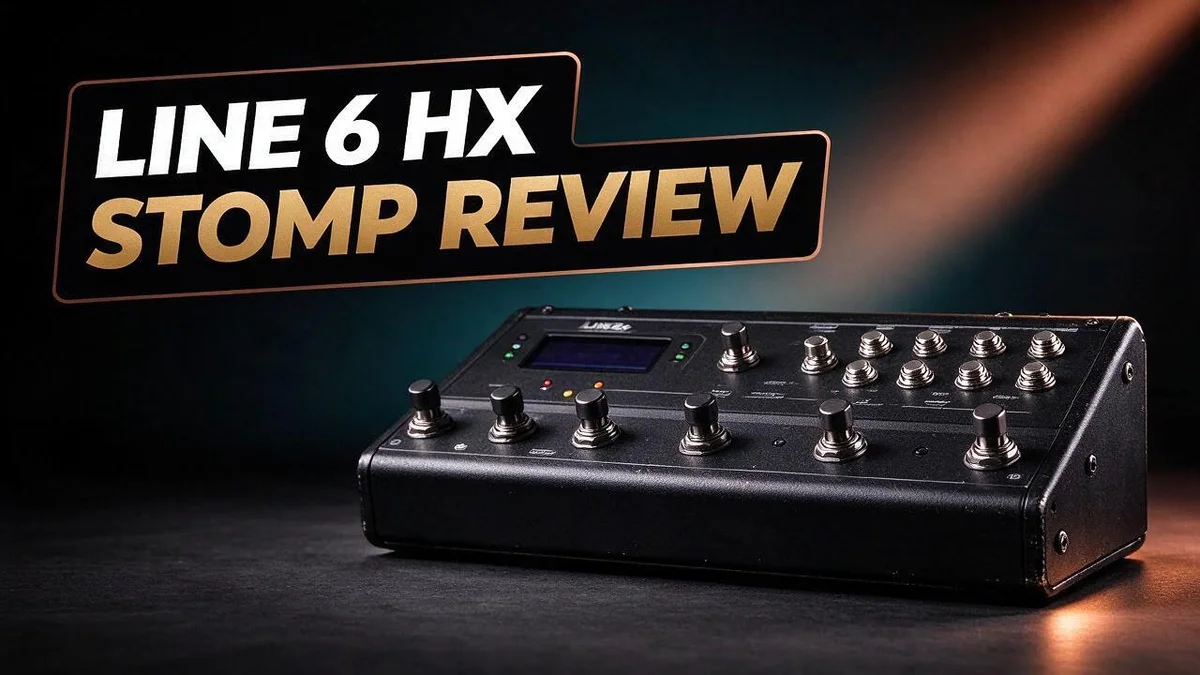
Line 6 HX Stomp Review: Modeling, Sound Quality, Build and Verdict
Are you looking for a pedalboard that fits in a small bag? The Line 6 HX Stomp might be the answer. It packs a lot of tone into a tiny body.
This floor processor models amps and effects. You can also use it as a backup rig or a travel setup. It even works as a recording interface.
Its full metal build feels solid on stage. A colored LCD shows your settings clearly. Onboard presets cover most common sounds, so you can start playing fast.
Ambient effects and delays really shine here. The digital models also sound rich, not cheap. Still, the interface takes some getting used to during a live show.
In this review, we look at the key features, the sound quality, and the pros and cons. Let’s see if this compact unit deserves a spot on your board.
In a Nutshell
-
Beyond the stage: The HX Stomp works well as a main rig, a backup unit, or a compact travel setup. Its small size makes it easy to carry to rehearsals, lessons, and local shows.
-
Recording made simple: The unit also doubles as a recording interface, so you can capture song ideas straight to your computer. Many players use it at home before taking their sounds to a full studio session.
-
Custom cabinet tones: You can store and load up to 128 impulse responses. This feature lets you shape your sound with different speaker styles, mic choices, and room feels.
-
Easy gear matching: Programmable impedance circuits help the processor work well with different guitars and basses. The headphone jack also keeps late night practice quiet for everyone nearby.
-
Real time feel: Zero latency monitoring means you hear your playing instantly, even when you stack several effects. This quick response keeps your timing natural during jams.
-
A quick heads up: The chipset is about nine years old, so very dense patches may reach its limits. Plan your presets carefully before a big gig.
Modeling and Sound Quality

- Utilizes the same HX Modeling as Helix
- More than 300 effects and models from Helix, M-Series, and legacy Line 6 products

Last update on 2026-11-22 / Affiliate links / Images from Amazon Product Advertising API
Sound quality is where the Line 6 HX Stomp really earns its reputation. The unit relies on digital amp and effects models to recreate classic gear. Many players find the results surprisingly convincing.
Clean tones sound smooth and open. Edge of breakup settings feel lively and responsive. High gain sounds hold their shape when you play tight chords.
Digital models sound full and lifelike, even through a single cable. Your tone stays consistent from one gig to the next.
The processor runs at 48 kHz with 16 bit converters, according to the manual. That resolution handles live playing and quick recordings with ease. Most listeners hear a clean and detailed signal.
Dynamics feel natural under your fingers. Soft playing gives you warm and rounded notes. Hard picking brings out bite and attack.
Bass players can also dial in a punchy low end. The models keep the bottom tight so notes stay clear and focused.
Delay tones are a mixed bag. Analog delay models are not as dark as the MXR pedals many players know.
Players who love a warm, murky repeat may need to shape the tone. Try rolling back the treble or adding a little darkness with other effects in the chain.
Amp models respond well to your pick attack and volume knob. Roll the guitar volume down and the tone cleans up nicely.
Patches also translate well from bedroom practice to a loud stage. A sound you build at home usually works in a band setting too, after a quick level check.
Try starting with a preset close to your target sound. Then tweak the amp and cabinet settings until it feels right to you.
Overall, the sound quality impresses for its size. Tone shaping takes a little patience, but the results reward your effort.
Build and Portability
Size is the first thing you notice. It sits about the same size as a Strymon three switch pedal. That means it fits onto a crowded board without taking over your space.
Layout matters too. You can place it at the front or back of your board, since the footprint stays small. Your cables can run neatly along the edge.
Think about your pedalboard as a whole. Smaller units leave room for drive pedals, tuners, and wah. Freeing up space helps you build a board that feels clean and organized.
The colored LCD also deserves a mention. Bright stages and dim clubs both put strain on your eyes. A clear screen helps you read preset names quickly.
Fitting it into a case. Many players place the unit on a board, but the footprint also suits a small case. Measure your case before you load your gear, so nothing rubs or rattles.
Think about wear over time. Pedal rigs take bumps in vans, car trunks, and rehearsal rooms. A sturdy enclosure protects the internal parts, but a padded bag still helps.
Footswitch spacing deserves a look too. Because the switches sit close together, precise stomping matters. Players with larger feet may need a few practice sessions to feel at ease.
Plan your cable path first. Lay out your cables before you lock anything down. Clear routing keeps the board neat and reduces tangles during a loud set.
Carrying a compact unit up stairs or across a parking lot feels easier. Keep a small bag ready for quick loading. Less bulk means fewer trips. Even a short walk to the stage adds up over a long night.
Overall, the size and build suit players who move often. Musicians who gig, teach, or record in different rooms will appreciate the small footprint. Start with a simple layout, then add pieces as your needs grow.
Ease of Use and Effects Routing
Routing is where the HX Stomp really shines for many players. The signal chain works like a row of blocks. You can add, remove, or move effects with ease.
Think of each block as a building piece. Drag it into place in the Edit app, then sync the chain to the unit over USB. Seeing the whole chain at once makes changes faster.
The large screen in the app helps a lot. Tweaking a patch at your desk feels far easier than hunting through menus on a dim stage. Clear labels help too.
Set up at home, play on stage. Build your patches before the gig. Save them in banks, so each song has a ready sound. A little prep saves time during soundcheck.
Order matters more than you might think. Place drive effects before modulation and delays for a tighter sound. Put reverb near the end so it sounds spacious.
Parallel paths open new doors. The unit can split your signal into two paths. One path might hold a clean amp tone, while the other holds a shimmering delay.
Mixing those paths takes a few extra steps. Set the level of each path so the blend sounds balanced. Then listen closely with headphones or a monitor.
Keep live changes simple. Assign your most used effects to footswitches. Save the rest for the app, so your stage view stays clear.
Use one switch for a lead boost. Use another for a delay swell. Label each switch clearly so you never guess. Small choices like these reduce stress during a live set.
Practice the routing before you play live. Run through each patch once at home. You will spot awkward moves before the crowd does.
Overall, the routing gives you real freedom. The interface asks for some patience, but the payoff is worth the time.
Top 3 Alternatives
Zoom G1X Four

- Over 70 Guitar Effects & 13 Amp Models
- Global Tone Stack & Volume Knob
Last update on 2026-11-22 / Affiliate links / Images from Amazon Product Advertising API
The Zoom G1X Four is a strong pick for players who want a simple, all-in-one setup. It packs amp models, cabinet sims, and effects into one pedal. Beginners will like the easy controls. A built-in expression pedal also lets you shape your tone live.
Headrush MX5

- Next-Generation Guitar and Bass Multi-FX and Amp Modeler - 4" responsive color touchscreen and a...
- 700+ Premium Emulations of vintage, modern and boutique acoustic and electric guitar and bass gear...
Last update on 2026-11-22 / Affiliate links / Images from Amazon Product Advertising API
The Headrush MX5 is a compact option for players who need a small footprint on a crowded pedalboard. It delivers a wide range of amp and effect models. Its flexible routing lets you build complex signal chains. Many gigging guitarists choose it for its tight, responsive sound.
Boss GT-1000 Core

- Powerful Guitar and Bass Processing: Amazingly powerful and ultra-versatile processor delivers a...
- Flagship DSP Performance: The full DSP muscle of the flagship GT-1000 drives class-leading sound...
Last update on 2026-11-22 / Affiliate links / Images from Amazon Product Advertising API
The Boss GT-1000 Core suits players who want deep control and advanced editing. It offers a large display and a long list of amp and effect presets. Experienced players often appreciate the detailed tone shaping. It also works well as the main hub for a larger rig.
Recording, IR Loading and Live Use
Recording with the HX Stomp feels simple. Connect the unit to your computer with one USB cable. Your recording software then treats it like an audio source.
Record a dry track and a processed track. Many players capture both at once. This gives you options during mixing.
Sending a dry track back through the unit lets you try new tones later. Good ideas often arrive after the take is done.
IR loading is where the recorded sound gets its character. Load cabinet impulse responses through the Edit app. Plenty of slots give you room to test many cabs. Start with a few favorite cabinets and swap them until the tone clicks.
Match the IR to your amp. A bright amp model often pairs well with a darker cabinet. Trust your ears, then compare a few options before you commit.
Keep your session settings consistent. Mismatched files can sound off, so check your project before you record.
Zero latency monitoring keeps your playing feeling tight in the studio. You hear yourself instantly, which helps timing and feel.
Practice quietly with headphones when the neighbors are asleep. The headphone jack makes late night sessions easy.
Live use starts with a direct connection. Many players send a clean output to the front of house mixer. The sound engineer then gets a steady tone every night. A quick check at soundcheck confirms the levels.
Keep your favorite patches ready. Save scenes for each song before showtime. Good preparation makes mid set changes less stressful.
Recording and live use both reward preparation. Spend time in the editor, then trust your settings on stage. Your tone will feel familiar, and your focus stays on the music.
Processing Power and Limitations
The HX Stomp packs a lot of power into a small box. Still, every processor has a ceiling. This unit uses a chipset that is about nine years old, and that age shapes what it can handle.
Processing power is the main limit. Each amp model, delay, and reverb draws from the same pool of chip power. When you fill every block, the unit may stop you from adding more. Players who run heavy reverbs and detailed amp models often hit this wall first.
Test your hardest preset before you play. Load your most demanding sound and check that every block works. If a tone feels thin or a block refuses to load, remove one effect and try again. Simpler patches often sound cleaner anyway.
Analog delay models also need a closer look. They are not as dark as the MXR pedal many players know well. If you chase a warm, murky repeat, you may need to adjust the settings or add a separate pedal for that job.
Think about your future needs too. A bigger board with more layers will push the processor harder. The HX Stomp XL shares the same family and offers a path for players who need more room. Rivals such as the Boss GT-1000 Core take a different approach, so compare them side by side before you decide.
The choice comes down to your style. The HX Stomp handles most gigs and home sessions with ease. It does not suit players who want huge, layered rigs with no limits. Know your own needs before you commit to a setup.
Pros and Cons
Pros
- Compact size fits easily on any pedalboard.
- Onboard presets cover most common needs.
- Ambient effects and delays sound lush.
- Digital models sound rich and convincing.
- The solid metal build holds up well on gigs.
Cons
- The interface can be hard to use on the fly.
- The chipset is about nine years old.
- Analog delay models sound brighter than the MXR.
Who Should Buy It
This unit suits some players better than others. Here is a closer look at who should buy it.
Gigging guitarists who want one box will likely find it useful. A single floor unit can replace a crowded pedalboard. Fewer cables also mean faster setup before each show.
Beginners who want room to explore can benefit too. The unit gives access to many amp and effect sounds in one place. New players can test ideas without buying a stack of separate pedals.
Home songwriters who sketch ideas quickly will appreciate the flexibility. You can try a riff with a new amp sound in minutes. That speed keeps creativity flowing.
Touring musicians should give this a serious look. The small footprint slides into a gig bag easily. Many road players also keep a spare unit as a backup rig.
Players who already own a pedalboard might use it differently. It can handle the ambient and delay parts of a set while existing pedals cover the rest. This hybrid approach works well for many people.
Students with busy schedules can benefit as well. Short sessions feel more productive when sounds are ready to go. Saving time on setup leaves more minutes for playing.
Players chasing pure vintage warmth may want to look elsewhere. Some analog tones lack the depth of classic gear. A dedicated analog pedal could serve those players better.
Anyone who enjoys deep editing will find plenty to explore. Still, a player who wants simple knobs might feel overwhelmed. Think about how much time you enjoy spending on settings.
Your playing habits matter most. Review a typical week of playing. If you gig, record, and practice often, this unit covers all three. A clear picture of your needs makes the decision easier.
Final Verdict
The HX Stomp earns its spot on many pedalboards. It handles practice, recording, and small stages with ease.
Think of it as a flexible partner rather than a magic box. Your sound still starts with your guitar, your amp, and your ears.
Expect a learning curve at first. Plan a few evenings to explore the menus before your first gig.
Patience pays off quickly. Once the routing clicks, editing feels natural and fast.
The onboard recording interface lets you capture ideas straight to a computer.
The 48 kHz and 16 bit recording quality suits demos and practice takes well.
Keep one as a backup rig for gigs. If your main unit fails, you can still play the show.
Look at the sibling model if you need more footswitches. The XL version adds extra switching room for larger setups.
Consider the Boss GT-1000 Core for a different workflow. Some players prefer its layout when they edit heavily.
Choose this unit if you want one compact, versatile box. Gigging players, songwriters, and students will find plenty to love.
Skip it if your main goal is a single amp in a simple chain.
Friends who use similar gear can offer honest feedback. Ask them to play through your presets.
Local music shops often let players test gear on site. A short session can settle many doubts.
Keep notes on your favorite settings. A simple list of preset names and tweaks saves time when you return to a song.
Each new preset you build makes the next session easier. Over time, your library becomes a personal sound bank.
Final recommendation: the HX Stomp suits players who value speed and variety. It rewards curiosity more than it rewards strict habits.
Your playing style is the real judge. Trust your ears and your comfort on stage.
Final tip: record a short demo before you decide. Hearing your own playing through the unit reveals more than any review can.
Frequently Asked Questions
Can I practice with headphones?
Yes, the HX Stomp has a headphone jack. It offers zero latency monitoring, so you hear your playing right away. Practice sessions feel natural and responsive.
How many cabinet IRs can it hold?
The unit stores and loads up to 128 IRs. That gives you plenty of room for your favorite cabinet sounds. Load the ones you use most and keep them ready for each song.
What is multichannel reamping used for?
Reamping lets you record a dry guitar track first. Later, you send that track back through the amp models. This helps you test new tones without playing the part again. It is useful for songwriters who want to experiment.
Which rivals should I compare it with?
Many players compare the HX Stomp with the Boss GT-1000 Core. The TC Electronic and Behringer HX Effects units also come up often. Try each one with your own guitar and amp if possible. Listen for the sounds you use most, such as lead tones or ambient swells.
Does it adjust to different pickups?
The HX Stomp uses programmable impedance circuits. This lets you match the input to your pickups more closely. Single coil and humbucker guitars can sound more balanced. Adjust the setting while you listen to find your best match.

Dillip is the founder and lead writer at PlayItLoudFinds.com, where he combines his deep passion for music with hands-on experience to deliver honest, in-depth reviews and comparisons of musical instruments, gear, and accessories.