
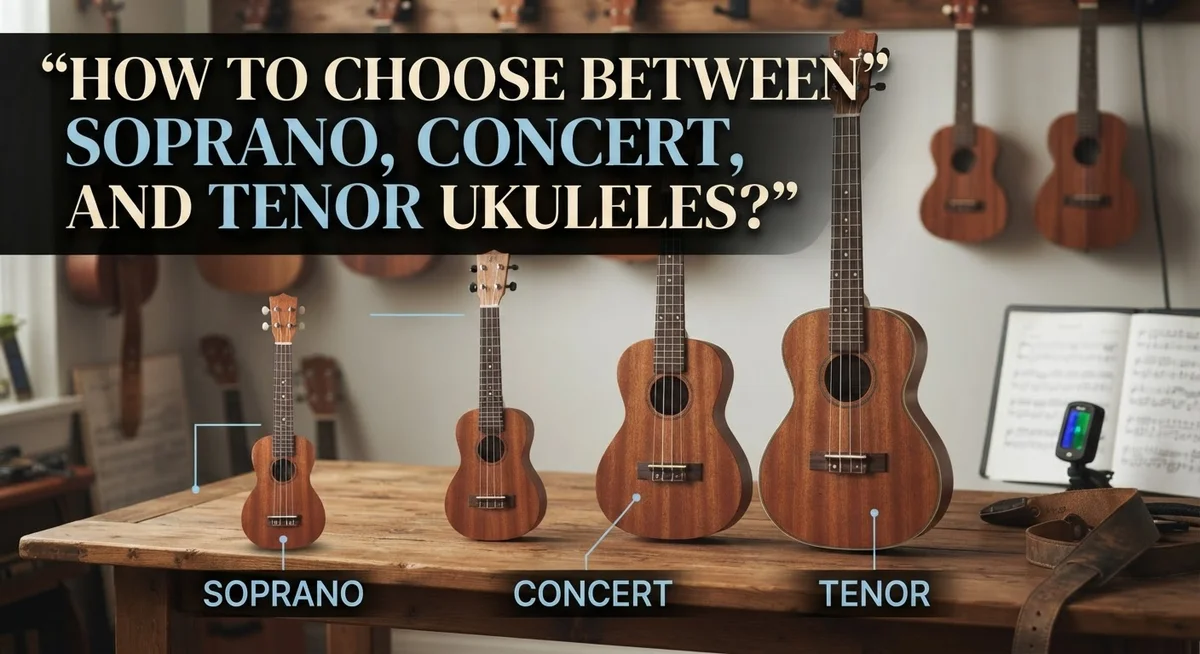
How to Choose Between Soprano, Concert, and Tenor Ukuleles?
Picking your first ukulele feels exciting. But then you see three sizes on the shelf. Soprano, concert, and tenor all look similar, yet they sound and feel different.
This choice matters more than you think. The size you pick affects comfort, tone, and how much you enjoy playing.
Soprano ukuleles are small and bright. They fit easily in your hands and travel bag. Concert ukuleles offer a bit more room and a fuller tone. Tenor ukuleles are the largest of the three, with a rich, deep sound that many performers love.
So how do you choose the right one for you?
This article breaks down the real differences between these three ukulele sizes. We will cover body size, scale length, tone quality, and weight.
You will also learn how hand size and comfort play a role in your decision. We will bust some common myths too, like the idea that smaller ukuleles are always easier for beginners.
By the end, you will know exactly which size fits your hands, your style, and your musical goals.
In a Nutshell
Here’s a quick rundown to help you decide fast.
-
Soprano ukuleles are the smallest and brightest. They fit small hands well and stay easy to carry around.
-
Concert ukuleles offer a mid size body. They have a wider neck and a slightly fuller tone than soprano models.
-
Tenor ukuleles are the largest of the three. They give you a rich and deep sound with more frets for higher notes.
-
Scale length changes with each size. Concert necks run about an inch longer than soprano, and tenor necks stretch even further.
-
Hand size and comfort matter a lot. Bigger hands often feel better on a concert or tenor body.
-
Your tone preference should guide your pick too. Bright and cheerful sounds point to soprano, while warm and full sounds point to tenor.
-
All three sizes work fine for beginners. There is no single best size, so personal comfort and sound preference decide the winner.
Understanding the Three Ukulele Sizes
The three main ukulele sizes each have distinct physical and sonic qualities. Understanding these differences helps you make an informed choice based on your needs.
Soprano ukuleles measure about 21 inches long overall. They produce the brightest, most traditional ukulele sound. The scale length runs approximately 12 to 13 inches from nut to bridge. These instruments weigh very little, making them easy to hold for long periods. Sopranos fit well in small hands and work great for travel since they take up minimal space.
Concert ukuleles are roughly 23 inches long with a scale length around 15 inches. This extra length gives them a louder, warmer tone compared to sopranos. The neck sits wider, which some players find more comfortable for finger placement. Concert models weigh slightly more than sopranos but remain quite portable. They split the difference between the bright soprano sound and the deeper tenor tone.
Tenor ukuleles reach about 26 inches in length with a scale around 17 inches. These instruments deliver the fullest, richest sound of the three sizes. Tenors have more frets, allowing you to play higher notes without running out of fingerboard space. The larger body produces more volume and resonance. Tenors suit players with bigger hands who want a more substantial feel.
All three sizes use standard tuning, so learning songs transfers easily between them. The main trade offs involve physical comfort versus tone quality. Smaller hands may struggle with tenor neck width. Larger hands might find soprano necks cramped. Tone preference varies by player too. Some love the bright, cheerful soprano sound. Others prefer the warm, mellow concert tone or the powerful tenor voice.
Your choice depends on three factors: hand size, desired tone, and how you plan to play. Consider visiting a music store to hold each size. This hands on experience reveals which one feels right for your body and ears.
Body Size and Scale Length Explained
Body size and scale length work together to shape how a ukulele feels and sounds. Understanding these two features helps you pick the right instrument for your hands and ears.
Scale length refers to the distance from the nut to the bridge on the fingerboard. Soprano ukuleles have a scale around 12 to 13 inches. Concert models stretch to about 15 inches. Tenor ukuleles reach approximately 17 inches. This extra length matters more than you might think.
A longer scale means the frets spread out more on the neck. Your fingers travel further between notes. Players with larger hands often find concert and tenor models more comfortable because they have more room to move. Smaller hands may feel cramped on a tenor, while a soprano fits snugly.
Body size affects both weight and tone production. Soprano bodies are compact and light. You can hold them for hours without fatigue. Concert bodies add thickness and depth. Tenor bodies are noticeably larger and heavier. This extra mass creates deeper, fuller resonance because the wood vibrates more freely.
The relationship between body and scale length influences playability too. A larger body with a longer scale lets your fingers settle into a natural position. Cramped fingers lead to sore hands and slower progress. Conversely, a body that feels too big can tire your arms quickly.
Tone quality also connects to these measurements. Soprano ukuleles produce bright, punchy sounds because their smaller chambers vibrate faster. Concert models offer warmer tones with better volume. Tenor ukuleles deliver rich, resonant sounds that project well in group settings.
Before you decide, hold each size if possible. Notice how the neck feels in your grip. Listen to how each one sounds when played. Your hands and ears together will guide you toward the best fit for your musical journey.
Comparing Tone and Sound Quality
Tone and sound quality differ noticeably across the three ukulele sizes. Understanding these differences helps you pick the instrument that matches your musical ear.
Soprano ukuleles produce bright, punchy tones. The small body creates high frequencies that cut through clearly. This cheerful sound works well for traditional Hawaiian music and pop songs. Many players love the distinctive “ting” quality sopranos deliver. The trade off is less volume and depth compared to larger sizes.
Concert ukuleles sit in the middle ground for tone. They offer warmer sound than sopranos while keeping some brightness. The larger body projects more volume without losing clarity. Concert models work for various music styles because they balance treble and bass frequencies better. You get a fuller sound without the heavy bass response of tenor models.
Tenor ukuleles deliver rich, deep tones. The biggest body produces the most resonance and low end frequencies. Tenors sound almost like small guitars with their warm, mellow quality. They project loudly and work great for solo performances. The deeper sound suits jazz, blues, and fingerstyle playing styles.
Your personal tone preference matters most here. Do you want bright and cheerful sounds? Pick soprano. Do you prefer balanced warmth? Concert fits that need. Do you crave deep, resonant tones? Tenor delivers that experience.
Listen before you buy if possible. Many music stores let you play different sizes. This hands on approach reveals which tone appeals to your ear most. Watch online videos of each size too. Hearing real performances helps you imagine how each sounds in practice.
Remember that all three sizes use standard tuning. Your musical knowledge transfers between them easily. The tone difference comes purely from body size and construction, not from different note systems. Choose based on the sound that makes you excited to play.
Matching Ukulele Size to Hand Size and Comfort
Your hand size plays a crucial role in which ukulele feels right for you. Smaller hands generally work better with soprano or concert models, while larger hands often prefer concert or tenor options.
The soprano’s narrow neck means your fingers stay closer together. This setup works well if you have smaller or medium hands. Your fingers won’t stretch as far between frets, making chord changes easier at first.
Concert ukuleles offer a wider neck than sopranos. The extra space gives your fingers more room to move around. This size bridges the gap nicely if you’re between small and large hands.
Tenor ukuleles have the widest neck of the three. Your fingers spread out more on the fingerboard. This matters if you have larger hands or find the soprano neck cramped.
Physical comfort directly affects how long you’ll practice. An uncomfortable ukulele sits in the closet. A well fitted instrument gets played regularly.
Weight also impacts comfort during long practice sessions. Sopranos weigh the least, making them easy to hold for extended periods. Tenors weigh more, which some players find tiring but others appreciate for stability.
Test different sizes before deciding if you can. Hold each one like you’re about to play. Your arms should rest naturally, and the neck shouldn’t feel too thin or thick for your grip.
Consider your body size too, not just hand size. A very small person might feel awkward holding a tenor. A tall person might find a soprano looks disproportionate.
The best fit feels natural and encouraging. When a ukulele fits well, you’ll want to pick it up more often. This leads to better practice habits and faster progress. Your comfort level directly influences your enjoyment and success as a player.
Step-by-Step: How to Decide Which Size Fits You
Start by measuring your hand span. Stretch your hand open and measure from your thumb tip to your pinky tip. Most people with hands under 7 inches find sopranos comfortable. Hands between 7 and 8 inches work well with concerts. Larger hands typically prefer tenors.
Next, sit down and hold each size if possible. Rest the ukulele on your lap like you’re playing it. Your fingers should reach the frets without stretching too far. Your thumb should wrap around the neck comfortably without strain.
Pay attention to how the neck width feels in your hand. A soprano neck is narrow and compact. A concert neck is noticeably wider. A tenor neck gives you the most space between strings. Cramped fingers lead to frustration and mistakes during practice.
Consider your body size alongside hand measurements. A very small person might feel overwhelmed holding a tenor. A tall person might find a soprano feels toy-like. Balance matters between the instrument and your frame.
Think about your tone goals. Do you want bright, punchy sounds or deep, warm tones? Sopranos deliver that classic “uke” brightness. Tenors produce richer, fuller sounds. Concerts split the difference. Your tone preference should guide your choice as much as comfort does.
Test your reach on the fretboard. Can you comfortably press down on the first fret? Can you stretch to reach higher frets without your hand cramping? Limited reach on a tenor might frustrate you. Excess space on a soprano might feel pointless.
Try playing simple chords on each size. Feel how naturally your fingers form shapes. Notice how quickly your hand tires. An instrument that feels natural encourages more practice time.
Remember that no single size works for everyone. The best choice combines comfortable hand fit, pleasant tone for your ears, and a body size that matches your frame. Take time testing different sizes before deciding.
Sizing Considerations for Beginners vs Performers
Your hand size and body frame matter more than you might think when picking a ukulele. A soprano fits snugly in smaller hands, while a concert or tenor works better if you have larger fingers or a bigger reach.
Beginners sometimes assume they need the smallest size. This is wrong. Your comfort determines how much you’ll actually play. If a soprano feels cramped, you’ll avoid practicing.
Measure your hand span from thumb to pinky when stretched out. Hands under 7 inches typically feel comfortable on sopranos. Hands between 7 and 8.5 inches suit concerts well. Hands over 8.5 inches often prefer tenors.
Body size also plays a role. Sit with each ukulele and notice how it rests against your chest. The instrument should feel balanced, not awkward. A tenor might look silly on a very small person, but it still works if it feels natural to hold.
Weight matters during long practice sessions. Sopranos weigh the least, making them ideal if you tire easily. Concerts weigh slightly more. Tenors are noticeably heavier and can cause arm fatigue for some players.
Test your fretboard reach on each size. Can you comfortably stretch between frets? Can you access higher notes without straining? Your arm length affects this more than hand size alone.
Performers often choose tenors because the larger body and wider neck give them more room to move. Beginners benefit from whatever size lets them play comfortably for 30 minutes straight without pain.
The real secret is this: comfort builds confidence. When your ukulele fits your body properly, you practice more. When you practice more, you improve faster. Size preference is personal, not universal. What works beautifully for someone else might feel wrong for you. Trust your own physical feedback when testing different sizes.
Common Mistakes When Choosing a Ukulele Size
Many beginners make the same mistakes when picking their first ukulele size. Understanding these errors helps you avoid them.
The biggest mistake is assuming size doesn’t matter for beginners. Many people think all three sizes work equally well for learning. This isn’t true. Your physical comfort directly impacts how often you practice and how quickly you improve.
Another common error is ignoring tone preference entirely. Some players want bright, punchy sounds. Others prefer warm, deep tones. If you choose a soprano just because it’s small, but you hate how it sounds, you’ll lose motivation fast. Take time to listen to each size before deciding.
People often overlook their own hand size and body frame. A soprano might feel cramped if you have larger hands. A tenor could feel unwieldy if you’re petite. Neither situation is ideal. Physical fit matters more than you think for long term enjoyment.
Many players also skip the testing phase. They order online without playing the instrument first. This leads to disappointment when the ukulele arrives. If possible, visit a music store and hold each size. Feel the neck width. Try playing a simple chord. Your hands will tell you what feels right.
Some beginners assume the concert size is always the safe middle ground. While it’s versatile, it might not match your specific needs. Maybe you want the portability of a soprano or the rich sound of a tenor.
Finally, people sometimes choose based on what looks cool rather than what works for them. A beautiful tenor means nothing if it’s too heavy for comfortable playing sessions.
The real key is matching the ukulele to your hands, your ears, and your goals. Take your time with this decision. Test different sizes when you can. Your comfort and happiness matter most.
Final Thoughts
Choosing between soprano, concert, and tenor ukuleles comes down to you. Your hands, your body, and your ears all play a part in this decision.
There’s no universal winner here. Each size offers something different, and that’s actually good news.
Soprano ukuleles give you that classic bright sound. They’re small, light, and easy to carry anywhere.
Concert ukuleles offer a balance. You get a bit more room on the neck without a huge jump in size or weight.
Tenor ukuleles bring depth and richness to your playing. Many performers love them for exactly this reason.
Think about how each one feels in your hands. Think about the sound that makes you smile.
Your comfort should guide your final choice. A ukulele that feels awkward will collect dust in a corner. One that feels right will become your daily companion.
Don’t rush this decision. Take time to try different sizes when you can.
Visit a music shop if possible. Hold each ukulele. Strum a few chords. Notice how your hands and arms feel.
If you can’t test them in person, read detailed size guides and watch comparison videos. These resources help you understand what to expect.
Remember that beginners can succeed with any of these three sizes. Your commitment to practice matters more than which size you pick.
That said, matching the ukulele to your body and taste makes practice more enjoyable. And enjoyable practice leads to steady progress.
Trust your instincts here. If a certain size feels natural when you hold it, that’s a strong sign.
Sound matters too. If you love a warm, deep tone, lean toward tenor. If you want something bright and cheerful, soprano might suit you better.
In the end, the best ukulele size is the one that makes you want to play more.
Frequently Asked Questions
Can I use all three sizes with standard tuning?
Yes. Soprano, concert, and tenor ukuleles all use the same standard tuning (G-C-E-A). The tuning stays consistent across sizes. What changes is the sound quality and how the notes resonate through the larger or smaller body.
Which size is easiest for small hands?
The soprano works best for smaller hands. It has the shortest scale length and narrowest neck. Your fingers need less stretch to reach the frets. However, concert sizes can work too if you have medium hands and practice regularly.
Does a larger ukulele always sound better?
No. Sound quality depends on build materials and craftsmanship, not just size. That said, tenor ukuleles produce deeper, richer tones because of their larger body. Soprano ukuleles offer bright, crisp sounds that many players prefer. The “better” sound is your personal choice.
What if I’m a beginner and unsure which to pick?
Start by considering your hand size and the tone you want. If you have small hands, try soprano first. If you prefer warm, full sounds, lean toward concert or tenor. Visit a music shop to hold all three sizes. Playing each one for a few minutes helps you decide based on comfort and tone preference.
Can I switch sizes later if I change my mind?
Absolutely. Many players own multiple sizes. Switching later is completely normal as your skills grow and your preferences develop. Your first choice doesn’t lock you in forever.

Dillip is the founder and lead writer at PlayItLoudFinds.com, where he combines his deep passion for music with hands-on experience to deliver honest, in-depth reviews and comparisons of musical instruments, gear, and accessories.


