Boss GT-1000 Core Review: Tone, Routing, Build and Verdict for Guitarists
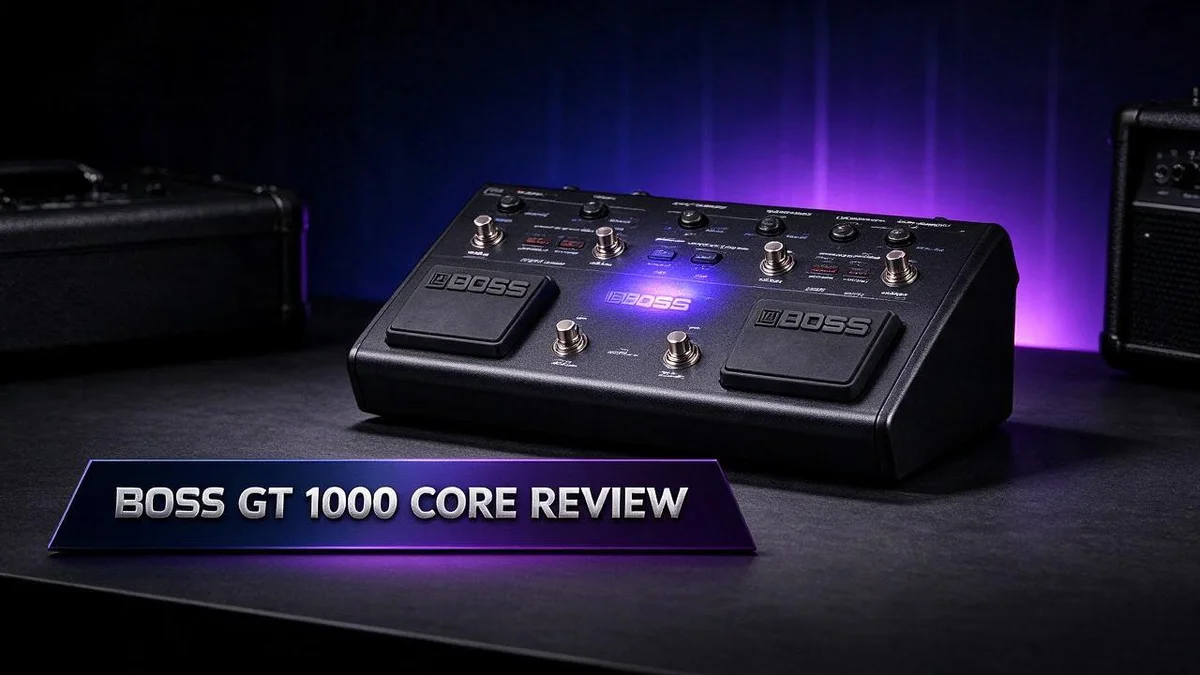
Are you looking for one pedalboard that does it all? The Boss GT 1000 Core might be the answer you need. It packs 24 simultaneous effects blocks and two amps into one unit. That means you can build almost any tone you can imagine.
Guitarists often praise how it sounds. The 32 bit AD and DA converters deliver clear, rich audio. Many players also say it feels solid and professional under their feet.
Of course, this unit has a learning curve. New users may need time to explore the menus and routing options. Some reviewers also feel the connected app could be more intuitive.
In this review, we break down the key features, the pros and cons, and how it compares to the Line 6 HX Stomp. Keep reading to see if the GT 1000 Core fits your rig.
In a Nutshell
- Many effects in one unit. The Boss GT 1000 Core offers 24 effects blocks. Two of those blocks run amp models at the same time.
- Flexible signal routing. You can arrange effects in series or parallel. This lets you build chains that fit your playing style.
- Precise audio conversion. The 32 bit AD and DA converters handle your signal with high precision. Your tone stays clear from input to output.
- Hands on control. Six knobs and a master volume sit on the front panel. You can adjust your tone quickly during a live set.
- Built to feel professional. The build quality feels sturdy under your feet. It feels like gear made for the stage and the studio.
- A companion app with room to grow. The connected app could improve. One reviewer feels its interface needs to be more intuitive.
Amp and Effects Tone Quality

- AIRD (Augmented Impulse Response Dynamics) technology delivers natural feel and optimized...
- Unmatched sound quality with 32-bit AD/DA, 32-bit floating-point processing, and 96 kHz sampling...
Last update on 2026-11-23 / Affiliate links / Images from Amazon Product Advertising API
The tone quality starts with the amp models. The GT 1000 Core packs two amps into one unit.
You can set one for clean chords and another for crunchy leads. That means you can build a full band sound from a single box.
Because the amps sit inside the signal chain, you control how they interact with effects. Place a drive pedal before an amp to push it harder. Place a reverb after the amp to add space.
Small changes in order can shift the character of your tone quite a bit.
Effects sound clean and natural. Modulation, delay, and reverb blocks add texture without muddying the core signal.
Many players keep settings subtle. Others push effects into bold, experimental territory. Either way, your tone stays clear.
Knob control matters for tone too. The front panel knobs let you adjust key settings fast.
You can tweak gain or tone while playing. That quick access helps you find your sound during soundcheck.
Dynamics respond to your playing. Light picking gives you a soft, warm sound.
Hard strumming pushes the amp into a fuller, more aggressive response. This touch sensitivity makes the unit feel alive under your fingers.
Presets keep your favorite tones ready. Save a clean setting for ballads and a heavy setting for rock songs.
Recall each one with a single press when you need it.
Start with flat settings and build up. Add only what your song needs.
This habit keeps your guitar voice intact. It also avoids muddy results that hide your playing.
Cabinet simulation shapes the final sound too. Good cabinet choices make the tone feel full in a mix.
Try a few options before you settle on one. Your ears will tell you which one fits best.
Recording players often check tone through headphones. Compare your sound with a favorite record.
Small tweaks can close the gap between your rig and the track you love. This method keeps your ears honest.
Take time with each setting. Good tone rarely happens by accident.
Signal Routing Flexibility
Signal routing decides how your sound travels through the unit. With numerous routing options, you can build chains that fit almost any style. Think of effects as building blocks you can stack in new ways.
Separate paths let you run two ideas at once. Some players keep airy effects on one branch and a heavier drive on another. This keeps delicate textures apart from tight riffs.
Routing also rewards patience. The steep learning curve shows up most here, because so many choices sit in front of you. Start with a simple path, then add one block at a time.
Take it slowly, and your ears will guide you. Each new block teaches you how the sound reacts. Keep notes on routes that inspire you, so you can revisit them later.
Live players gain a real advantage. You can plan a signal path for each song before the gig. Then you switch between songs without rebuilding your sound from scratch.
Routing also helps you shape tone within a mix. When you split effects, you can adjust one branch without touching the other. That control keeps your overall sound balanced as you add new layers.
Think about your playing style before you design routes. A rhythm player may want a steady chain that never changes. A lead player might want quick switches for solos. Match the layout to your habits.
The Line 6 HX Stomp is the rival many guitarists compare against. Try both if you can, and notice which routing layout feels natural in your hands.
Try a quick test today. Build a simple chain with one delay and one drive. Then move the delay to a separate branch and listen closely. Small experiments like this reveal what the routing can really do.
Good routing pays off over time. Each session teaches you more about your sound. Soon, building a new chain feels like second nature.
Build Quality and Stage Feel
Stage feel starts the moment you plug in and step onto the stage. Your gear should respond quickly and stay out of your way.
Live gigs bring rough floors, tight spaces, and fast song changes. A unit that feels dependable under your foot helps you focus on the music.
Think about how the unit fits on your board. Leave room for cables, a power supply, and a few extra pedals you might need.
The layout gives you a clear path from one control to the next. You can reach the switches without looking down for long.
Stage feel also depends on your habits. Practice pressing each footswitch until the motion feels natural. Build that muscle memory before the gig.
Arrange your presets in song order. Your set then flows from one section to the next without long pauses.
Test your setup in the actual room where you play. Loud stages, dim lights, and crowd noise change how you hear your tone.
Check your output level at full volume. Adjust it until your sound cuts through the mix without harsh peaks. Small tweaks make a big difference.
Bring a backup plan for every gig. Pack spare cables, a short patch cable, and a simple chain you can run in a pinch.
Pros who play often say confidence comes from repetition. Rehearse with your setup before each show, and the stage will feel like home.
Stage movement matters too. Many players move across the stage, and the unit should stay put on your board during every step.
Consider your setup height and angle. A comfortable angle lets you see the display and reach each switch while you play.
Good stage feel also means reliable sound. Power your gear with a steady supply and avoid loose connections between units.
Finally, trust your ears. If a preset feels right in the room, keep it. Your audience hears your playing, not your gear.
Top 3 Alternatives
Looking for a different pedal option? Three strong choices can fit your playing style. Each one offers its own feel and features. Read on to see which one suits you best.
Line 6 Helix Stomp

- Utilizes the same HX Modeling as Helix
- More than 300 effects and models from Helix, M-Series, and legacy Line 6 products

Last update on 2026-11-23 / Affiliate links / Images from Amazon Product Advertising API
The Line 6 Helix Stomp is a compact floor processor with a large display. It gives you many amp and effect models in one box. Players who love detailed tone shaping often choose this unit. It also works well for recording with its built-in USB audio interface.
Zoom G6

- SEVEN EFFECTS PLUS AMP MODELING SIMULTANEOUSLY – Chain up to 7 effects plus amp modeling...
- FOUR PLAY MODES ON A 4.3" TOUCHSCREEN – Navigate 240 patches across four play modes with an...
Last update on 2026-11-23 / Affiliate links / Images from Amazon Product Advertising API
The Zoom G6 keeps things simple. It packs amp models, effects, and a built-in tuner into a small pedal. Beginners find the controls easy to learn. It is a good pick if you want a quick setup without much fuss.
HeadRush MX5

- Next-Generation Guitar and Bass Multi-FX and Amp Modeler - 4" responsive color touchscreen and a...
- 700+ Premium Emulations of vintage, modern and boutique acoustic and electric guitar and bass gear...
Last update on 2026-11-23 / Affiliate links / Images from Amazon Product Advertising API
The HeadRush MX5 focuses on clean, modern sound in a small footprint. It offers high quality amp and effect models that sound lively on stage. Gigging musicians appreciate how fast they can switch presets. It suits players who want strong tone that travels easily.
Each option above brings something different to the table. Think about how many effects you need and where you plan to play. Choose the pedal that matches your goals. Your next sound is waiting.
Editor App and Software Setup
Setting up the editor app is your first real step. Many players skip this part at first. Still, it gives you deeper control over the unit.
Start by visiting the official Boss website. Download the editor software that matches your computer.
Install it before you connect the unit. Early setup saves time later.
Next, connect the GT-1000 Core to your computer with a USB cable.
Keep the cable short and sturdy. Loose connections cause dropouts.
Power on the unit first. Then open the app and wait for detection.
If the app does not find the unit, try another USB port.
Check the firmware before you edit. An old version can cause odd behavior.
Update the unit so the app and hardware match. Then restart both devices.
Close other music software during setup. Conflicts can block the connection.
Your screen layout takes some getting used to. Give it a few sessions.
A reviewer notes that the connected app interface could feel more intuitive.
Take notes as you learn each menu. Small notes help you remember the paths.
Use the bigger view to your advantage. The app shows parameters more clearly than the small display.
You can drag, click, and adjust values with ease. Spotting problems gets faster too.
Look for a mouse or trackpad that feels comfortable. Precise clicks help with small values.
Save your work often. Export your patches to your computer as backup files.
This protects your sounds if the unit ever resets. Store copies in a folder you can find.
Use clear file names that mention the song or style. Future you will be grateful.
Read the release notes before each update. New versions can change menus.
Practice editing at home before any rehearsal. A calm session builds confidence.
Keep the editor open while you learn. Click around and explore freely.
Run a quick connection test. Open a patch and change one value in the app.
Watch the change happen on the hardware. If it responds, your setup works.
Pros and Cons
Pros
- The sound is clear and full across clean and driven tones.
- It feels solid and well built, like a pro-level tool.
- The controls become easy to use once you learn the basics.
- It packs 24 effects blocks, including two amps.
- You get plenty of room to customize your tone.
Cons
- The learning curve can feel steep for new players.
- Many options may overwhelm players who want quick changes.
- Deep menus can slow your setup before a gig.
- Beginners may need extra time to feel confident with it.
Who Should Buy It
The GT 1000 Core fits guitarists who want one unit for their whole tone. It suits players who now carry a crowded pedalboard and want fewer cables to manage.
Gigging guitarists are the first group to consider. Many players already own a row of stompboxes. This unit can replace much of that setup with one box.
Home players can benefit too. Bedroom guitarists who record at a desk get amp and effect models in one place. They can shape many sounds without buying a full stack of gear.
Session players who switch clients often also benefit. Each preset can store a complete tone for a specific song or project. That saves time between takes.
Hands on players may enjoy the layout. The unit offers six knobs plus a master volume. That gives you one more knob than the Line 6 HX Stomp. Players who dislike digging through menus often appreciate that direct access.
Pedal purists may prefer another route. Many players love the feel of single effects that they switch on and off with one press. If that feel matters most to you, a traditional pedal chain might suit you better.
Players who want a simple sound should look elsewhere. A single overdrive or delay pedal can stay simple for years. You may not need this much depth for one favorite tone. Simple tones often feel more fun for daily practice.
If you plan to build most presets on a computer, expect extra time for that job. Your workflow may take longer at first. Set aside a calm weekend so you can explore without stress.
Ask yourself three quick questions. Do you play songs that need many different tones? Do you want fewer boxes on the floor?
Are you ready to invest time in learning a deep system? If you answered yes to all three, this unit could be a strong match.
Still unsure? Try the unit in a shop before you decide. Bring your own guitar and cable to the test. Play through several presets and see if the menus feel manageable. Your gut feeling matters.
Final Verdict
The final verdict is clear. The GT 1000 Core earns a spot on the shortlist for players who want one unit to handle their whole sound. It rewards the time you spend learning it.
Think of it as a trade. You gain depth and flexibility. In return, you invest some effort up front.
The Line 6 HX Stomp is the rival most players compare it with. Put the two side by side and ask which workflow feels natural to you. Both can cover plenty of ground, so your playing habits should break the tie.
Players who already love their current setup may not feel a strong push to switch. A new unit makes the most sense when your existing gear starts to hold you back.
Think about your gig routine as well. If you switch sounds often during a set, the GT 1000 Core keeps everything in one place. Fewer cables also mean a quicker setup on stage.
Consider your next year too. If your band plans new songs with different sounds, a flexible unit can grow with you. A simple pedal board might feel fine today but feel tight later.
The non-Core version also deserves a look. Compare its features with the Core before you decide. Choose the version that matches how you plan to use it on stage or at home.
Here is the short answer. If you want a pro feel, lots of tone options, and room to grow, this unit delivers. If you want quick changes with almost no menu digging, you may want to wait or try simpler gear.
Our advice is simple: test it before you commit. Try it at a local shop or with a friend’s setup. Hands on time tells you more than any spec sheet ever could.
Your playing style should guide the decision, not hype. Pick the gear that makes practice more fun and gigs less stressful. Trust your ears and your routine. The right choice will feel obvious once you play it.
Frequently Asked Questions
How long does it take to learn the GT 1000 Core?
Most players often need a few weeks of short, regular practice. Start with one preset and change only one block at a time. This approach keeps the learning curve manageable and builds confidence fast.
Can the GT 1000 Core replace my whole pedalboard?
It can cover most tones for many players. You still need to plan your signal chain, though. Some players keep one favorite drive pedal on the floor for instant access during a song.
What should I check before a gig?
Save your presets in the order you play them. Name each one after the song it serves. Test every patch at gig volume in the room where you perform. This step prevents surprises when the lights come on.
Do I need the connected app?
The app helps with editing, but it is not required. You can make most changes right on the unit. Save the app for larger edits when you have time to sit at a desk.
Which player should choose the Line 6 HX Stomp instead?
Players who want a simpler, more compact unit may prefer the Line 6 HX Stomp. The GT 1000 Core suits players who want deeper routing and more blocks. Your gig style and comfort with menus should guide the choice.

Dillip is the founder and lead writer at PlayItLoudFinds.com, where he combines his deep passion for music with hands-on experience to deliver honest, in-depth reviews and comparisons of musical instruments, gear, and accessories.