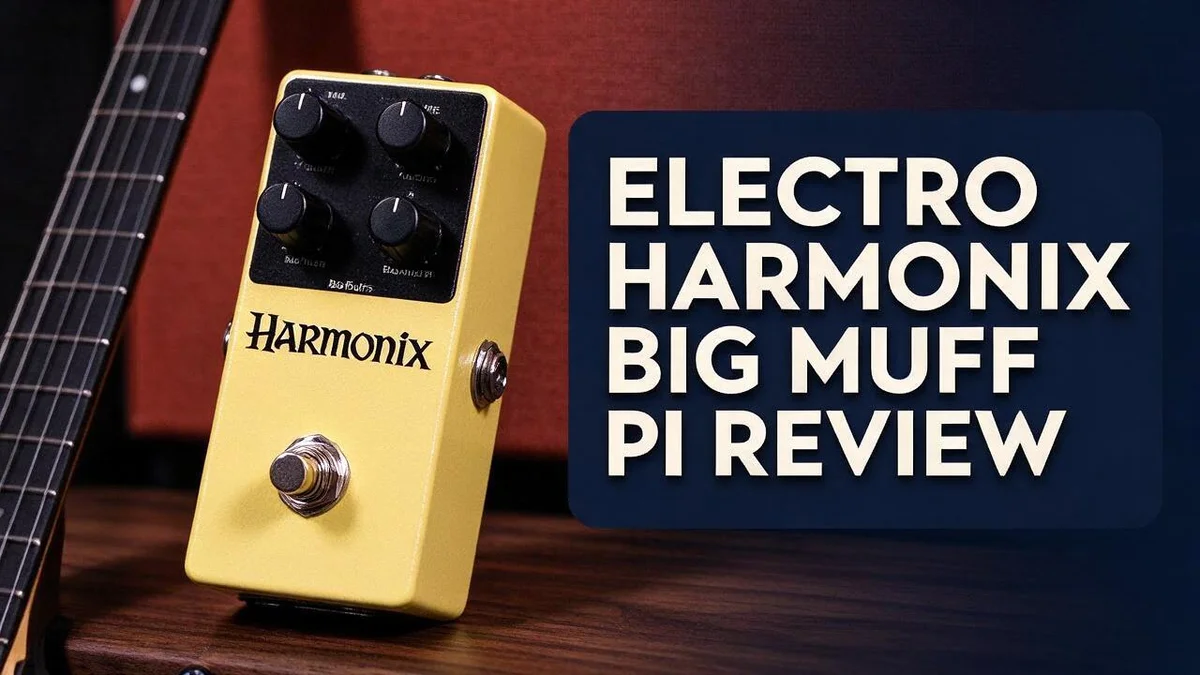
Electro-Harmonix Big Muff Pi Review: Fuzz Tone, Sustain, Versions and Alternatives
Every guitarist wants a tone that roars. The Electro Harmonix Big Muff Pi has delivered that roar for decades. It remains one of the most famous fuzz pedals ever made.
Its thick, massive sustain makes solos sing. Notes stretch out and feel full. Players use it for crushing rhythm riffs, smooth lead lines, and wild walls of noise.
Newer versions also bring more control. Many 2014 models add a foot switchable MIDS section, Frequency and Level knobs, a Noise Gate, and adjustable Attack. The compact Nano fits tight pedalboards, while the rugged Ram’s Head model handles life on the road.
Is this classic fuzz right for your rig? Keep reading to see how it sounds, how it feels, and how it compares with rivals like the EQD Hoof and the Way Huge Swollen Pickle Fuzz MkII.
In a Nutshell
- Built to last: The Ram’s Head model has a rugged body that handles heavy use. Gigs, rehearsals, and road trips rarely faze it. Players who gig often will appreciate that solid feel.
- Easy on a crowded pedalboard: The Nano version has a tiny frame that saves valuable floor space. It fits tight setups where bigger fuzz units cannot. Small rigs suddenly feel complete.
- Forgiving for lead players: The fuzz feels smooth under the fingers. Soloists can bend notes without harsh edges. Each phrase stays clear and easy to shape.
- A famous sound with a long history: Many players know this circuit by heart. Its tone shaped countless rock and doom records over the decades. Hearing it once makes the reputation clear.
- Simple to master: The controls stay easy to follow, even for beginners. You can dial in a usable sound in minutes. Less time fiddling means more time playing.
- Test before you commit: Sources hint at downsides but do not name them. Try one in person to judge the fit. Your own ears will tell you the truth.
Fuzz Tone and Sound Character

- Singing sustain with attitude
- Crushing distortion
Last update on 2026-11-22 / Affiliate links / Images from Amazon Product Advertising API
The Big Muff Pi creates a fuzz that feels dense and full. Its sound sits in a different place than many overdrive or distortion pedals.
The character comes from its two gain stages. Each stage pushes the signal hard, so notes blur into a rich wall of harmonics.
The scooped midrange gives the tone its signature shape. Mids drop out while lows and highs stay loud. This creates a hollow, almost metallic bite that cuts through a dense mix.
Heavy riff players often enjoy this bite. Chords stay clear, and low notes hold their shape instead of turning to mud.
The guitar volume knob changes the character. Rolling it back cleans the sound into a softer breakup tone. Players can shape grit with their picking hand, which opens a useful range from crunch to full fuzz.
Pickups and amps shape the final voice. Single coil pickups sound brighter and thinner, while humbuckers add weight. Clean amps let the fuzz shine, and cranked tube amps add extra bloom.
The tone knob sets the top end. Dark settings suit bass heavy styles, while bright settings help the sound cut through a live stage.
Dial in your sound with patience. Small changes in each knob can shift the feel a lot. Spend time with different guitars and amps to find your favorite setting.
Clean power keeps the noise low. Hum and buzz can hide in the fuzz, so a quality power supply helps a lot. A good signal chain keeps the tone tight and clear.
Playing dynamics also change the result. Soft picking brings out the smooth side, while hard strumming pushes the fuzz into a rowdy wall of sound. Try both approaches before you decide.
Ease of Use and Controls
The control layout keeps things simple. Most players find the main knobs in plain view right away. Each one has a clear job, so you can set a sound without reading a long manual.
Newer models add helpful extras. The 2014 versions include a foot switchable MIDS section, so you can change the midrange character during a live set.
Frequency and Level controls offer more precision. They let you shape the midrange without guessing. Dial them in slowly, and you will hear each move clearly.
The Noise Gate tames unwanted hiss. It keeps the quiet gaps between notes clean. This helps a lot when you play heavy riffs or stop mid phrase.
Attack shapes how each note starts. The adjustable Attack control changes how quickly a note swells into the fuzz. A fast setting feels punchy, while a slower setting feels soft and bloomy.
Beginners can start small. Use the main knobs first and leave the extras alone. Add one new control at a time, so you learn what it does.
Try a simple test routine. Set every knob to the middle position. Then play the same riff and move one control at a time. Notice which change you like most.
Test in a full mix. Check the pedal with a band too. A sound that works alone may feel different with drums and bass.
Pedal feel matters on stage. A firm footswitch gives clear feedback, so you know the pedal is on. This helps during loud shows when stage lights glare.
Labels help you stay organized. Write down your favorite settings on a notepad or in a phone app. Then you can recall a tone in seconds.
Keep the fun in the process. Fuzz is about feel, so trust your ears. The controls exist to help you chase the sound you hear in your head.
Build Quality and Durability
Gigging guitarists need gear that survives daily wear. The Big Muff Pi generally holds up well. Good build quality is one of its strongest traits.
Pedals take a beating in gig bags, car trunks, and crowded stages. Each stomp hits the switch hard. Each knob gets turned again and again. A solid pedal keeps working through all of it.
The metal casing protects the circuit inside. It shields delicate parts from bumps and drops. Players can toss it into a bag without much worry.
The footswitch sees the most wear. Its action feels firm and clear under the foot. Over months of use, that firm action helps the bypass stay reliable.
Jacks and power inputs matter too. Cables plug and unplug many times during a session. Solid mounts keep connections steady, so you avoid crackles during a song.
Pedalboard setups add more stress. Tape and cheap adhesives can leave sticky residue or pull off paint. Mount the pedal with care. Sturdy pedalboard hardware keeps the unit stable during heavy stomping.
Internal construction also plays a role. Clean solder joints and quality components reduce the chance of failure. Owners who keep their pedal clean and dry often enjoy years of service.
Storage habits make a difference as well. Keep the pedal away from moisture, heat, and dust. Use a padded bag when you travel. Simple care keeps the finish looking fresh.
Wear still appears over time. Paint can chip, and jack nuts may loosen. Check the hardware now and then. Quick checks catch small issues before they grow.
Few players ever need a repair. Still, a local technician can service the pedal if a problem appears. Keep the manual and proof of purchase in a safe place for warranty questions.
Overall, this fuzz feels built for real playing. You can trust it on stage, in the studio, and on tour. Treat it well, and it will reward you for many years.
Top 3 Alternatives
Looking for a different fuzz or distortion sound? These three pedals each bring their own character to your rig.
Dunlop Fuzz Face

- Meticulously faithful reproduction of Jimi's 1969-70 Dallas Arbiter Fuzz Face
- Built around the toneful BC108 silicon transistor. Carefully matched to the original specs

Last update on 2026-11-22 / Affiliate links / Images from Amazon Product Advertising API
Warm, vintage fuzz is the main draw here. This pedal gives a sweet, gritty tone that many blues and classic rock players love. It also responds well to your guitar volume knob. Roll the volume down for a cleaner sound.
Its simple controls make it easy to use. Small changes to the fuzz knob can shift the sound a lot.
Pro Co RAT

- Used as a primary distortion, it excels at arena rock rhythm tones and soaring leads
- Nails that sweet spot where a tube amp goes from sparkly clean to warm overdrive
Last update on 2026-11-22 / Affiliate links / Images from Amazon Product Advertising API
This pedal offers sharp, aggressive distortion with plenty of bite. It works well for hard rock, punk, and heavy riffs. The filter control lets you shape the tone from dark to bright.
Many players use it for both lead and rhythm parts. Its tone is easy to dial in, so beginners can get strong sounds fast.
Electro-Harmonix Nano Big Muff

- Compact, pedalboard friendly footprint
- Extensive EQ control: Bass +/14dB of cut or boost, Mid +/15dB and Treble +/10dB
Last update on 2026-11-22 / Affiliate links / Images from Amazon Product Advertising API
This compact fuzz delivers thick sustain and a huge wall of sound. Players who want massive, sludgy tones often reach for it. It suits doom, stoner rock, and experimental music.
It fits easily on crowded pedalboards. Its small size also makes it a smart choice for gigging musicians who travel light.
Sustain and Lead Performance
The Big Muff Pi is famous for its massive sustain. Once you pick a note, it rings out for a long time. This makes single notes and chords feel alive and open. Many players love how the tone keeps going.
Lead playing benefits the most from this sustain. A held note can bloom and hang in the air. Solos sound big, even when you play slowly and with space. Each bend feels deliberate and full.
The lead feel is smooth and forgiving. Bends glide without harsh edges. Vibrato sounds rich and steady. Even quick runs stay controlled when your picking stays clean.
Singing lines come through with ease. Your phrasing shows up clearly in the mix. Small changes in pick attack still matter, so stay expressive. The pedal rewards players who play with feel.
Too much sustain can turn into mud. Pull back the gain a little and let the note decay on its own. This keeps the lead clear and cutting in a band mix.
Slow ballads and epic solos suit this sound well. Players can stretch phrases and let each note breathe. Fast passages may blur at high settings. Try a middle position first. Bridge sections also benefit from the extra length.
Try this simple test. Play one note, hold it, and listen closely to the fade. Repeat the test at several knob positions. Your ears will find the sweet spot quickly.
Pair it with a clean boost for more lift. A compressor can even out the sustain. Keep the sound tidy for solos. Experiment with pick style and see what happens. Try it with a warm amp for smooth leads.
Overall, the sustain makes lead guitar sound open and emotional. Long notes feel full and inspiring. Many guitarists find it encourages bolder, more expressive solos.
Versions, Features and Value
The Big Muff Pi comes in several versions. Each one suits a different kind of player. Knowing the lineup helps you choose the right fit.
The Nano model stands out for its tiny size. It fits on crowded pedalboards where space runs short. Players who travel often or run many pedals tend to love it.
On a small board, the Nano leaves room for a delay or reverb. Fewer cables and less clutter also make setup faster.
The Ram’s Head version keeps the classic circuit in a traditional housing. It suits players who want a familiar, full-size feel. Many guitarists choose it for their main rig.
The OpAmp version offers a different path. It uses another internal design, so it sounds a bit different from the original. Playing both side by side is the easiest way to hear that gap.
Mixing versions can also open new sounds. A Nano and a full-size model can share a setup for different songs. You can switch between them as the set demands.
Alternatives also deserve a look. The EQD Hoof, Thorpy FX Fallout Cloud, Way Huge Swollen Pickle Fuzz MkII, and Green Russian each bring their own fuzz personality. Exploring them can help you find a surprise favorite.
Research notes mention big trade offs, but they do not name them. That means hands-on testing matters more than any spec list. Try the pedal in your own setup before you commit.
Choosing the right version comes down to your playing needs. Think about board space, stage habits, and the sound you want. A pedal that fits your routine gives you the most enjoyment over time.
Finally, the best fit beats any extra feature. Simple controls and a classic sound often do the job well. Trust your ears, and the right choice will feel obvious.
Pros and Cons
Pros
- Iconic fuzz tone that many rock players recognize right away.
- Simple controls help players find a sound fast.
- Several versions let players choose the size that fits their board.
- The fuzz blends well with many guitar and amp setups.
- Lead parts sound thick and expressive without much effort.
Cons
- Heavy fuzz can blur fine note detail in busy chords.
- The thick sound does not suit every genre.
- Full size models take up more space on a crowded pedalboard.
- Research does not name the main trade-offs, so test one before you decide.
Who Should Buy It
The Big Muff Pi suits guitarists who want a fuzz pedal that feels alive under their fingers. It also fits players who want a tool they can use right away.
Beginners often pick this pedal for a simple reason. They can dial in a big tone without reading a long manual. Most settings make sense after a few minutes of play.
Solo artists who write their own songs can build a signature sound around it. The pedal gives each track a bold identity that stands out.
Touring musicians who swap rigs often appreciate the flexibility too. The pedal slots into many setups with little fuss.
Collectors enjoy comparing the different versions side by side. Each model brings its own personality to the lineup.
Songwriters who record at home can use it to shape demos quickly. A bold sound helps a rough idea feel finished.
Fans of vintage rock sounds will feel right at home. Many of them chase that gritty, wall of tone for their recordings.
Clean tone chasers may want to look elsewhere. This pedal adds plenty of grit, so it rarely suits pristine rhythm parts.
Jazz players usually need a different path. Warm, clean tones matter more in that style than heavy saturation.
Country and folk players often prefer a lighter touch. A pedal this bold can overpower gentle acoustic arrangements.
Before you buy, bring your own guitar and amp to a shop. Your setup changes how the pedal responds, so test it with your own gear.
In short, this pedal fits players who chase bold and expressive fuzz. Players who need pristine clean tones should keep browsing.
Final Verdict
In short, the Big Muff Pi is a strong pick for fuzz lovers. It brings massive sustain and a thick voice that cuts through a band mix.
The pedal rewards players who take time with it. Small changes to the Frequency and Level knobs can shift the tone a lot.
Think of the pedal as a tool for expression, not a quick fix. Your guitar, amp, and playing style will shape the result.
Gain and tone choices matter a lot. Pair it with a clean amp for a crisp edge, or a cranked amp for a wall of sound.
Some players will hear a bit of harshness at high settings. Others will find that edge exciting, so trust your ears.
Do not expect a perfect fit for every rig. The pedal sounds best when it matches the goal you have in mind.
Check return options at your local shop if you can. Playing it through your own setup tells you more than any review.
Bottom line: the Big Muff Pi has a sound and legacy that make it a lasting choice.
Long term, the pedal holds up well for gigs and studio work. It stays a dependable companion for years of playing.
Final thoughts for buyers: pick the model that fits your goals. Then give the pedal real time in your hands.
Fuzz fans who love a thick, singing tone will find plenty to enjoy here. Anyone seeking a subtle overdrive should explore other options.
Expect a learning curve for dialing in the sound. The first session might feel messy, but patience usually pays off.
Keep notes on your favorite settings so you can return to them fast. A simple log helps you build a sound over time.
In the end, it is a fuzz pedal worth hearing for yourself.
Frequently Asked Questions
Which version should a beginner start with?
Most new players pick a standard model first because the controls stay simple. *Start with the basic layout, then explore the extra features later. Once you know how the fuzz reacts to your fingers, the added options will make more sense.
What does the MIDS switch do?
Newer 2014 models add a footswitchable MIDS section. Turn it on for a thicker, more vocal lead tone. Leave it off when you want a bigger wall of fuzz for rhythm parts. Switching between the two settings during a song can also help a solo stand out.
How do the Frequency and Level knobs work?
The Frequency knob shifts the tone from dark and deep to bright and cutting. The Level knob sets the output volume. Raise the Level if the pedal sounds quiet next to your clean tone. Small changes often make a big difference, so move the knobs slowly.
Does the Noise Gate reduce hiss?
Yes, the Noise Gate on 2014 models cuts background noise when you stop playing. Set it so it closes between notes. Keep the threshold low so your sustain still rings out before the gate closes. Test it with a quiet room and a loud amp to hear the difference.
Where should I place the pedal on my board?
Place the Big Muff after your tuner and any wah pedal. This order keeps your tuning accurate and your wah sweep clear. Many players then add a drive pedal before the Big Muff for a layered sound. Try a few spots, because each setup changes the final tone.

Dillip is the founder and lead writer at PlayItLoudFinds.com, where he combines his deep passion for music with hands-on experience to deliver honest, in-depth reviews and comparisons of musical instruments, gear, and accessories.