Nux Amp Academy Review: Tone Models, Features, and Who It’s Best For
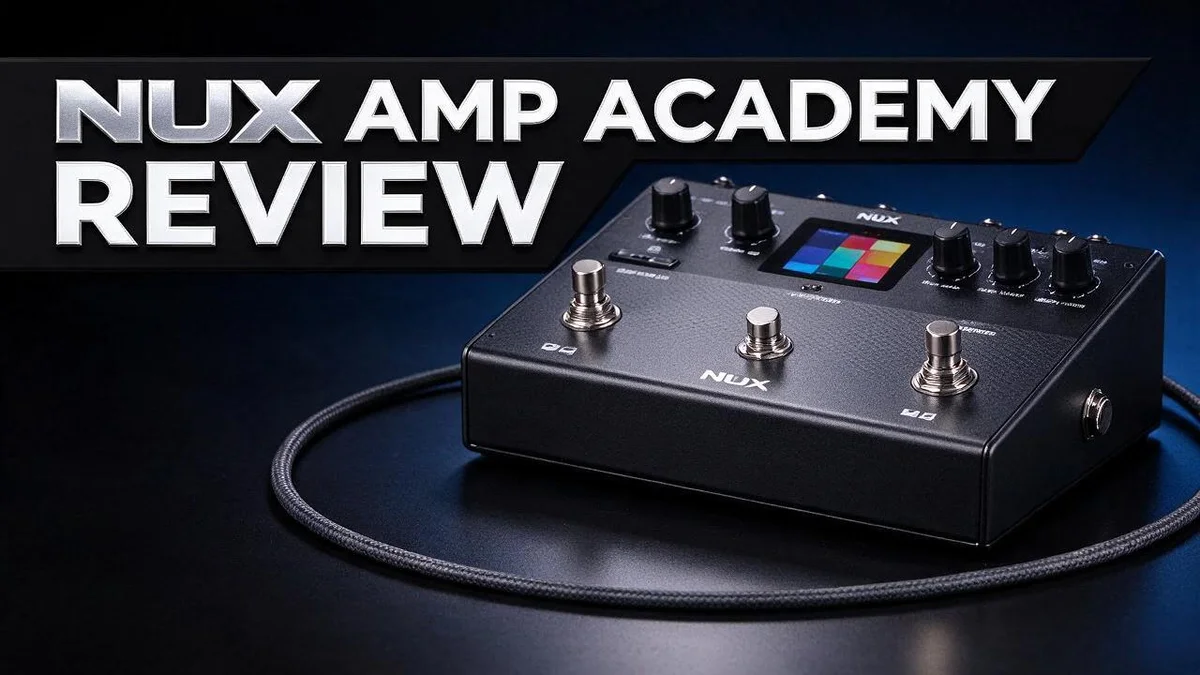
Are you looking for a small amp that sounds big? The Nux Amp Academy might be the pedal you need. It packs six tube amp models into a compact stompbox.
Guitarists love how it sounds. Reviewers often say it sounds great on stage and at home. The tone feels rich and lively.
Under the hood, you get a fast NXP RT DSP chip running at 1000 MHz. It also offers 1024 sample IRs, an FX loop, an XLR DI output, and USB recording. Neutrik jacks and Alpha pots add a solid feel.
Players can use it as a clean pedal platform or pair it with a real amp. The low gain drive adds attack without harshness. The latency sits at just 1.2 ms, so your playing feels tight.
Some users find the feature list a bit overwhelming. Still, the depth pays off for serious players.
In a Nutshell
-
Six tube amp models fit inside one compact stompbox. You get a wide range of classic tones without hauling a full rig to every gig or rehearsal.
-
Impulse response slots hold 1024 samples each. You can also load outside IR files, which opens up extra cabinet options for recording and live use.
-
An FX loop, XLR direct out, and USB recording give you flexible routing. You can send your tone to a mixing desk, a PA system, or your computer with very little setup.
-
Low gain drive adds attack and bite without harsh edges. Rhythm players and lead players both find it useful for shaping a clean or slightly crunchy sound.
-
Vox style models are missing, so players chasing that chimey British tone may need to look at another option. Everything else in the lineup covers a broad mix of styles.
-
Same brand alternative: the NUX NGS-6 offers a similar effects loop, while the MK1 Firebox works as a replacement choice if you want a different feature set.
Tone Models and Sound Quality

- Add Amp Academy to any pedal chain and connect to a mixer or PA system for excellent tone, control...
- Connect Amp Academy directly to a recording interface for excellent guitar tone, instantly, without...
Last update on 2026-11-23 / Affiliate links / Images from Amazon Product Advertising API
Tone is what most players care about first. This section looks at how the Amp Academy sounds day to day.
The clean and crunch sounds feel natural. Your guitar keeps its voice even when you add gain.
Signal quality starts with the converters. The unit uses a TI PCM1840 ADC and an AKM AK4454 DAC. These parts help keep the audio clear from input to output.
Pick attack shows up clearly. Lighter strumming stays clean and open. Heavier picking pushes the sound into a fuller crunch.
Latency plays a role in feel. At 1.2 ms, your notes respond almost instantly. That quick reply helps the tone feel alive under your fingers.
Cabinet voice matters a lot too. Loading outside IR files lets you swap speaker voicings for new flavors.
Reports show no clear weak spots in the sound. Still, every player hears tone differently. Test it with your own guitar and speakers.
Genre fit shows up in your playing style. Blues players often chase warm breakup tones. Rock players usually want more push and grit.
Clean tones deserve attention too. Jazz and pop players often want smooth, even sound. Clean settings can handle both styles.
Your sound changes from room to room. Try it through speakers and headphones to compare.
Volume matters for tone. Playing louder often shifts the feel of the amp. Quieter practice may sound thinner for some players.
Pedal order can change tone too. Try the Amp Academy at different spots on the board. Each spot gives a new flavor.
Practice tip: Start with simple settings. Change one knob at a time.
Listen with fresh ears after each change. Your ears guide the best choice.
Good tone comes from practice. The Amp Academy gives you plenty to explore. Every guitar and room sounds a little different.
Bottom line: the tone suits players who want variety from one compact box.
Build and Controls
Build quality matters more than many players expect. You plug in, stomp on, and turn this pedal every night, so the hardware needs to handle that wear.
The Nux Amp Academy uses Neutrik jacks for its connections. These jacks show up often in professional audio gear. They grip cables firmly, which helps keep the signal path steady during a busy set.
Next are the Alpha pots. These knobs sit under your fingers when you dial in a sound. Smooth turning lets you make tiny changes in the middle of a song.
Knob feel matters on a dark stage too. You may need to adjust your sound without looking down. Clear, easy to reach controls help you do that.
Good controls also help you work fast. You can nudge gain or level without fumbling. Quick, confident adjustments keep your focus on playing instead of the pedal.
Plan your cable runs before you mount the unit. Think about where the inputs and outputs face on your board. Clean, short runs make your rig easier to service later.
Cable quality matters here as well. Strong patch cables protect your connections from wear. A weak cable can cause crackles, even when the jacks are solid.
Leave some space around the knobs, too. Your fingers need room to reach them mid song. Crowded boards slow you down and make small changes harder.
Practical tip: Set your knob positions before a gig. Take a photo of your favorite settings. This saves time during soundcheck and keeps your tone consistent from night to night.
Spend a few minutes with the controls in person if you can. Your own hands will tell you how it feels.
Recording and Expandability
Recording is a strong side of the Nux Amp Academy. Many home players want to capture ideas quickly. This unit makes that process simple.
Direct recording works well for demos and practice sessions. You plug in your guitar, connect USB, and hit record in your software. No microphone or quiet room is needed.
The XLR output adds another option. You can send a balanced signal to an audio interface or mixer. This helps when you want a cleaner path into a studio setup.
Latency matters during recording too. The unit runs at 1.2 ms, so monitoring feels responsive. Most players will not notice any delay while tracking.
Tip: Record a short riff with two different settings. Compare the takes in your software. Small changes often show up clearly on playback.
Clean recordings also help when you mix later. You can add reverb or EQ on your computer. This keeps the amp sound flexible for each song.
Expandability starts with the FX loop. You can add outboard pedals, such as a delay or reverb, after the amp sounds. This lets you grow your rig over time.
Third party impulse responses open another path. You can load outside files into the open slots. Over time, you can build a library for different songs and styles.
Your setup can also grow beyond one box. Many players start with the unit alone. Later, they add an interface, a looper, or a second pedal board, and the stompbox fits into that plan easily.
Write down your settings after each good take. This makes it easy to recreate the sound later. Keep notes simple so you can find them fast.
In short, the recording options suit home studios and songwriters. The expansion options keep the unit useful as your setup grows.
Top 3 Alternatives
If you want other choices for guitar tone, these three options stand out. Each one offers amp models, effects, and presets for home recording.
BIAS FX 2

- 126 Effects & Multi-Instrument Support – Offers 126 preset effects for electric guitar and bass...
- Built-in Tools & Wireless Footswitch Ready – Features a built-in tuner, 10 metronome patterns...

Last update on 2026-11-23 / Affiliate links / Images from Amazon Product Advertising API
Positive Grid built BIAS FX 2 for realistic amp and cabinet modeling. Players can shape sounds with a clear layout and detailed controls. Its amp designs focus on authentic feel and response. It runs as a standalone app or as a plugin inside your DAW. Great for players who want deep tone control.
AmpliTube 5

- PLUG AND PLAY SIMPLICITY ON EVERY DEVICE: Adjustable gain dial, which works with its built-in...
- CONNECT TO AMPLIFIER WITHOUT ADDITIONAL ACCESSORIES: iRig 2's new 1/4” output jack lets you use...
Last update on 2026-11-23 / Affiliate links / Images from Amazon Product Advertising API
IK Multimedia created AmpliTube 5 with a large library of amps, pedals, and microphones. The drag and drop signal chain makes building tones simple. Users can also explore virtual mics and room placement options. It works well for beginners and experienced musicians. Strong choice for creative sound design.
Helix Native

- Offers the same award-winning HX Modeling as Helix Floor, Helix Rack and Helix Native
- Uncompromised Helix sound quality with 123 dB of dynamic range
Last update on 2026-11-23 / Affiliate links / Images from Amazon Product Advertising API
Line 6 developed Helix Native to bring its hardware sound into software. Users get amp models, cabinets, and effects that feel familiar to Helix owners. Presets give quick starting points for many genres, from rock to jazz. The plugin fits easily into most recording setups. A smart pick for home studios.
Test each option with your own guitar before you decide. Listen closely, compare the tones, and pick the one that suits your style.
Latency and Playing Feel
The Nux Amp Academy runs at 1.2 ms of latency. That figure matters more than most players expect. Your fingers feel the response before your ears catch it.
Digital modelers can feel sluggish when delay builds up. Players often notice this first during fast runs and tight chords. The Academy keeps that gap small, so playing feels more direct.
Quick response changes how you pick. A light touch gives a clear answer. A harder strike responds with more force. This dynamic response helps you shape each phrase.
The NXP RT DSP handles the processing load. Its 1000 MHz speed gives the modeling engine room to work. Less strain means fewer hiccups when you push the gain.
Feel also depends on your own timing. A small delay can throw off a drummer or a backing track. Test the unit at the same tempo you use at home.
Try this simple check. Play a fast scale with a metronome. Listen for any smear between notes. If the notes stay crisp, the feel should suit your style.
Playing feel also comes from how the amp handles chords. Open chords should ring out without mud. Single notes should stay tight and focused.
Some players prefer a looser, vintage bounce. Try the tube models first and see which one fits your hands best.
Feel improves with practice too. Your hands adjust to the response over a few sessions. Give the unit a fair trial before you judge it.
Monitoring plays a role as well. Hear the sound through good speakers or headphones. Your ears judge the response best when the sound stays clear.
Keep the signal path simple when you check feel. Fewer effects make it easier to notice any delay. Add effects one at a time after you confirm the response.
Low latency also makes the Academy a strong pick for live work. Your playing stays lively even on a busy stage. Good feel keeps you in the moment.
Ease of Use and Learning Curve
New players often ask how fast they can start. The Nux Amp Academy keeps the first steps simple. Its six tube amp models sit in one stompbox, so you do not face a wall of separate gear.
The feature count can feel big at first. Some users find the options pretty overwhelming during their first week. That feeling is normal. You do not need every function on day one.
Pick two or three favorite models. Use them for a few days. This small focus helps your ears and your hands learn the box. Over time, the rest of the options start to make sense.
Give yourself a short daily routine. Ten minutes a day works better than one long session. You build muscle memory without getting tired. Each session adds a new skill, like saving a preset or switching between models.
Writing notes helps too. Name each preset after the song or the sound it covers. A clear label saves time later when you need a tone in a hurry.
The learning curve flattens quickly. Most beginners feel comfortable after a few sessions. The layout stays consistent, so each new step builds on the last one. Your confidence grows as your controls become familiar.
Guitarists who already know stompbox pedals will adapt fast. The box works like a pedal board in one unit. If you mostly want clean tones or a quick gain boost, you can use those basics first and explore later.
Try a simple first hour. Plug in, play a few chords, and move through the six models one by one. Note which one feels right for your style. Then come back the next day and see what you remember.
Stay patient with the menus. Some functions sit a level deeper than you expect. Look up the manual pages when you get stuck. A small search often clears up a confusing step.
Pros and Cons
Pros
– Reviewers say it sounds great.
– Low gain drive adds attack without harshness.
– It works as a clean pedal platform.
– It also pairs well with real amps.
– The stompbox form fits tight pedalboards.
Cons
– It has no Vox-style models.
– Fans of chimey British tones must look elsewhere.
– Published drawbacks are rare, so try it in person.
– Heavy high gain players may want more drive range.
Who Should Buy It
Some guitarists will get the most from this pedal. Think of players who love to experiment. Every knob and model invites a fresh idea.
Cover band players may also find it handy. One unit can cover many classic tones. That means fewer pedals to carry on stage.
Traveling musicians stand to gain too. The unit fits easily into a gig bag. You can practice in a hotel room without a loud amp.
Players who already own a real amp can use it as a tone layer. It adds new color to a familiar setup. Many owners like this flexible approach.
Music teachers often look for gear like this. Students can hear many styles without owning a full rig. This helps them explore faster.
Worship team guitarists who change sounds between songs can find this useful. Quick switches keep the service moving. The focus stays on the music.
Hobbyists who play for fun also fit the profile. Short sessions after work can feel rewarding. Small wins keep motivation high.
Guitarists who chase only one clean sound may not need it. A simple amp might serve them better. Match the gear to your goals.
Ask yourself three quick questions first. Do you play at home, on stage, or on the road? Do you enjoy tweaking tones for hours? Honest answers will point you toward the right choice.
Players who want one box for many styles will feel right at home. This pedal rewards curiosity and steady practice. It can grow with your skills over time.
Read more reviews from players with a similar style. Their experiences can highlight details that specs miss.
Final Verdict
Is the Nux Amp Academy the right pick for you? Our final take points to a strong yes for many guitarists. The answer still depends on your goals and daily habits.
The Academy works best as a tone hub rather than a single sound tool. Many players use it to store ideas, test styles, and build a flexible rig. That role matters more than any one preset.
Think about the sound you chase most. If your favorite tones come from one amp, the Academy becomes a playground for experiments. If you enjoy switching moods often, it turns into a daily companion.
Recording deserves a closer look too. The USB connection lets you capture riffs straight into your computer. Songwriters often find that handy when a melody appears at midnight.
Plan your setup before you commit. Decide whether the pedal will live on a board, a desk, or in a studio. Your space shapes how often you will reach for it.
Gig days call for preparation. Build a short patch list for each set so you can move between songs quickly. Clear notes keep your focus on the music.
Future growth matters as well. Outside impulse responses let you expand the sound library as your taste changes. That openness keeps the pedal useful for longer.
Compare it with its siblings before you decide. The NUX NGS-6 fits players who care most about the effects loop. The MK1 Firebox suits those who want a different replacement path.
Our verdict in one sentence: The Academy rewards curious players who want many sounds in one compact box.
Players who want one dependable tone may prefer a simpler option. That choice is perfectly fine and often saves frustration later.
Keep your expectations realistic. No single pedal replaces years of practice, good technique, and a properly set up guitar. Treat the Academy as a helpful partner, not a magic fix.
Frequently Asked Questions
Can I load my own impulse responses?
Yes, the Academy supports third-party IR loading. It handles 1024-sample IRs, so you can shape your sound with cabinet files from other makers. This lets you change the speaker voice without changing the amp models.
How responsive is the Academy when I play?
The Academy has a latency of 1.2 ms. That speed keeps your playing feeling tight, even when you stack effects. Most players will notice little delay between pick and sound.
Can I connect outside effects pedals?
Yes, the unit includes an FX loop. You can place your favorite delay or reverb pedals inside the signal chain. The NUX NGS-6 from the same brand also offers an effects loop, so you can compare the two setups.
Can I send a direct signal to a mixer or interface?
Yes, the Academy includes an XLR DI output. You can run a clean, direct signal to a sound board or recording interface. This helps when you play live or record at home.
How does it compare with the MK1 Firebox?
Reviewers list the MK1 Firebox as a replacement option. Compare the jack types, IR support, and effects routing of both units before you choose. Your gig plans and tone goals should guide the final pick.

Dillip is the founder and lead writer at PlayItLoudFinds.com, where he combines his deep passion for music with hands-on experience to deliver honest, in-depth reviews and comparisons of musical instruments, gear, and accessories.