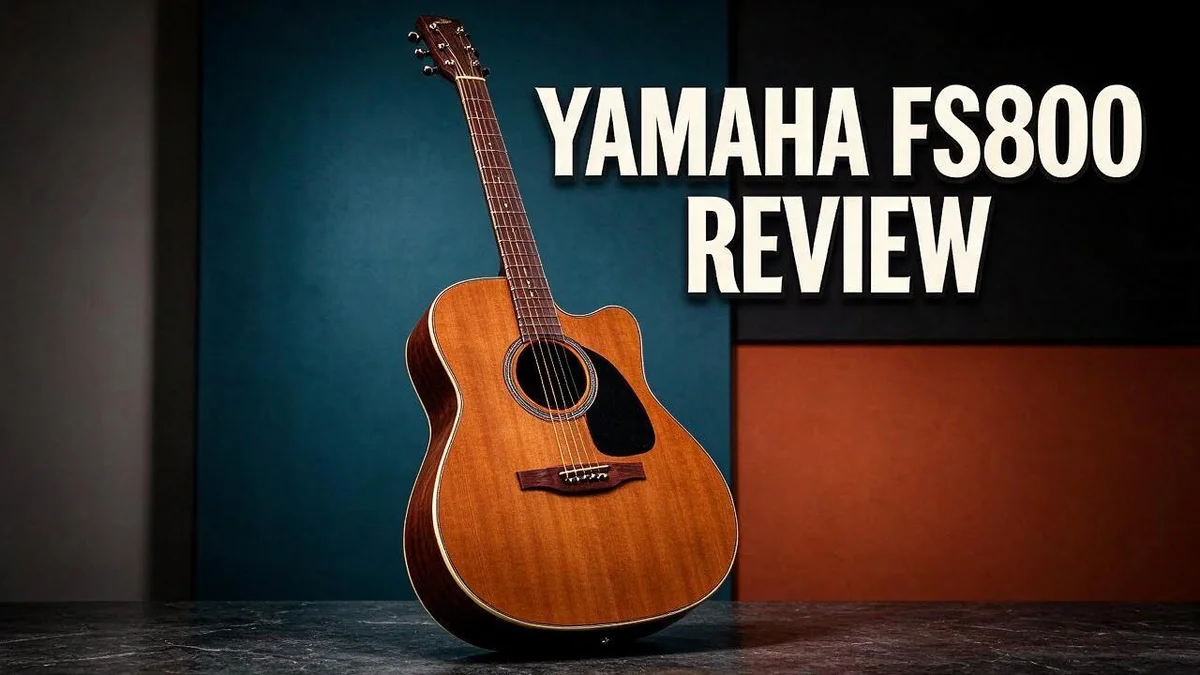
Yamaha FS800 Review: Solid Spruce Concert Guitar Tone, Playability and Verdict
Looking for a guitar that feels comfortable and sounds rich? The Yamaha FS800 might be the answer you need. It features a concert body that fits many players well.
Many guitarists want an instrument that is easy to carry. They also want a guitar that still delivers a full tone. This model checks both boxes.
Its solid Sitka spruce top gives the guitar a clear, balanced voice. The scalloped X bracing helps the top vibrate freely. The 25 inch scale length feels easy to hold and play.
In this review, you will learn how the FS800 sounds, feels, and performs. You will also see where it shines and where it falls short. Keep reading to decide if this guitar fits your playing style.
In a Nutshell
-
Concert body and thinner low end: The FS800 uses a concert body that suits smaller frames. Its slim shape favors the midrange, so bass notes feel lighter. Players who want deep, thumping bass may notice this right away.
-
Scalloped X bracing: This bracing pattern helps the top stay sturdy under steady playing. Owners often say the guitar holds up well over the years.
-
Shorter 25 inch scale: The short scale length makes fretting feel easier. Beginners often enjoy the gentler string tension. Chord shapes can also feel less stretched for smaller hands.
-
Brighter voice than the FG800: The FS800 sounds brasher than its sibling model. Some players love that bite and clarity, while others want more warmth. Try both guitars side by side before deciding.
-
Easy upgrades for better results: Many owners swap the nut and saddle for bone. This simple change can improve tone and playability. A good setup can make the guitar feel even better.
-
Strong rivals to compare: The Taylor GS Mini and Alvarez AD30 are popular choices. Each one offers a different tonal character.
Build and Tonewood

- Solid sitka spruce top
- Nato back & sides

Last update on 2026-11-25 / Affiliate links / Images from Amazon Product Advertising API
Good build quality tells you a lot about how a guitar will age. The FS800 starts with a solid top, and that choice shapes almost everything you hear.
The thinner body pushes the low end forward. This trait can be a pro or a con. Bass lovers often enjoy it, while players who want more midrange warmth may notice a leaner feel.
Scalloped bracing also changes how the top responds. Because the wood flexes more freely, the guitar answers light touches quickly. Gentle strumming and fingerpicking both sound lively.
The standard neck sits in the middle of the range. Most hands settle into it with little effort. This makes the FS800 a smooth step up from a beginner model.
Solid wood keeps changing over time. Many players say the tone opens up after months of regular play. Keep the guitar in a stable room, because humidity swings can stress the top.
Wood choice also affects daily use. Solid tops usually resist dents better than laminate tops. They also respond more to playing style, which many players value.
When you test one in a shop, look closely at the build. Check that the frets feel smooth and the neck sits straight. Tap the top lightly and listen for a clear, ringing tone.
Pay attention to the bridge area too. A clean glue joint and a firm bridge show good craftsmanship.
Think about your playing goals before you buy. A solid build suits players who plan to keep the instrument for a long time. If you want a guitar that grows with your skills, this build is a strong match.
Simple construction brings honest sound. The FS800 rewards careful play and gentle care. Its build may not look flashy, but it gives you a dependable base for years of practice.
Sound Profile and Tone
The tone is the main reason players choose this guitar. It sounds clear, focused, and pleasant to hear. Each string rings with defined detail, and chords stay clean.
The midrange carries most of the character. It gives the guitar a direct and honest presence, whether it plays alone or sits inside a band. Open chords ring out with a bright, lively shimmer when strummed.
Fingerstyle players may enjoy the sound even more. Individual notes separate well, so melodies sound crisp and easy to follow.
The guitar responds quickly to changes in touch. Light picking sounds soft and gentle, while firm strumming brings out a bigger voice. This dynamic range helps the guitar suit many styles. Folk, pop, and songwriter music all fit naturally.
Attack matters too. The guitar responds quickly to the pick, so each note starts with a clean edge. Sustain feels moderate rather than huge. Notes fade in a natural way that suits most songs.
Strings play a big role in the final sound. Lighter sets often feel brighter, while heavier sets add warmth and fullness. Players can experiment until they find their favorite balance. Small changes in strings or picks can shift the voice noticeably.
Room acoustics matter as well. A bright space may make the guitar sound sharper. A softer room can calm the highs and make the tone feel smoother.
Recording with this guitar is easy too. Microphones capture its clear tone with little fuss, so home demos often sound polished and full of life.
Players who want a heavy, thunderous sound should test it closely. The tone leans toward clarity rather than massive bass punch.
Try the guitar in a few settings before deciding. Play it at home, in a music store, and through a friend’s amplifier if possible. Listen to how each chord and note feels in different spaces.
Overall, the tone feels honest and musical. It rewards players who listen closely to every nuance.
Playability and Neck Comfort
Playability decides how often you pick up a guitar. A neck that feels good in your hand invites longer practice sessions. The FS800 gives many players that comfortable feel from the first strum.
The neck shape plays a large role in daily comfort. Your thumb rests behind the neck with a relaxed grip. Your fingers then move across the strings with less strain.
Hand size changes how the neck feels. Players with smaller hands often find the grip easy to hold. Players with larger hands may want to test the neck for a few minutes before deciding.
Long practice sessions reveal comfort problems quickly. Sore fingertips and tired wrists show up after an hour or two. Take time to play scales, chords, and simple songs before you commit.
Chord changes feel smoother when the neck stays steady under your hand. Barre chords ask more from your index finger. A comfortable neck keeps that pressure manageable.
Action affects playability as much as the neck itself. Low string height helps your fingers press notes with less effort. Ask the shop to check the action at the twelfth fret before you buy.
Humidity can change how a guitar plays over time. Wood expands and shrinks with the weather. Keep your guitar in a steady room to protect the neck.
String choice also shapes the feel under your fingers. Lighter gauges press down easily but may buzz if the setup is uneven. Heavier gauges feel firmer but may tire beginners faster.
Upper fret access matters for lead lines and melodies. Reaching the higher frets should feel natural and not stretched. Test a few high notes while you sit in your normal playing position.
Your posture also affects comfort. Rest the body against your side and keep the neck angle relaxed. Good posture helps your hands stay loose and ready to play.
Top 3 Alternatives
Looking for a great acoustic guitar? Each guitar below offers something different, so you can find the right fit.
Yamaha FG800
No products found.
The Yamaha FG800 is a popular choice for beginners and players who want a steady, reliable sound. It has a solid spruce top that gives a bright tone. Many players enjoy its comfortable neck and easy playability.
It also holds its tune well. This makes practice sessions smooth and fun. Beginners can learn chords without fighting stiff strings. The action feels low and easy on the fingers.
Fender CD-60S

- READY-TO-PLAY BUNDLE: Austin Bazaar bundle includes essential accessories so you can start playing...
- WARM MAHOGANY TONE: Solid mahogany top with mahogany back and sides; this construction delivers a...
Last update on 2026-11-25 / Affiliate links / Images from Amazon Product Advertising API
The Fender CD-60S offers a warm, rich sound with a full body. It has a sturdy build that handles daily strumming well. Players who love classic folk and pop tunes often pick this guitar.
Its smooth finish and balanced feel make it easy to hold for long sessions. It works well for home practice and small gigs alike.
Epiphone DR-100

- One right-handed Fender Alternative Series Dreadnought Acoustic Guitar – a perfect beginner guitar...
- Backed by a 75 year legacy of quality and craftsmanship -- the FA Series has all the sound and style...
Last update on 2026-11-25 / Affiliate links / Images from Amazon Product Advertising API
The Epiphone DR-100 brings a bold, punchy tone to every chord. Its dreadnought body projects strong volume, so it fills a room. Strummers and singers both enjoy its lively response.
Players who want a fuller voice will appreciate it. It suits open chords and bold strumming patterns. This guitar also looks great. Its classic design suits any stage or living room.
Upgrades and Setup Tips
Setup work can make the FS800 feel even better in your hands. Small changes often bring big results. Start with the parts that touch the strings most.
Owners often recommend upgrading the nut and saddle to bone. Bone helps the strings ring with more clarity and sustain. It also gives the notes a crisp edge that many players enjoy.
A bone upgrade works best when a skilled tech fits it. Poor fitting can cause buzzing, so ask for clean slots and a snug seat.
After any nut or saddle work, check the intonation. Play the harmonic at the twelfth fret, then press the same string at that fret. If the two notes match, the guitar stays in tune up the neck.
New strings need a little care before you judge the sound. Stretch each string gently by pulling it away from the fretboard. This helps the strings settle and hold tune much faster.
Tuning stability depends on the winding too. Wind each string neatly around the post. Leave two or three wraps for a firm, steady hold.
Check the truss rod once each season. A slight turn can correct a neck that bows forward or backward. Make tiny adjustments only, and wait a day between turns. If you feel unsure, ask a tech to help.
Keep a small setup kit nearby. Include a string winder, a soft cloth, a tuner, and a few spare strings. A soft gig bag also protects the body from bumps during travel.
Write down every change you make. Record the string brand, nut material, and saddle height. This note helps you repeat your favorite setup later.
Small steps add up fast. Take your time and enjoy the process. Your FS800 will reward the care you give it.
Value and Price Positioning
The FS800 sits in a clear spot within the Yamaha lineup. It offers a solid Sitka spruce top, which many players expect only from higher models. Compare it with the FG800 and the difference becomes clear. The FS800 sounds brasher and more direct.
That brighter edge suits some styles very well. Strummers who want their rhythm to cut through a group often prefer it. Players who gig with a band may find it helps the guitar stand out.
The thinner body pushes more energy into the low end. Some players love that bold bass response. Others find the bottom too loud in a mix, so taste plays a big role.
Competitors show the range of choices available. The Taylor GS Mini is a common reference point for compact guitars. The Alvarez AD30 offers another route for players who want a different feel.
The Yamaha FS820 is the next model to compare. Look at it if you want to explore a step up in the lineup. Side by side tests help you see what changes between them.
Think about the guitar’s future too. A solid top can open up and deepen over many years of play. Many players keep one guitar for decades, so build quality matters more than the first impression.
Good positioning comes down to matching a guitar with your goals. Ask what you want to play, where you will play it, and how loud the room gets. Then choose the model that fits those answers.
Trust your ears and your hands. Play several models side by side before you decide. The right guitar often feels like the obvious pick once you hear it.
Read reviews from owners who play similar music. Their experience can point out strengths you might miss. Those notes help you ask better questions in the store.
Pros and Cons
Pros
– Balanced and authentic sound for many playing styles
– Comfortable and traditional looks
– Solid Sitka spruce top gives a rich, woody voice
– Scalloped bracing helps the top hold its shape over time
– Smaller body makes it easy to hold for long sessions
Cons
– Voice can sound sharper than some players want
– Bass heavy styles may need more low end support
– Warmer tone lovers may prefer a different model
– The sound may not fill a room as much as a bigger body
Who Should Buy It
The Yamaha FS800 fits players who want a real solid top guitar early on. Many beginners start with laminated wood. A solid top often opens up more with time.
Students who plan to practice daily will find it a useful training partner. The guitar rewards clean technique, so every good habit shows up in the sound.
Songwriters who sing quiet, intimate songs can also benefit. The concert body suits soft vocals and gentle picking in a bedroom or small studio.
Campfire players and travelers may like it too. The guitar feels at home on a porch, a bench, or a train seat.
Church musicians and coffeehouse performers often need a guitar that supports a voice. This model sits well in those settings without overpowering the singer.
Fingerstyle players who want clear note separation may enjoy this guitar. Each note gets room to ring before the next one arrives.
Music teachers often use a guitar like this for duets. Students hear a familiar sound and feel more relaxed.
Hobbyists with limited space also benefit from this guitar. A concert body fits easily on a crowded stand or in a small apartment corner.
Gift buyers often look for a reliable guitar for a loved one. This model offers a classic look and a solid top that feels special.
Players who only play at home may still enjoy the solid top. Quiet practice suits a concert body well.
Players who value a calm, steady sound will feel at ease here. The guitar does not demand attention, so it suits quiet evenings.
Ask yourself one simple question before you buy. Will you pick this guitar up most days? If yes, the FS800 belongs on your shortlist.
Try it in a shop with songs you already know. Your favorite chords will reveal more than any spec sheet ever could.
Final Verdict
The Yamaha FS800 earns a strong place on this list. It gives players a real solid top in a compact package. Most readers will find it a dependable choice for years of practice and performance.
Our overall verdict is positive but honest. This guitar does not try to be everything to everyone. Instead, it offers a focused experience that many players will enjoy.
Think of this guitar as a strong foundation. It rewards players who want to grow their skills over time. Later changes can shape the feel further, so the guitar can grow with you.
The biggest strength is its honest character. Nothing about it feels gimmicky. You hear the wood, the strings, and your own touch. That clarity makes practice feel rewarding.
Many players return to the FS800 after trying other models. They often say it feels honest and dependable. That kind of loyalty says a lot about any instrument.
Some buyers may want more drama or a warmer blend. That is perfectly fine. A guitar should match your taste, not someone else’s checklist. Your favorite music should guide the final choice.
Who should say yes today? Players who want a true solid top and a traditional look should feel confident. People who enjoy hearing every note clearly will feel at home with this guitar.
Who should keep looking? Players chasing a huge, booming sound may prefer a larger body. Performers who play loud stages may want a different voice before committing.
Another point matters too. The guitar suits quiet home sessions and casual gigs with the right amplifier setup. Its size keeps transport simple for busy schedules.
The Yamaha FS800 stands as a trustworthy guitar with a clear identity. Give it a fair chance in person before you decide. Your hands and ears will show you when the match feels right.
Frequently Asked Questions
Is the Yamaha FS800 a good first solid top guitar?
Yes, it can be a great choice. The solid top gives a real acoustic voice in a compact body. Many beginners stay with it as they grow.
How does the FS800 compare to the FG800?
The FS800 sounds brasher than the FG800. If you want a mellower voice, the FG800 may suit you better. Try both in a shop before you decide.
Should I upgrade the nut and saddle?
Many owners suggest a bone nut and saddle upgrade. These parts can improve tone and playability. A local guitar tech can handle the swap in one visit.
Who else makes guitars like this one?
The Taylor GS Mini is a popular rival. The Alvarez AD30 offers a different tonal character. If you want a step up in the same family, look at the Yamaha FS820.

Dillip is the founder and lead writer at PlayItLoudFinds.com, where he combines his deep passion for music with hands-on experience to deliver honest, in-depth reviews and comparisons of musical instruments, gear, and accessories.