Zoom G1X Four Review: Effects, Amp Models, Tone and Verdict
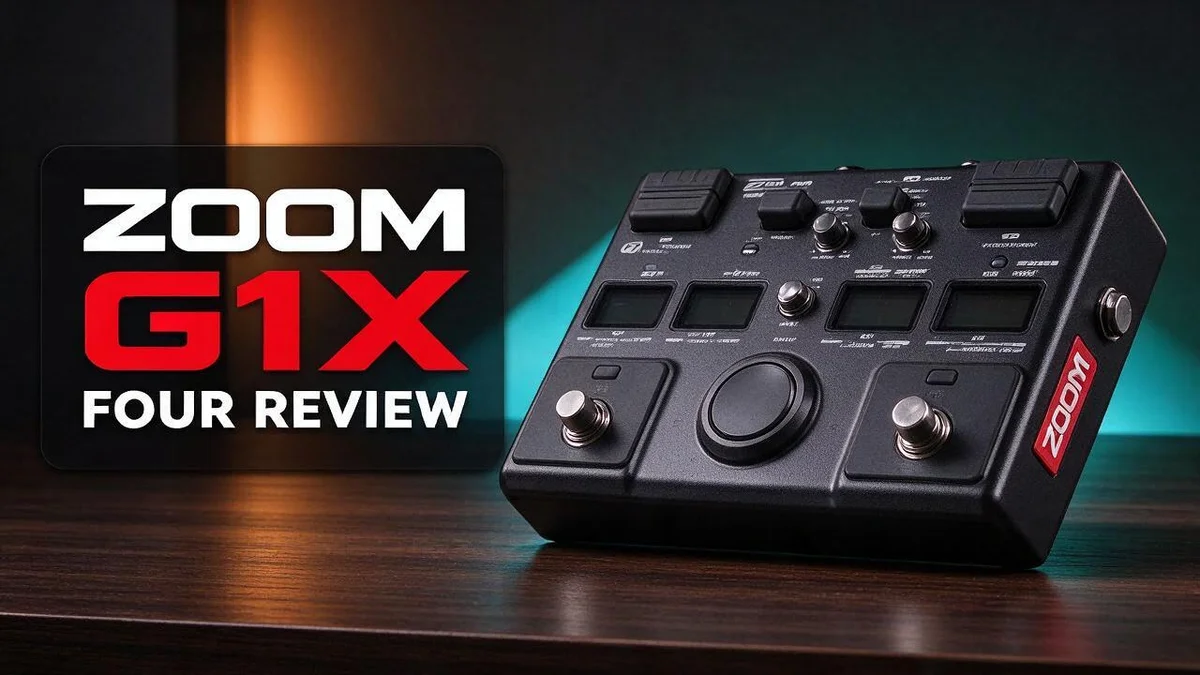
Looking for a pedal that does it all? The Zoom G1X Four might be the answer you need.
It packs 70+ built-in effects and 13 amp models into one compact box. That means you get a lot of tone without a huge pedalboard.
Beginners often feel lost with gear. This pedal keeps things simple. The interface is clear and easy to use.
Want to tweak your sound? You can use a computer for deeper edits and firmware updates. Otherwise, you can work straight from the pedal.
Filter effects like wah sound especially strong here. The pedal also includes a looper and a drum machine with 68 rhythm patterns.
You can practice, jam, and write ideas on the go.
In this review, we break down the features, real world use, and who this pedal suits best. Let’s dive in.
In a Nutshell
Here is what matters most about this pedal.
-
Drum machine and looper: The pedal includes 68 rhythm patterns. You can build loops without a separate device. Players can jam along with a beat right away, which saves time during practice.
-
Effect chains: You can run up to five effects with smooth start and end times. This helps you shape a full sound. Each change stays clean from one part of your song to the next.
-
Easy controls: The interface feels simple to learn. Players can change settings fast, whether at home or on stage. New players often feel more confident after a few sessions.
-
Good for many styles: Players of many genres can use it. It fits both quiet practice sessions and live playing. One pedal can cover a lot of ground.
-
Sibling model option: The Zoom G1 Four is a close relative. Compare it if you want a similar sound with a slightly different setup.
-
Other options to consider: The Zoom X2 and Zoom G2 models offer other choices. A forum comparison can also help you decide which fits your playing best.
Read on to see who this pedal suits best.
Effects and Amp Models

- Over 70 Guitar Effects & 13 Amp Models
- Global Tone Stack & Volume Knob
Last update on 2026-11-23 / Affiliate links / Images from Amazon Product Advertising API
Think of the amp models as a small tone library. Each one copies the feel of a real amplifier. You can start with a bright clean sound for chords or a warm crunch for riffs.
Clean tones are great for practice. They let you hear your timing and picking clearly. Try them when you learn scales or fingerstyle parts.
Crunch and drive settings bring grit to your playing. They work nicely for blues licks and classic rock. Dial the gain up slowly. You will hear the sound change with your pick attack.
Effects work the same way. You do not need to know every technical detail. Pick a sound, then adjust one knob at a time.
Small moves often make the biggest difference. Try that approach when you shape a new sound.
Consider building your own patch from scratch. Start with an amp model, then add a delay for space. Add a modulation effect like chorus for shimmer.
Save the result so you can recall it later. Your favorite sounds should always be easy to find.
Mixing amps and effects opens creative doors. A clean amp with a reverb can sound like a large hall.
A driven amp with a delay can sound like a stadium anthem. Experiment with combinations and trust your ears.
Beginners often wonder where to begin. A good rule is to choose three or four favorite sounds. Use those as your core patches. Then explore new options once you feel comfortable.
Presets also help during live play. You can switch between sounds with a quick tap. This keeps your focus on the music, not the menus.
Pay attention to how each amp responds to your guitar. Single coil pickups often sound bright. Humbuckers usually sound thicker and fuller.
Take time to test each sound with your own instrument. Small changes in pickups or playing style shift the result. Your ears should guide the final choice.
Tone Quality and Filter Effects
Tone is the heart of any good pedal. The Zoom G1X Four gives you a wide palette for shaping your sound. Every setting changes how your notes feel and sound.
Filters work a little differently than amps or delays. They cut or boost certain frequencies. Your tone can turn brighter, darker, or more vocal. Players often use this to add real expression.
Think of a filter as a sweep. Move the control slowly and the tone rises and falls like a voice. Move it quickly and you get a funky, chattering effect. Both styles work well for solos.
Your picking changes the response. Dig in hard and the filter may bite harder. Play softly and the sound stays smooth. Try different picking strengths to learn how the pedal reacts.
Filters also pair nicely with other effects. Place one before a drive pedal for a thicker, more aggressive voice. Try placing one after a delay for spacey textures that move with every repeat.
Too much low end can make chords sound muddy. Trim the filter range when your band mix feels crowded. Small cuts often clean up the sound and help each note stand out.
Clean and simple tones show off filters best. A bright, clear setting lets the sweep stand out clearly. Heavy distortion can hide subtle movement, so start light and add grit later.
Listen in context. Play along with a backing track or your band. A filter that sounds great alone may feel different in a mix. Adjust the settings until the tone fits the song.
Filter work rewards patience. Spend time sweeping slowly. Notice where the sound feels most alive. You may find a favorite spot that becomes your signature tone over time.
This pedal makes tone exploration easy. Whether you want a funky rhythm or a crying lead, the filters respond well. Trust your ears and let the sound guide your choices. Take notes on settings you love so you can return to them later.
Ease of Use and Interface
Setup stays simple. You do not need a computer to start playing. You only need a computer for firmware updates and deeper edits.
Many guitarists want a pedal they can use right away. The Zoom G1X Four keeps things simple from the first power up.
Everything sits on one pedal. The single pedal design means your board stays tidy. You can change sounds without digging through a crowded setup.
Using the pedal during a gig feels natural. Your foot moves from one control to the next without much thought. Quick tap changes keep the energy high.
Editing takes only a few steps. Most players find the flow logical. Once you learn the layout, you can shape a sound quickly.
Think of the pedal as a guide. It points you to the next step, so you rarely feel lost.
Menus follow a clear path. Moving between settings feels predictable for most players. You rarely need a manual during a session. That saves time when inspiration strikes.
Good layouts reduce mistakes. Clear controls help you find the right setting fast. Fewer wrong turns mean more time playing.
Deeper work happens on a computer. Some edits feel more natural at a desk. You can connect the pedal when you want more control.
Keep updates in mind. Firmware updates help the pedal stay current. Check for them now and then. Set a reminder if that helps.
New players can explore without fear. Each control has a clear purpose, and the layout invites experimentation. Experienced players also appreciate the quick access.
Practice sessions become easier. You can jump between sounds without losing your place. Smooth transitions keep your focus on the music, not the gear. Your ears stay in charge. Stay with the groove longer.
Overall, the interface feels welcoming. It suits quick changes on stage and careful tweaks at home. That balance makes it a smart choice for daily practice.
Top 3 Alternatives
Looking for a different option than the Zoom G1X Four? These three pedals suit guitarists who want more sound. Each one brings something useful.
Boss ME-25

- Super simple user-friendly interface
- SOUND LIBRARY provides extensive collection of ready-to-use tones; simply choose a category and...
Last update on 2026-11-23 / Affiliate links / Images from Amazon Product Advertising API
The Boss ME-25 is a compact multi effects pedal. It has a simple layout that anyone can learn fast.
It offers distortion, modulation, delay, and reverb. You can shape your tone quickly with clear knobs and a bright LCD screen. Players who like classic Boss sounds will feel at home here.
Line 6 HX Stomp

- Utilizes the same HX Modeling as Helix
- More than 300 effects and models from Helix, M-Series, and legacy Line 6 products

Last update on 2026-11-23 / Affiliate links / Images from Amazon Product Advertising API
The Line 6 HX Stomp is a strong choice for players who love variety. It packs many amp models, cabinet sounds, and effects into one small box.
The large touchscreen makes editing presets easy. You can build custom signal chains in a few taps. Many musicians use it for both live shows and home recording.
Zoom G3Xn

- 70 onboard high-quality digital effects (68 effects, 1 looper pedal, and 1 rhythm pedal), including...
- 5 amp emulators, 5 cabinet emulators, and 75 custom-designed factory patches
Last update on 2026-11-23 / Affiliate links / Images from Amazon Product Advertising API
The Zoom G3Xn is a great match for players who want a simple, expressive pedal. It has an expression pedal that gives you control during a performance.
You can save your favorite sounds and recall them fast. Its clear display helps you stay focused on your playing. It suits guitarists who want a clean upgrade from their current setup.
Looper and Drum Machine
The looper gives you a fast way to build songs alone. You play a phrase, and the pedal repeats it again and again.
Layer parts one at a time. Record a chord progression first. Then add a lead line on top of it.
The drum machine adds a full rhythm section to your practice. It offers 68 rhythm patterns for many musical styles.
Pick a pattern that fits your mood. A slow shuffle suits blues ideas, while a tight beat fits rock riffs.
Tempo changes help too. Start at a comfortable speed. Then raise it slowly as your timing improves.
Loops also sharpen your timing. Your part must lock with the beat, so mistakes stand out fast.
Use the looper for songwriting. Capture an idea before it fades from memory. Keep loops short so you can revisit them later.
Up to five effects can join the loop. Try a delay on one repeat and a filter on the next.
The transitions between effects stay smooth. That keeps the groove alive while you change your sound.
The looper works like a sketchpad for sound. Each layer adds a new idea to the mix.
Solo guitarists gain the most from this setup. A steady beat replaces a full band during practice.
Drum patterns also help with groove. Play along with the kick and snare, then notice where your notes land.
Mix loops with fills. Add a short fill at the end of each phrase. This signals a change in the song.
Practice sessions feel more like real music. A steady beat keeps you focused. You may play longer than you planned.
Beginners can start a loop within minutes of picking up the pedal.
Keep your recordings organized. Name each loop by key or tempo so you can find it fast during a session.
Form Factor and Portability
The Zoom G1X Four takes up very little room on stage. Its single pedal form factor keeps the footprint small. This makes it a smart pick for players who move around a lot.
Small gear fits easily into a gig bag. You can slide it beside your cables and a jacket without much fuss. Travel days also feel lighter with one compact unit in your case.
Think about your current setup before you buy. A pedal this size leaves space for other effects. Your board can hold a tuner, a delay, or a second drive pedal next to it.
Portability matters most for busy schedules. Rehearsal rooms, open mic nights, and friends’ houses all require quick packing. Fewer items mean fewer things to forget at home.
Many players also perform in tight spots. Picture a narrow corner of a bar stage or a crowded living room jam. A compact pedal fits comfortably in those places.
Players who gig often also value quick changes between venues. A small unit means less time spent on setup and teardown. Speed matters when the next band is waiting.
Power is another part of the portable story. Bring a compact power supply and you can play almost anywhere with an outlet nearby. Keep the cable short so it does not trip anyone on stage.
Carrying the pedal also means less wear on your gear. Fewer heavy cases reduce the chance of bumps and scratches during transport. Light kits feel easier to lift on crowded stairs.
Consider how you use the pedal on the go. Solo players can travel with almost no extra load. Bands with long load-ins will appreciate the space saved in the van.
Overall, the form factor suits guitarists who value mobility. It slides into tight spaces and small bags with ease. Pack it, plug it in, and start playing.
Pros and Cons
Pros
– Strong filter effects like wah for expressive playing
– Versatile enough for many playing styles
– Well suited to beginners who are just starting out
– Packed with 70+ effects and 13 amp models to explore
– Firmware updates need only a quick computer connection
Cons
– Fewer physical knobs can slow down quick tweaks
– Advanced players may want more tone control
– Newer players may outgrow it as their skills grow
– Test it in person before you decide if it fits your style
Who Should Buy It
The Zoom G1X Four suits a specific kind of guitarist. It works best for players who want many sounds in one box. Instead of buying a pile of separate pedals, you get a single unit that covers a lot of ground.
Students often fit this profile well. Beginners can explore different tones without spending hours setting up gear. A new player can try a clean amp, then switch to a crunchy one, all from one place.
Teachers may also find this pedal useful. A student can bring one small unit to every lesson. The teacher can then demonstrate effects without hauling a large rig.
Home practice players gain a lot here. Small apartments and shared rooms rarely have space for big setups. This pedal sits on a desk or a shelf and still delivers a full range of effects.
Genre hoppers also make great candidates. One player might jump from blues to metal in a single evening. This pedal lets them switch sounds fast without swapping gear.
Weekend jammers can keep one pedal ready for spontaneous sessions. Friends can plug in and play without a long setup. Quick sessions feel easy when the gear already works.
Cover band guitarists may also appreciate the flexibility. Each song can need a different tone, and this pedal covers many of them. Setlists feel less stressful with one unit handling the changes.
Who might skip it? Players with a full pedalboard may not need another unit. Some prefer to keep their current chain and add one sound at a time.
Teachers, students, and home players all share one trait. They want simple control over a wide tone palette. If that describes you, this pedal deserves a close look.
Ask yourself a simple question before you commit. Do you want more sounds in less space? If the answer is yes, the Zoom G1X Four is worth a look.
Final Verdict
So, is the Zoom G1X Four worth your time? For many guitarists, the answer is yes.
The pedal shines when you want variety without clutter. It works well as a main unit or as a backup for gigs.
Think of it as a creative hub rather than a simple effects box. Use it to test ideas fast, then keep the good ones. Many players find this approach speeds up songwriting.
The interface feels friendly, so you spend less time reading manuals. Think about how fast you want to start. Plug in, pick a preset, and play within minutes.
That quick start helps new players stay motivated during their first weeks. Experienced players can also use it as a sketching tool for riffs.
Still, it will not replace every piece of gear you own. Serious tone chasers may keep a favorite amp or stompbox close by. That is perfectly normal, and it does not take away from the pedal’s charm.
Home recording becomes easier with a pedal that stays ready. Connect your guitar, then hit record on your audio recorder. Save your favorite tones so they stay one press away.
Spec sheets only tell part of the story, so play it yourself. A quick trial at a local shop tells you more than any list of features.
The Zoom G1 Four offers a sibling option if you prefer a familiar layout. The Zoom X2 and G2 models offer different routes worth reviewing.
Your next step is simple. Write down three songs you play most often. Then check whether this pedal covers the sounds those songs need. If it does, you can move forward with confidence and start playing today.
Frequently Asked Questions
What extra tools does the Zoom G1X Four include?
The pedal includes a looper and a drum machine. It offers 68 rhythm patterns. Loop your riffs and jam along with a beat. This helps you sketch song ideas in one place.
Can I combine several effects at once?
Yes, you can use up to 5 effects together. Each effect has seamless start and end times. This helps your tone change smoothly from one section to the next.
Does it include classic and boutique sounds?
Yes, the pedal offers over 60 traditional and boutique effects. These range from familiar classics to newer sounds. Try a few to find the tones that match your style.
Which Zoom pedals should I compare it with?
The Zoom G1 Four is a sibling model, so it makes a natural first comparison. Reviewers also weigh the Zoom X2 and the Zoom G2.1u. Compare them side by side before you decide. Focus on the features you use most.

Dillip is the founder and lead writer at PlayItLoudFinds.com, where he combines his deep passion for music with hands-on experience to deliver honest, in-depth reviews and comparisons of musical instruments, gear, and accessories.