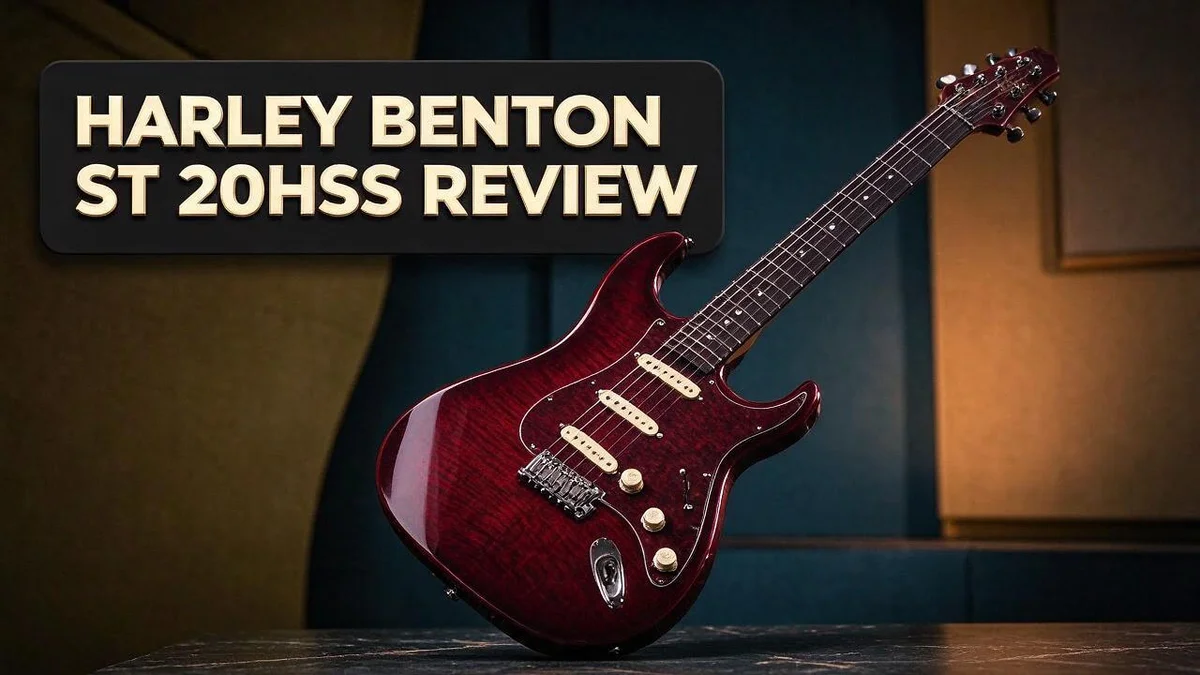
Harley Benton ST-20HSS Review: Specs, Tone, Playability and Verdict
Looking for an electric guitar that feels great and sounds versatile? The Harley Benton ST 20HSS might be the one you need. It follows the classic ST shape that many players know and love.
This guitar has a poplar body and a maple neck. Its HSS pickup setup gives you a wide range of tones, from clean, chimey sounds to punchy rock crunch.
Players often praise the slim neck. It handles fast runs with ease and stays comfortable during long rhythm sessions. The Wilkinson tremolo and DLX die cast tuners add stability.
Is it perfect? Reviewers do point out some quality control issues, so a careful check is worth it. In this review, we will look at the build, feel, and sound so you can decide for yourself.
In a Nutshell
-
Tremolo and tuners: The guitar uses a Wilkinson WVPC tremolo and DLX die-cast tuners. These parts help the guitar stay in tune during bends and dive bombs.
-
Two bundle choices: Buyers can pick the SB or SBK Standard bundle. This lets them choose the package that fits their setup needs.
-
Room to upgrade: Many players swap parts over time. The guitar takes mods well, so new pickups or hardware are easy to add later.
-
A close sibling in the range: The Harley Benton ST-62CC MN is the main rival. Shoppers can compare these two models side by side.
-
Check the fingerboard: The listing calls the fingerboard wood roseacer, which is unclear. Ask the seller to confirm the material before you commit.
-
Test it in person: Plug in and play a few songs. Your own ears will tell you if the HSS pickups suit your style.
Body, Neck and Fingerboard

- One Squier Debut Series Stratocaster electric guitar – a perfect beginner guitar for all ages
- Designed by the most trusted name in guitar and backed by a 75-year legacy of quality and...

Last update on 2026-11-23 / Affiliate links / Images from Amazon Product Advertising API
The body of the Harley Benton ST 20HSS follows the classic ST shape that many guitarists already know. Poplar is a fairly light wood, so the guitar sits comfortably on the lap. Long practice sessions feel less tiring as a result.
Poplar wood gives a bright and open voice. It tends to sound clear in the mids and highs. This suits lead lines, crisp chords, and many musical styles.
The neck uses a bolt on design, which means it screws directly into the body. This setup makes neck removal simple for repairs or future upgrades. Owners who enjoy tinkering will appreciate this easy access.
Beyond the slim feel, the neck profile also affects hand position. A comfortable shape lets your thumb rest naturally behind the neck. Try the guitar for a few minutes and notice any pressure points.
The fingerboard supports smooth bends and quick position shifts when the frets are clean. Run a fingertip along the fret ends to check for sharp edges. Smooth edges prevent scratches on your hand during long sessions.
Fretboard care matters over time. Wipe the fingerboard after each session to remove sweat and dust. A light conditioner keeps the wood from drying out, especially in dry rooms.
The balance between body and neck matters when you stand up. A balanced guitar hangs level on a strap, so the headstock does not dip. Test this by strapping it on and walking around the room.
Fret access is another strength of the ST design. The contoured body edges let your fretting hand reach higher frets with ease. This helps with solos and lead work near the top of the neck.
Setup is key. A fresh setup can improve action and intonation. Many players take the guitar to a local tech soon after getting it, so the neck feels just right. A good setup also helps the guitar stay in tune.
Pickups and Tonal Range
The pickup setup is where this guitar starts to shine. It uses HSS pickups, which means two single coils and one humbucker. Each type brings its own character to the sound.
The humbucker sits at the bridge. It delivers a fuller, thicker tone that works well for heavier riffs. It also pushes gain nicely when you use a dirt pedal.
The two single coils sit in the middle and neck positions. They produce a brighter, more chiming voice. Clean chords sound crisp and lively with these pickups.
Switching between them opens up many options. You can move from a glassy clean tone to a punchy lead sound in seconds. This makes the guitar feel like several guitars in one.
Setup tweaks can sharpen the results. Raising or lowering the pickups changes output and balance. Small moves near the strings can make the bridge sound tighter or the neck sound rounder. Take a little time to experiment.
Tonal flexibility is the big win here. Players can cover blues, pop, funk, and rock without swapping gear. A few tweaks to the amp settings can change the mood even more. Blues players often favor the neck pickup for warm lead tones.
The middle position deserves special attention. It blends the bridge and neck sounds, giving a hollow, vocal quality. Many players love this setting for funky rhythm parts and sweet lead lines.
Pickup output also matters for stage and studio use. Hot pickups push an amp hard, while lighter ones keep things open and dynamic. The HSS layout lets you pick the balance that suits your music.
Try a few tones before you decide. Play the same riff through each position and listen closely. Notice how the bridge humbucker feels compared with the single coils. Your ears will tell you which sound fits your style best.
Hardware, Tremolo and Tuning Stability
New strings often drift out of tune during the first few days. Stretch each string gently and retune often. This simple habit helps the guitar hold its pitch.
The tremolo needs a level setup to work well. Check that the bridge sits flat and the springs feel even. A tilted bridge can push the pitch sharp or flat during bends.
Use the tremolo arm with care. Small, light movements keep the tuning steady. Heavy dives can pull the strings out of key.
Lubrication plays a quiet role here. A tiny amount of graphite at the nut helps strings slide smoothly. Strings that stick can snap back out of tune after a bend.
Check the nut slots next. The strings should sit snugly without binding. Slots that are too tight can cause the string to catch and lose its tuning.
Look at the tuner posts as well. Wind each string neatly around the post. Clean, even wraps give the string a firm grip.
String gauge also affects stability. Lighter sets can feel loose on the tremolo. Heavier sets often hold pitch better under bends, though they change the feel.
Tuning order helps too. Tune each string up to its note from below. This approach lets the string settle evenly on the post and reduces slipping.
Temperature and humidity can change both wood and metal. Keep the guitar in a case, away from heaters and damp rooms.
Give the setup a final test. Tune the guitar, then play a few bends and dive bombs. Retune and play again. Repeat until the guitar stays steady.
A clip on tuner or tuner app makes this process quick. Check each string after every session. Small habits keep the ST 20HSS sounding its best and make practice more enjoyable.
Top 3 Alternatives
Looking for another guitar that fits your style? These three options offer strong playability and good value. Each one brings something different to the table.
Squier Affinity Stratocaster

- Thin and lightweight poplar body
- Slim and comfortable ÒCÓ-shaped maple neck
Last update on 2026-11-23 / Affiliate links / Images from Amazon Product Advertising API
The Squier Affinity Stratocaster is a friendly choice for new players. It has the classic Strat shape that many guitarists love. Its bright, clear tones work well for practice and simple songs. Beginners also find it easy to set up and play right away.
Fender Player Stratocaster

- Solidbody Electric Guitar with Alder Body
- 3 Single-coil Pickups - Polar White
Last update on 2026-11-23 / Affiliate links / Images from Amazon Product Advertising API
The Fender Player Stratocaster steps up the feel and sound. It uses modern pickups that deliver full, punchy tones. Many players love its smooth neck and easy action. It suits anyone who wants a long lasting guitar for gigs and home recording.
Yamaha Pacifica 112V

- Alder Body
- Maple Bolt-On Neck
Last update on 2026-11-23 / Affiliate links / Images from Amazon Product Advertising API
The Yamaha Pacifica 112V offers a vintage look with a modern edge. Its comfortable body shape sits well on the lap and shoulder. Players enjoy its versatile sound for rock, pop, and blues. It is a dependable everyday guitar for players who want good value.
Each guitar here suits a different player. Try them in person if you can. Pick the one that feels right in your hands.
Playability and Setup
Playability starts with neck relief. Sight down the neck from the headstock to check for a slight curve. A small curve helps the strings avoid buzzing when you play hard.
Use the truss rod to adjust that curve. Turn it a little at a time. Wait a few minutes between turns so the wood can settle.
Action height changes everything. Measure the gap between the strings and the 12th fret. A low action feels fast, but it can cause buzzing if pushed too far.
Raise or lower the saddles on the bridge to adjust that gap. Make small changes and play a few chords after each one.
Intonation keeps chords sounding in tune. Compare the open string with the harmonic at the 12th fret. If the fretted note sounds sharp, move the saddle slightly back.
Fret ends deserve a quick check. Run a fingertip along the edges near the neck. Sharp ends can scratch your palm during long sessions. A fine file or fret rocker can smooth them.
Nut height affects open chords. A nut cut too high makes the first few frets feel stiff. Open chords may also sound flat or uneven.
Strap length shapes your comfort. Strap length changes the angle of the neck. Try a few positions while you play. Pick the one that lets your fretting hand move freely.
Light touch wins fast runs. Relax your fretting hand and press just behind each fret wire. This makes clean notes with less effort.
Speed comes from practice habits. Use a metronome for clean timing. Start slowly, then raise the tempo little by little.
Test the guitar in short sessions. Play scales, chords, and simple songs for ten minutes. Note any buzz, dead spots, or tight bends. Fix one issue at a time for the best results. Keep a notebook of changes so you can repeat the good settings later.
Upgrade and Modding Potential
The ST-20HSS makes a strong starting point for upgrades. Its classic ST shape means many aftermarket parts fit well, so many players see it as a fun project.
Pickups are the first mod most players try. Swapping the HSS set for new units can change the sound fast. Choose models that match your playing style.
Measure the cavity before you buy. Standard ST style routes fit many common pickups, but dimensions can vary. Double check each part.
Wiring upgrades come next. New pots and a fresh output jack can make the controls feel smoother. Quality parts also help reduce crackle over time.
A new pickguard offers a quick visual change. Black, white, or tortoise shell guards can shift the whole look without touching the wood.
Hardware swaps add personality. Knobs, switch tips, and string trees are simple parts to replace. Each change adds a small touch of your own style.
Some players go further with a different bridge. A hardtail design removes the tremolo, which suits players who never use it.
The bolt on neck can also change. Players who want a different neck profile can order a replacement. Check the neck pocket and string spacing before ordering.
Poplar bodies take paint well. Refinishing gives the guitar a unique look, and light sanding helps new coats bond. Sand gently to protect the wood.
Inspect the stock parts first. Reviewers flag quality control concerns, so check fret ends, pocket fit, and electronics before you start. This helps you spot faults early.
Keep the original parts in a box. You can return to the factory setup at any time, which helps if you sell the guitar later.
Some mods need a pro. Shielding paint, drilling new holes, or heavy routing should go to a skilled tech.
Change one part at a time. Listen after each step so you know what made the difference. Small steps keep the process clear and fun.
Pros and Cons
Pros
– The slim neck feels fast for lead runs and comfortable for rhythm playing.
– The HSS pickups give you a wide range of tones.
– The classic ST shape looks attractive on stage and at home.
– The Wilkinson tremolo and DLX tuners add useful hardware.
– The guitar comes in SB and SBK bundles for different players.
Cons
– Build quality scores only 50 out of 100 on one comparison site.
– The fingerboard material is listed as unclear, which can confuse buyers.
– Few direct rivals appear in the research, so compare options carefully.
Who Should Buy It
This guitar suits players who want one instrument for many styles. Rock, blues, and indie fans often find the HSS setup useful. A single guitar can handle crunchy riffs and smooth clean tones. Players who jump between genres will appreciate that range.
New players stepping up from a starter pack will likely enjoy it. Their first guitar taught them basic chords. This model keeps them learning new skills as they grow.
Teachers may also point students to this model. It looks like a classic electric guitar. Students often stay motivated when their instrument looks cool.
Parents shopping for teenagers can consider it too. A good look and useful hardware can keep a young player interested. Teens who practice regularly often develop their own sound faster.
Home recording fans can benefit as well. The HSS pickups offer several sounds without extra gear. Bedroom musicians can shape tones quickly with the knobs and switch.
Gigging musicians should think carefully before choosing it. Stage players need instruments they can trust every night. Trying the guitar in person before buying gives extra peace of mind.
Players who enjoy tinkering fit this guitar well. The classic ST body gives them room to experiment. They can swap parts over time as their taste changes. Each change teaches them more about how electric guitars work.
This guitar may not suit everyone, though. Buyers who want a guitar ready to play straight from the box may feel let down. Those who prefer a famous brand with a long track record should read more reviews first.
Choose this model if you want flexibility and fun. Read the reviews, test the feel, and trust your ears.
Final Verdict
The Harley Benton ST 20HSS earns a strong place on any shortlist. It offers a classic shape, a fast neck, and plenty of tonal range.
Your goals should guide the final choice. Players who want a guitar they can play right away and improve later will likely feel at home with it.
Plan for a proper setup. Many players find that a fresh setup makes the biggest difference. A local technician can adjust the action, intonation, and tremolo balance right after delivery.
Beginners and experienced players can both benefit. Beginners get inspiration from the looks and sound. Experienced players get a platform for experiments without high stakes.
Stage players need a tuning test. Check how the tremolo holds pitch during heavy bends. A quick run at a shop or rehearsal space shows whether the guitar fits the set.
The ST 20HSS deserves a close look. It rewards careful buyers who enjoy learning their instrument.
Our verdict is clear. The ST 20HSS suits curious players who enjoy tweaking gear. It may frustrate buyers who expect a flawless finish straight from the box.
Think about long term plans. This guitar can grow with your skills. Over the years, you may change its style as your tastes shift, and that flexibility keeps the instrument fresh.
Trust your own priorities. Some players want the safest pick. Others want the most fun and creative room. Your priorities should set the final call.
Keep expectations realistic. No guitar solves every problem. This model delivers strong looks, flexible tones, and a comfortable neck. Small flaws may still appear, so patience helps.
A short checklist helps. Check the neck feel, test the tremolo, and listen through both pickup positions. Then decide with confidence.
Read a few more reviews, play the guitar in person, and let your own experience guide the decision. Your ears and hands know what feels right.
Frequently Asked Questions
Can I upgrade the parts later?
Yes, you can. The ST-Modern HSS review shows that this guitar takes mods well. Many players swap pickups or tuners once they know their own taste. Change one part at a time so you can hear what each upgrade does.
How should I inspect a new guitar?
Check the instrument closely when it arrives. Look at the fret ends, the nut, and the paint edges. One reviewer calls quality control seriously lacking, so a careful look matters. If anything seems off, contact the seller right away.
How does it compare with the ST-62CC MN?
The ST-62CC MN is the only direct rival named in the research. Compare the neck feel and pickup output of both models side by side. Play each one before you decide, if you can.
What should I check in the bundle?
The SB and SBK bundles include different extras. Read the bundle list on the product page before you buy. Confirm that the accessories match what you need, such as a strap, cable, or tuner.

Dillip is the founder and lead writer at PlayItLoudFinds.com, where he combines his deep passion for music with hands-on experience to deliver honest, in-depth reviews and comparisons of musical instruments, gear, and accessories.