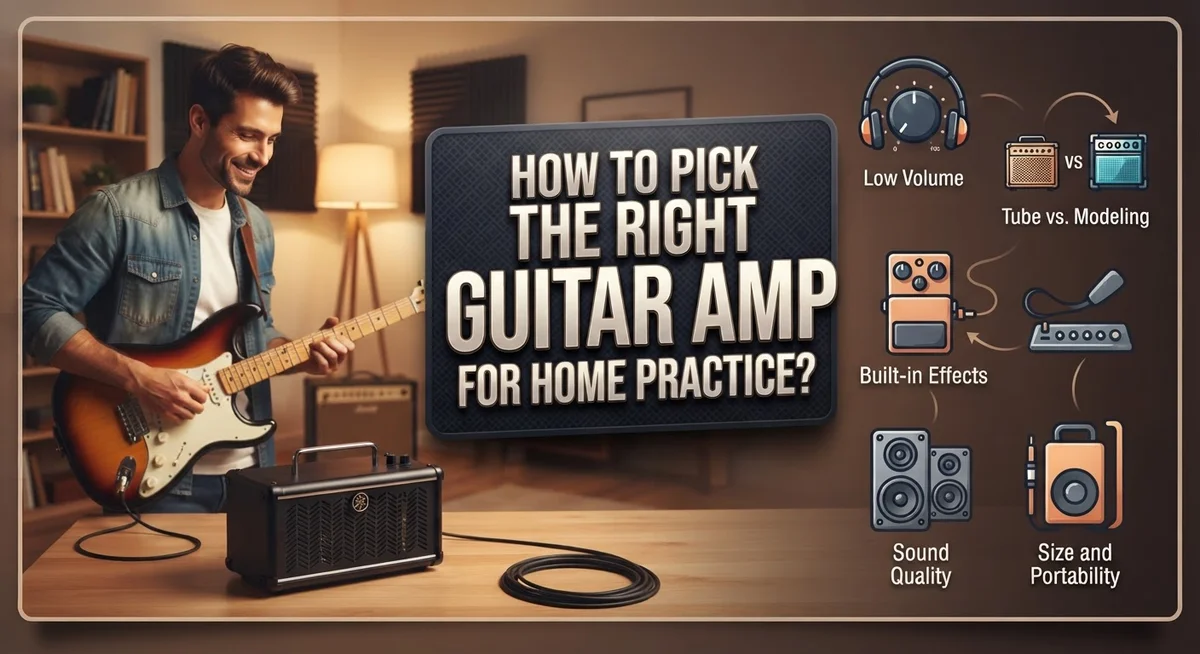
How to Pick the Right Guitar Amp for Home Practice?
Picking a guitar amp for home practice can feel tricky. Walk into any store and you will see rows of amps. Each one promises great tone and top performance.
But here is the truth. You do not need the biggest or loudest amp to practice well at home.
In fact, many players make the mistake of buying gear built for the stage. Then they struggle with too much volume and unhappy neighbors.
This guide breaks down what actually matters. We will look at wattage and how much power you really need indoors.
You will learn about speaker configurations and how they shape your sound. We will also compare tube and solid-state amps so you can pick the right tone for your ears.
Headphone output is another key feature we cover. It lets you practice quietly, even late at night.
By the end, you will know exactly how to match an amp to your actual needs. No guesswork. No wasted money on features you will never use.
Let’s find the perfect practice partner for your guitar journey.
In a Nutshell
Here is the quick rundown for choosing your amp. Keep these points in mind while you shop.
-
Focus on low wattage. A 5 to 20 watt amp gives you plenty of volume for a bedroom or living room. You do not need stage level power at home.
-
Check the speaker size. A single small speaker works fine for practice. It keeps the amp compact and easy to store.
-
Choose your amp type. Tube amps give warm, rich tones but cost more. Solid state amps are budget friendly and need less maintenance.
-
Look for headphone output. This feature lets you play at any hour without bothering anyone. It is a must have for apartment living.
-
Think about portability. If you plan to jam with friends or take lessons, pick something light. If it stays in one room, weight matters less.
-
Match the amp to your real needs. Skip the fancy stage gear. Simple and practical always beats flashy and unused.
These points help you avoid wasted money and pick an amp that actually fits your daily practice routine.
Understanding Wattage: How Much Power Do You Really Need?
Wattage measures how much power your amp produces. For home practice, you don’t need as much power as you might think. Most bedrooms and living rooms stay quiet with just 5 to 20 watts.
Here’s why wattage matters less at home than many players believe. A 100 watt amp designed for concert halls will be far too loud in your practice space. You’ll spend most of your time turning the volume knob down, which wastes the amp’s potential and your money.
Lower wattage amps actually give you more control. They reach their sweet spot at lower volumes. This means you can dial in great tones without disturbing your family or neighbors. A 10 watt amp can sound just as good as a 50 watt amp when both are played at reasonable home volumes.
The relationship between wattage and actual loudness isn’t simple math. Doubling the wattage doesn’t double the volume you hear. Going from 5 watts to 10 watts makes a noticeable difference. Going from 50 watts to 100 watts barely changes what comes out of your speaker.
Think about your actual situation. If you live in an apartment, go even smaller. If you have a soundproofed basement, you have more freedom. Either way, start by assuming you need less power than you think.
Wattage also affects how the amp responds to your playing. Lower wattage amps break up and compress more easily. This can actually help you develop better technique. You learn to control dynamics instead of relying on raw power.
The best approach is honest self assessment. Ask yourself where you’ll play and when. Consider your neighbors’ schedules. Match the wattage to your real environment, not to some imaginary future gig. This simple step saves money and ensures your amp sounds great in your actual practice space.
Speaker Configuration and Its Effect on Sound at Low Volumes
Speaker configuration directly shapes how your amp sounds, especially at the lower volumes you’ll use for home practice. The speaker size and number of speakers in your amp create different sonic results.
A single small speaker, like a 8 inch or 10 inch speaker, works well for bedroom practice. Small speakers break up more easily, which means they add natural distortion at lower volumes. This can actually help your tone sound fuller when you’re playing quietly. The trade off is that small speakers don’t reproduce deep bass frequencies as clearly.
Larger single speakers, around 12 inches, give you more bass response and cleaner highs. They handle low volumes better without that early breakup. You get a more balanced sound across the frequency range, even when playing softly.
Two speaker configurations offer another option. Dual smaller speakers can give you better stereo imaging and a wider sound stage. Some players find two speakers feel more spacious than one larger speaker, even in a small room.
Here’s what matters most: match the speaker size to your actual room. A large speaker in a tiny bedroom can sound boomy and unclear. A small speaker in a larger living room might feel thin. The room itself acts as part of your speaker system.
Speaker material also plays a role. Paper cones sound warmer and break up sooner. Synthetic materials offer more durability and tighter response. For home practice, the material difference is subtle unless you’re playing at very high volumes.
Test different configurations if possible. Play the same amp settings through different speaker sizes. You’ll quickly hear which setup matches your ears and your space. This simple listening test beats any specification sheet. Your ears are the best measuring tool for finding the right speaker configuration for your home practice needs.
Tube vs. Solid-State Amps: Tonal Differences for Practice Settings
Tube amps and solid state amps sound very different. Understanding these differences helps you pick the right one for home practice.
Tube amps produce warm, organic tones. The tubes inside naturally compress your signal as you turn up the volume. This creates a pleasing breakup and harmonic richness. Many players love this character. Tube amps respond to your playing dynamics in a musical way. They feel responsive under your fingers.
However, tube amps have trade offs. They run hotter and need more maintenance. The tubes wear out over time and require replacement. They also cost significantly more than solid state options. For home practice, this extra expense might not be necessary.
Solid state amps use transistors instead of tubes. They stay clean and punchy even at higher volumes. This means you hear your playing clearly without natural breakup. Solid state amps are reliable and require almost no maintenance. They stay cool during long practice sessions. The price is much lower than tube models.
Solid state amps don’t respond quite like tubes do. The tone stays consistent regardless of how hard you play. Some players find this less inspiring. Others appreciate the predictability.
For home practice specifically, consider what matters most. Do you want to explore natural amp breakup? A tube amp rewards your investment. Do you need reliability and affordability? Solid state works perfectly fine.
The good news: modern solid state amps sound excellent. They’re nothing like the harsh transistor amps from decades ago. Both types let you practice effectively at home.
Your ear is the best judge. Play through both types if possible. Listen to how each responds to your playing style. Notice which tone inspires you to practice longer. That preference matters more than technical specifications.
Step-by-Step: Matching an Amp to Your Home Practice Needs
Now that you understand wattage, speakers, and amp types, it’s time to match everything to your actual practice setup. This step matters because the wrong combination wastes money and creates frustration.
Start by honestly assessing your space. Measure your room and think about how often you’ll play. A bedroom requires different gear than a basement or living room. Your room size directly determines what will work best. Small rooms need smaller amps. Larger spaces can handle bigger setups without overwhelming your ears.
Next, decide if your amp stays home or travels. Stationary amps can be heavier and bulkier. Portable amps need to be lightweight and easy to move. This choice eliminates many options immediately, making your decision simpler.
Consider your playing schedule and volume constraints. If you practice late at night or live with others, headphone output becomes essential. Many home practice amps include this feature, letting you play silently while still hearing yourself clearly. This single feature often matters more than wattage.
Test your top choices if possible. Bring your guitar to a store and play the same riff through different amps. Listen for how each one responds to your touch. Notice which one feels natural to you. Your hands will tell you things specs cannot.
Write down your priorities in order. Maybe headphone output ranks first. Perhaps tone quality matters most. Weight and portability might be your main concern. Ranking these priorities prevents impulse buying.
Finally, check the connections on the back panel. Make sure the amp has inputs and outputs you actually need. Some amps include effects loops or line out capabilities. Others keep things simple with just input and volume.
Your perfect amp matches your real life, not your dreams. Start small. You can always upgrade later once you know exactly what you need.
The Importance of Headphone Output for Silent Practice
Silent practice changes everything. You can play guitar at any hour without disturbing family, roommates, or neighbors. A headphone output makes this possible.
Here’s why headphone output matters for home practice. Most people live in shared spaces. You might want to practice at 11 PM or early morning. Without headphones, you’re limited by volume. With headphones, you have complete freedom.
Headphone outputs work in different ways. Some amps have a dedicated headphone jack that cuts the speaker sound completely. Others let you run headphones while the speaker still plays. Both options work. The key is having the choice.
When you use headphones, the amp still colors your tone. You get the same amp character through your ears as you would through the speaker. This matters because it lets you develop your sound accurately. You’re not practicing with a different tone than you’d hear on stage.
The quality of the headphone output varies between amps. Some amps have cheap headphone circuits that sound thin or harsh. Better amps put real effort into their headphone outputs. Test this before buying if you can.
Consider your headphone choice too. Good quality headphones make a huge difference. Cheap earbuds might sound muddy. Decent over ear headphones reveal more detail in your tone.
Headphone outputs also solve another problem: amp modeling. Some amps include headphone outputs specifically to let you use amp simulations or effects units. This opens up creative possibilities.
For home practice, headphone output isn’t optional anymore. It’s essential. You need the ability to practice silently whenever inspiration hits. Whether you play at noon or midnight, headphones let you focus on improving without compromise. Check that your amp has this feature before making your final choice.
Common Mistakes When Choosing a Practice Amp
Many people make costly mistakes when picking a practice amp. Understanding these errors helps you avoid wasting money and ending up with gear that doesn’t fit your needs.
The biggest mistake is buying based on power alone. Beginners often think more watts equals better sound. This isn’t true for home practice. A 100 watt amp in your bedroom will be too loud and hard to control. You’ll spend most of your time fighting the volume knob instead of enjoying your tone. Start with honest wattage needs for your actual space.
Another common error is ignoring your real practice environment. People buy amps suited for band practice or small venues when they only play at home. Your bedroom or living room has different acoustics than a stage. An amp that sounds great in a music store might overwhelm your space at home. Match your amp size to where you actually play.
Overlooking amp type is another frequent mistake. Some players assume tube amps are always better without considering their lifestyle. Tube amps need more maintenance and run hotter. If you practice late at night or in tight spaces, solid state amps offer practical advantages. Your choice should reflect how you actually use the gear.
People also skip testing before buying. You can’t judge an amp from online videos or store displays. Every room sounds different. Every player’s touch is different. Spending time with an amp in realistic conditions reveals whether it suits you.
Finally, many ignore connectivity options completely. You might think headphone output is optional. It’s not. Silent practice keeps your family happy and lets you practice anytime. Check the back panel before committing to any amp. Look for headphone jacks, auxiliary inputs, and other connections you’ll actually use.
These mistakes are easy to avoid once you know what to watch for.
Troubleshooting Sound and Volume Issues in Small Spaces
Sound issues in small spaces happen more often than you think. Your amp might sound great in a store but struggle in your bedroom or apartment. The good news: most problems have simple fixes.
Volume control is your first tool. Many players crank their amp to full power, which overwhelms small rooms. Start at 25% volume and increase slowly. You’ll find the sweet spot where your amp sounds good without rattling walls or annoying neighbors. Lower volumes actually help you hear your playing more clearly.
Speaker size matters in tight spaces. A 10 inch speaker works better than a 12 inch in small rooms. Smaller speakers respond faster and need less power to fill a bedroom. They also reduce muddiness that larger speakers sometimes create in confined areas.
Room placement changes everything. Placing your amp in a corner makes it sound louder and bassier. Moving it to the center of a wall reduces boomy low end. Pointing the speaker toward your ear instead of at the wall gives you better tone. Experiment with different positions to find what sounds clearest.
Distance from walls affects your sound too. Keeping your amp at least 2 feet away from walls prevents reflections that muddy your tone. Hard surfaces like tile or wood bounce sound around. Soft materials like carpets and curtains absorb sound and reduce harshness.
Frequency buildup creates another common problem. Low frequencies pile up in corners and small spaces, making your amp sound thick or unclear. Rolling back the bass knob by just one or two notches often fixes this issue. You don’t need as much bass as you think in a small room.
Finally, check your cable quality. Bad cables introduce noise and reduce clarity. A good cable costs little but improves your sound noticeably. These simple adjustments solve most sound problems without buying new gear.
Final Thoughts
Picking the right guitar amp for home practice comes down to knowing your needs. You don’t need the loudest or most expensive amp on the market.
Small combo amps work best for most home players. They offer enough power without shaking your walls. Low wattage models between five and twenty watts suit most practice rooms.
Think about how you actually play. Do you practice at night? Do you share walls with neighbors? These questions matter more than technical specs.
Headphone output deserves your attention too. It lets you practice anytime without disturbing anyone. This feature alone can shape your final decision.
Tube amps and solid state amps each offer something different. Tube amps give warmth and natural breakup. Solid state amps stay reliable and need less maintenance.
Neither type is better for everyone. Your choice depends on your ears and your budget.
Speaker configuration also shapes your sound. A single small speaker fits tight spaces well. Multiple speakers create a bigger sound but need more room.
Don’t buy an amp built for stages if you only play at home. That kind of power creates more problems than solutions in small rooms.
Instead, match your amp to your real practice habits. Think about your space, your schedule, and your volume needs.
Testing amps before buying helps you avoid regret. Play through a few models if you can. Notice how each one feels and sounds at low volume.
Your ideal amp should feel like a natural extension of your practice routine. It should support your growth as a player, not get in your way.
Take time to think through your options. The right amp makes practice enjoyable, consistent, and stress free every single time you pick up your guitar.
Frequently Asked Questions
How much wattage do I actually need for home practice?
Most home players need between 5 and 20 watts. This power range lets you play at comfortable volumes without overwhelming your space. A 5 watt amp works fine for bedroom practice. If you jam with others at home, 15 to 20 watts gives you more headroom.
Don’t buy based on wattage alone. Speaker size and amp type matter just as much. A 10 watt tube amp sounds louder than a 15 watt solid state amp in many cases.
Should I choose a tube amp or solid state amp?
Tube amps produce warm, natural breakup when you push them hard. Solid state amps stay clean at higher volumes. Neither choice is wrong for home practice.
Tube amps need more maintenance and warm up time. Solid state amps are more reliable and portable. Consider your playing style. Blues and rock players often prefer tube warmth. Metal and modern genres work well with solid state clarity.
What’s the difference between combo amps and head and cabinet setups?
Combo amps have the amplifier and speaker in one unit. They’re compact and perfect for home use. Head and cabinet setups let you choose your speaker separately, but they take up more space.
For home practice, combo amps make the most sense. They’re easier to move, cost less, and sound great in small rooms.
Do I need an amp with headphone output?
Headphone output lets you practice silently anytime. This feature matters if you live with others or practice late at night. You can play full volume through headphones without disturbing anyone.
Many modern practice amps include this. It’s worth checking before you decide.

Dillip is the founder and lead writer at PlayItLoudFinds.com, where he combines his deep passion for music with hands-on experience to deliver honest, in-depth reviews and comparisons of musical instruments, gear, and accessories.