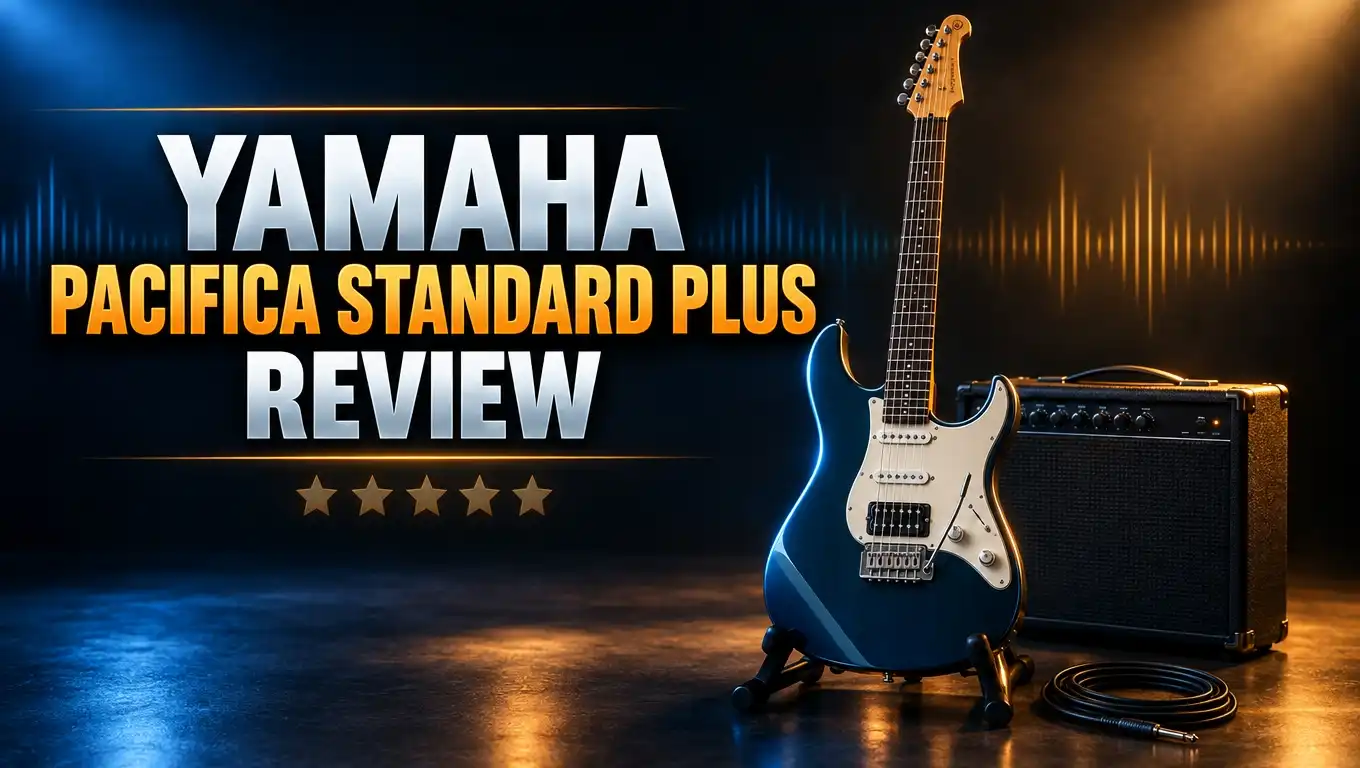
Yamaha Pacifica Standard Plus Review: $999 Guitar Worth It?
Are you looking for a guitar that feels like a high end instrument but doesn’t cost a fortune? The Yamaha Pacifica Standard Plus might be the answer. Many players call it one of the best S style guitars under $1,000.
In this review, I cover everything you need to know. You will learn about the pickups, the neck, the hardware, and the sound. You will also see how it compares to the Fender Player II Stratocaster.
Grab a coffee and keep reading. By the end, you will know if this guitar belongs in your hands.
In a Nutshell
- Price and Origin: The Pacifica Standard Plus costs about $999.99 in the USA. Yamaha builds it in Indonesia, and it ships with a quality gig bag. It sits between the budget Pacifica models and the Japan built Professional line.
- Pickups: It uses an HSS setup with Reflectone pickups made with Rupert Neve Designs. You get two true single coils and one humbucker. The tones sound clear, with solid lows and sparkling highs.
- Playability: The slim C shape neck and 13.8 inch fingerboard radius make bends easy. The carved neck heel and beveled body add comfort. Many reviewers say it plays better than guitars that cost twice as much.
- Hardware: You get Gotoh locking tuners and a Gotoh 510T two point tremolo. Both keep the guitar in tune, even with heavy whammy use. The stainless steel frets feel smooth and last for years.
- Smart Electronics: A push pull tone knob splits the humbucker. A high pass filter on the volume knob keeps your treble when you roll back. These small touches make the guitar very versatile.
- Verdict: This guitar gives you pro features for a mid range price. It suits beginners who want to upgrade and gigging players who need a dependable workhorse.
Yamaha Pacifica Standard Plus Overview

- Reflectone pickups created in collaboration with Rupert Neve Designs
- HSS pickup configuration with 5-way Selector

Last update on 2026-11-25 / Affiliate links / Images from Amazon Product Advertising API
The Pacifica name has a long history. Yamaha launched the first Pacifica in 1990, and it became a favorite among beginners. The Standard Plus takes that legacy and pushes it much further.
Yamaha designed this model with Yamaha Guitar Development (YGD), its Los Angeles custom shop. The team wanted a guitar that offers professional performance at a fair price. They did a great job.
The Standard Plus sits in the middle of the current Pacifica lineup. The cheaper Standard models come from China. The Pacifica Professional comes from Japan and costs around $1,000 more. The Standard Plus comes from Yamaha’s factory in Indonesia.
Here are the key specs at a glance:
- Body: Alder with a beveled design and gloss finish
- Neck: Maple, slim C shape, with a natural satin finish
- Fingerboard: Rosewood (PACS+12) or maple (PACS+12M)
- Frets: 22 medium stainless steel frets
- Scale Length: 25.5 inches
- Radius: 13.8 inches (350 mm)
- Pickups: Reflectone HS7 single coils and HH7 humbucker
- Hardware: Gotoh locking tuners and Gotoh 510T tremolo
One reviewer at That Guitar Lover said the Japan model is amazing. But he also said most players would be just fine saving $1,000 and buying the Standard Plus. That is high praise for a mid priced guitar.
Build Quality and Body Design
The first thing you notice is the build quality. Yamaha has almost a hundred years of experience making instruments. That experience shows in every detail of this guitar.
The body uses alder, a classic tonewood for S style guitars. Alder gives a balanced tone with good warmth and clarity. It is also fairly light, so the guitar won’t wear out your shoulder.
Yamaha added deep bevels to the body. These bevels sit where your forearm rests and where the guitar touches your ribs. The result is a guitar that feels comfortable during long practice sessions.
The gloss finish looks clean and even. Reviewers report no sloppy edges or finish flaws. The binding of the paint around the neck pocket looks neat, too.
The guitar also balances well on a strap. It doesn’t dive toward the floor when you let go of the neck. This matters a lot if you play standing up at gigs.
Ross Chevalier from That Guitar Lover noted the smart layout of the controls. He did not have to look down to find the knobs. The volume knob sits a bit farther from the bridge than on a Strat. Some players like this because they won’t bump it by accident.
The knurled metal knobs give a firm grip. They turn smoothly and feel solid. Overall, the build quality matches guitars that cost far more.
Neck Feel and Playability
Playability is where the Pacifica Standard Plus truly shines. Many reviewers call it the best feature of the guitar. Some even say it plays better than their beloved Stratocasters.
The neck has a slim C shape. It fills your hand without feeling chunky. Players with small hands will find it easy to grip. Players with larger hands won’t feel cramped either.
Yamaha gave the neck a natural satin finish. Satin feels fast and smooth under your thumb. It doesn’t get sticky when your hands sweat, which is a big plus on hot stages.
The 13.8 inch fingerboard radius is flatter than a vintage Fender. A flatter radius means you can set the action low without notes choking out on bends. Lead players will love this.
The neck joint has a carved heel. This lets you reach the top frets with less effort. Shredding up at the 20th fret feels natural.
The fretwork is excellent. The medium stainless steel frets have polished ends with no sharp edges. The fingerboard edges have a gentle roll, so the neck feels broken in from day one.
Stainless steel frets also last much longer than nickel frets. You may never need a fret job. Bends feel silky smooth on stainless steel.
Truss rod adjustments are simple thanks to a spoke wheel at the heel. You don’t need to remove the neck or a cover plate. Just turn the wheel and you are done.
Top 3 Alternative for Yamaha Pacifica Standard Plus
The Pacifica Standard Plus is a great guitar, but it is not the only option. Here are three strong alternatives in a similar price range. Each one has its own strengths.

- Player II Stratocaster
- Mpl Fingerboard
Last update on 2026-11-25 / Affiliate links / Images from Amazon Product Advertising API
Fender Player II Stratocaster is the most obvious rival. It carries the famous Fender name and the classic Strat sound. It costs a bit less than the Pacifica. However, it uses nickel frets and a vintage style bent steel saddle bridge. Choose this if you want the classic Strat “quack” and the Fender logo on the headstock.

- Solidbody Electric Guitar with Alder Body
- Gotoh Tremolo - Prussian Blue Metallic
Last update on 2026-11-25 / Affiliate links / Images from Amazon Product Advertising API
Ibanez Prestige AZ2204N is a premium Japan built guitar. It has an alder body, an HSS layout, and a Gotoh tremolo. It also uses stainless steel frets and a roasted maple neck. It costs much more than the Pacifica. Pick this if you want a modern superstrat with top tier Japanese build quality.

- Features poplar body, bolt-on maple neck, and maple fretboard with PRS trademark bird inlays
- 22-fret, 25.5” scale length neck features the original 635JM carve and an 8.5” fretboard radius
Last update on 2026-11-25 / Affiliate links / Images from Amazon Product Advertising API
PRS SE Silver Sky is based on John Mayer’s signature model. It uses a 635JM neck carve and three single coil pickups. The tone is warm and vintage inspired. It costs less than the Pacifica Standard Plus. Go for this if you love clean, glassy single coil tones and don’t need a humbucker.
Each of these guitars is a solid pick. Still, the Pacifica offers the best mix of features for the money. Stainless frets, locking tuners, and a Gotoh bridge are hard to find together at this price.
Reflectone Pickups and Rupert Neve Designs
The pickups are the heart of any electric guitar. Yamaha made a bold move here. It teamed up with Rupert Neve Designs to create the Reflectone pickups.
Rupert Neve is a legend in the recording world. His mixing consoles and preamps appear on countless famous records. His company knows a lot about clear, musical sound.
The goal of the Reflectone pickups is simple. Yamaha wanted pickups that sound like a great guitar played through a great studio signal chain. The pickups aim for clarity, detail, and balance.
The Standard Plus uses an HSS layout:
- Neck: Reflectone HS7 single coil
- Middle: Reflectone HS7 single coil
- Bridge: Reflectone HH7 humbucker
Yamaha says the pickups deliver “clear and articulate tones with solid lows and sparkling highs.” Most reviewers agree with this claim.
The single coils are true single coils. They are not noise cancelling. This means they keep their natural sparkle, but they may hum a little near lights or computers. Keep this in mind if you play in noisy rooms.
The pickups are not heavily overwound. They have moderate output. This makes them very responsive to your picking and to pedals. They clean up well when you roll back the volume.
Some players on Reddit say they took time to warm up to the single coil sound. The tone is a bit different from a classic Strat. Try them through your own amp before you judge them.
Sound Quality Across All Five Positions
The Pacifica Standard Plus uses a 5 way pickup selector. Each position offers a distinct voice. Let’s go through them one by one.
Position 1 (Neck): The neck pickup sounds warm and round. It is great for blues solos and smooth jazz chords. The low end is full without sounding muddy.
Position 2 (Neck and Middle): This position gives you that hollow, glassy tone. It is perfect for funk and clean rhythm parts. Reviewers note it has a little less quack than a Strat but a richer bottom end.
Position 3 (Middle): The middle pickup sounds bright and punchy. It cuts through a band mix well. Use it for crisp rhythm work.
Position 4 (Middle and Humbucker): This position combines the middle single coil with the humbucker. It sounds full and lively. Many players say this is their favorite setting for clean tones with a touch of grit.
Position 5 (Bridge Humbucker): The humbucker brings the power. It handles rock, punk, and even some metal with ease. It stays clear and tight under heavy distortion.
Ross Chevalier described the pickups well. He called them “Strat like, but not Stratty.” They keep the sparkle of single coils but add more depth.
The guitar also works well with effects. Compressors, overdrive, and delay all sound great with it. The clear output gives pedals a clean signal to work with.
Electronics, Coil Split and High Pass Volume
Yamaha added two smart features to the controls. These features make the guitar even more versatile. Both are easy to use.
The first feature is a push pull coil split on the tone knob. Pull the knob up, and the bridge humbucker becomes a single coil. Push it down, and you get the full humbucker back.
This gives you more tones from one guitar. With the humbucker split, the guitar sounds closer to a classic SSS Strat. You can switch from heavy rock to bright country with one pull.
The second feature is a high pass filter on the volume knob. Many guitars lose treble when you turn the volume down. The sound becomes dull and muddy. The high pass filter fixes this problem.
With this filter, your tone stays bright even at lower volume. This is a big deal for players who use the volume knob often. You can roll back for a clean sound and still keep the sparkle.
Ross Chevalier said he often adds treble bleed circuits to his own guitars. The Pacifica comes with this feature from the factory. You save time and money on modifications.
The layout is simple:
- One master volume with high pass filter
- One master tone with push pull coil split
- One 5 way pickup selector
The pots turn smoothly. The tone control has a useful sweep across its range. These electronics give you studio level control in a simple package.
Gotoh Hardware and Tuning Stability
Hardware can make or break a guitar. Cheap tuners and bridges cause tuning problems. Yamaha chose top quality Gotoh parts for the Standard Plus.
The tuners are Gotoh locking tuners. Locking tuners clamp the string in place. You need fewer wraps around the post, which means less string slip. String changes also become much faster.
The bridge is a Gotoh 510T two point tremolo. This bridge has a strong reputation among guitar techs. It pivots on two posts, which makes it smooth and stable.
The 510T returns to pitch well after you use the whammy bar. You can do dives and gentle vibrato without the guitar going out of tune. Reviewers say the factory tension felt perfect right out of the box.
The bridge also uses better saddles than the bent steel saddles on many vintage style guitars. These saddles help with sustain and give a solid feel.
Here is why this hardware matters:
- Locking tuners reduce string slippage
- Two point pivot gives smooth tremolo action
- Quality saddles improve sustain
- Stable tuning saves you time on stage
Yamaha also ships the guitar with D’Addario strings. This is a small detail, but it helps. Many brands use cheap strings that make a new guitar feel bad. The Pacifica feels great from the first strum.
Combined with stainless steel frets, this hardware makes the guitar a true workhorse.
Rosewood vs Maple Fingerboard

- Reflectone pickups created in collaboration with Rupert Neve Designs
- HSS pickup configuration with 5-way Selector
Last update on 2026-11-25 / Affiliate links / Images from Amazon Product Advertising API
The Pacifica Standard Plus comes in two versions. The PACS+12 has a rosewood fingerboard. The PACS+12M has a maple fingerboard. The “M” in the model name stands for maple.
Both versions share the same body, pickups, and hardware. The main differences are the feel, the look, and a slight change in tone.
Rosewood fingerboard (PACS+12):
- Feels warm and slightly textured
- Gives a slightly warmer, smoother tone
- Looks classic and dark
- Needs occasional conditioning with fretboard oil
Maple fingerboard (PACS+12M):
- Feels smooth and slick
- Gives a slightly brighter, snappier tone
- Looks bright and vintage
- Is easy to clean because of the finish
Reviewers praise the rosewood quality on the PACS+12. Yamaha finished it nicely, and the inlays look subtle and clean. The maple version looks great with the brighter finish colors.
The tone difference is small. Most people won’t hear it through a band mix. Your choice should depend on how the neck feels in your hand and which look you prefer.
If you play a lot of blues and jazz, rosewood may suit you better. If you play country, funk, or pop, maple may be your pick. Either way, you get the same great playability.
Finish Options and Looks
Looks matter when you buy a guitar. You want an instrument that inspires you to pick it up. The Pacifica Standard Plus delivers on this front.
Yamaha says the finishes take inspiration from sun drenched Southern California vibes. The colors feel fresh and fun. They stand out on stage without looking cheesy.
The rosewood model comes in four finish options. The maple model comes in three. Yamaha’s store lists six vibrant finishes across the range. Sparkle Blue is a fan favorite, with a metallic shine that pops under stage lights.
Color availability can vary by store and region. Check with your local dealer or Amazon to see which colors are in stock.
The headstock has the modern Pacifica shape. It looks sleek and different from a Fender headstock. Some players love it. Others prefer a more classic look. This comes down to personal taste.
The pickguard and hardware complement each finish. The Reflectone pickups have a clean, modern style. The overall look feels modern while keeping a nod to classic S style guitars.
The natural satin neck adds a nice contrast to the gloss body. It looks like a custom shop guitar. Many players say it looks more expensive than it is.
One thing to note is that the Yamaha logo does not carry the same “cool factor” as Fender for some players. But if you care about quality over brand name, this guitar looks and feels premium.
Pacifica Standard Plus vs Fender Player II Stratocaster
This is the comparison many buyers want to see. The Fender Player II Stratocaster is the main rival. Both guitars are S style instruments with similar prices.
The Fender costs a bit less. In Canada, the Player II lists for about $1,149 CAD. The Pacifica Standard Plus lists for about $1,499 CAD. In the USA, the gap is a few hundred dollars.
So what do you get for the extra money with the Pacifica?
- Stainless steel frets vs nickel frets on the Fender
- Gotoh locking tuners vs standard tuners
- Gotoh 510T two point bridge vs vintage style bent steel saddles
- Push pull coil split and high pass filter for more versatility
- Reflectone pickups with a unique voice
The Fender has its own strengths. It has the iconic Strat sound and the famous logo. It also has better resale value in some markets. The Player II improved fretboard work compared to older models.
Ross Chevalier played both guitars. He said the Fender is a “really fine guitar.” But he also said that with his own money, he would buy the Pacifica. He called it a superior guitar and a better long term buy.
If you want the pure classic Strat tone, buy the Fender. If you want more features and better hardware, the Pacifica is the better value. Try both if you can.
Pros and Cons
Every guitar has strengths and weaknesses. Here is a clear breakdown of the Pacifica Standard Plus.
Pros:
- Outstanding playability. The slim C neck and 13.8 inch radius feel fast and comfortable.
- Stainless steel frets. They last longer and make bends silky smooth.
- Premium Gotoh hardware. The locking tuners and 510T bridge keep the guitar in tune.
- Versatile Reflectone pickups. The HSS layout covers clean, blues, funk, and rock.
- Smart electronics. The coil split and high pass filter add useful tone options.
- Excellent fretwork. Fret ends are smooth with rolled fingerboard edges.
- Easy truss rod access. The spoke wheel makes neck adjustments quick.
- Comes with a gig bag. You get a quality bag at no extra cost.
Cons:
- Single coil hum. The true single coils can pick up noise in some rooms.
- Headstock design. Some players prefer the classic Fender look.
- Brand perception. Yamaha lacks the “cool factor” of Fender for some buyers.
- Unique pickup voice. The tone differs from a classic Strat, which may not suit purists.
- Price jump. It costs more than the Fender Player II and basic Pacifica models.
The pros far outweigh the cons. Most of the cons come down to personal taste rather than real flaws. For most players, this guitar offers outstanding value.
Who Should Buy This Guitar
The Pacifica Standard Plus suits many types of players. Let’s look at who will love it the most.
Upgrading beginners: If you started on a cheap guitar, this is a perfect next step. You will notice a huge difference in feel and tone. The quality hardware will also make practice more fun.
Gigging musicians: You need a guitar that stays in tune and works every night. The locking tuners and Gotoh bridge give you that reliability. The stainless frets will survive years of heavy playing.
Session and studio players: The clear Reflectone pickups record beautifully. The coil split and five positions give you many tones from one instrument. You can cover a lot of styles without switching guitars.
Players who love versatility: The HSS layout handles almost any genre. You can play clean funk in one song and heavy rock in the next.
Value focused buyers: If you want pro features without paying pro prices, this is a smart pick. It competes with guitars that cost twice as much.
Who might want to skip it? Strat purists who want the exact vintage Fender sound may prefer a Fender. Metal players who need active pickups or a Floyd Rose may want a different guitar.
For everyone else, the Pacifica Standard Plus is an easy recommendation.
Final Verdict
The Yamaha Pacifica Standard Plus is one of the best S style guitars you can buy under $1,000. It mixes premium features with a fair price. Very few guitars at this price offer so much.
You get stainless steel frets, Gotoh locking tuners, and a Gotoh 510T bridge. You also get unique Reflectone pickups made with Rupert Neve Designs. On top of that, smart electronics give you a coil split and a high pass filter.
The playability is the star of the show. The slim neck, flat radius, and carved heel make the guitar a joy to play. Reviewers compare its feel to boutique guitars that cost much more.
Guitar World praised the Pacifica line for its fantastic fret and fingerboard finishing. Independent reviewers call the Standard Plus a better long term buy than the Fender Player II. Owners on forums say it is comfortable everywhere and so smooth.
Yes, the single coils can hum a little. Yes, some players want a Fender logo. But these are small points next to everything this guitar does well.
My rating: 4.7 out of 5. If you want a dependable, versatile, and great playing guitar, the Pacifica Standard Plus deserves a spot on your shortlist. Try one at your local store, and you may not want to put it down.
Frequently Asked Questions
Where is the Yamaha Pacifica Standard Plus made?
Yamaha builds the Pacifica Standard Plus at its factory in Indonesia. The cheaper Pacifica Standard comes from China, and the Pacifica Professional comes from Japan.
How much does the Yamaha Pacifica Standard Plus cost?
The guitar costs about $999.99 in the USA. In Canada, it lists for about $1,499 CAD. The price includes a gig bag.
What pickups does the Pacifica Standard Plus use?
It uses Reflectone pickups co-designed with Rupert Neve Designs. The setup includes two HS7 single coils and one HH7 humbucker in an HSS layout.
Does the Pacifica Standard Plus have stainless steel frets?
Yes. It has 22 medium stainless steel frets. These frets last longer than nickel frets and make string bends feel very smooth.
What is the difference between the PACS+12 and PACS+12M?
The PACS+12 has a rosewood fingerboard. The PACS+12M has a maple fingerboard. All other specs, including pickups and hardware, are the same.
Is the Pacifica Standard Plus good for beginners?
Yes. It is easy to play and stays in tune well. Beginners who want a guitar they won’t outgrow will find it a great choice.
Can the Pacifica Standard Plus play metal?
The bridge humbucker handles rock and moderate metal well. For extreme metal, players may prefer guitars with high output or active pickups.
Does the Pacifica Standard Plus come with a case?
It comes with a gig bag. The bag protects the guitar during everyday travel. For flights or heavy touring, consider buying a hard case.
Is the Pacifica Standard Plus better than the Fender Player II Stratocaster?
It depends on your goals. The Pacifica offers better hardware and stainless frets. The Fender offers the classic Strat tone and brand name. Many reviewers say the Pacifica gives more value for the money.
Do the single coil pickups hum?
Yes, they can hum a little because they are true single coils. You can switch to position 4 or use the full humbucker to reduce noise in loud rooms.

Dillip is the founder and lead writer at PlayItLoudFinds.com, where he combines his deep passion for music with hands-on experience to deliver honest, in-depth reviews and comparisons of musical instruments, gear, and accessories.